
Dazaifu Tenmangu, Organized — Lord Michizane, Plum Blossoms, and the Head Shrine of the God of Learning
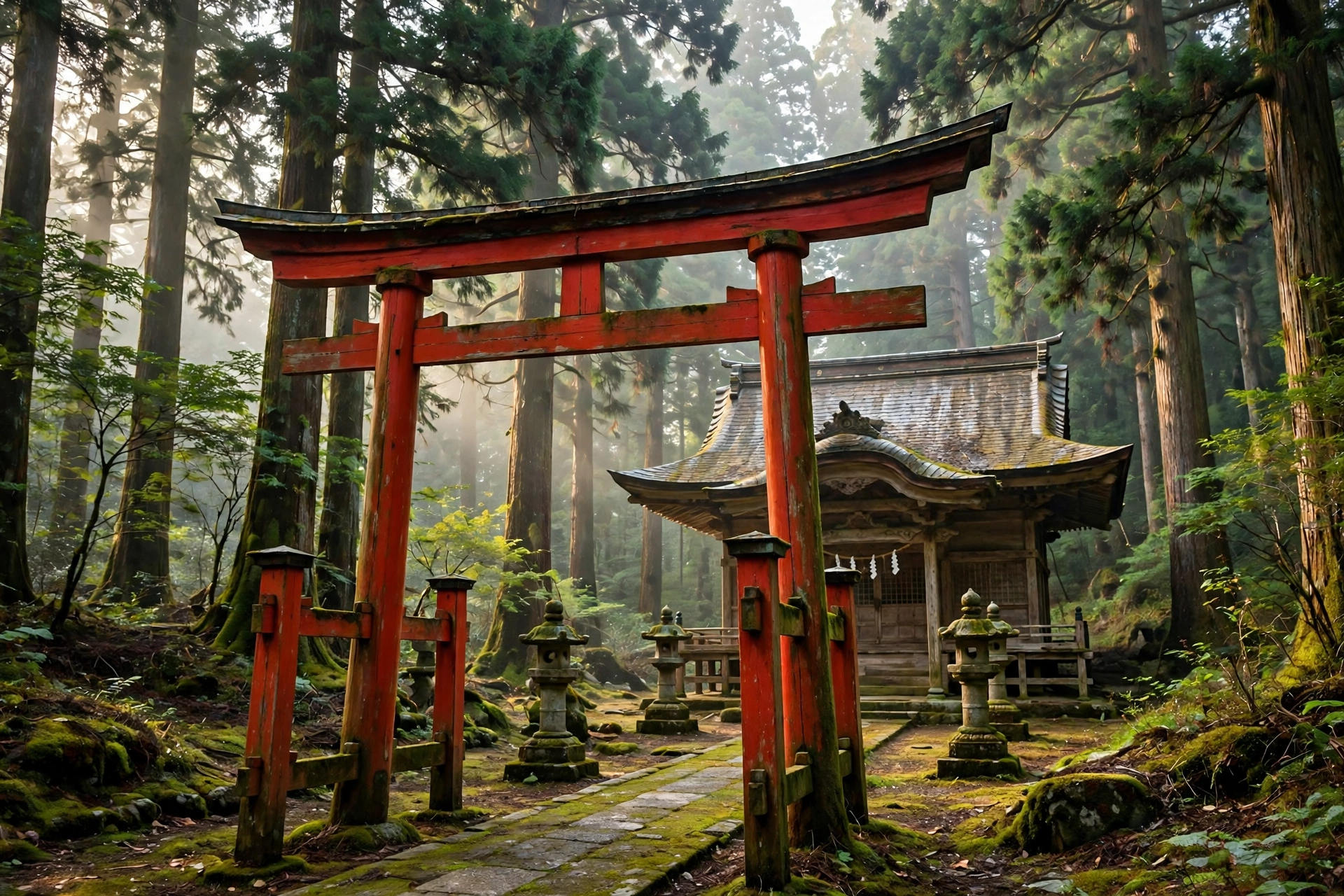
The point first: Dazaifu Tenmangu in Dazaifu, Fukuoka, is the head shrine (sohongu) of the Tenmangu and Tenjin shrines said to number about 12,000 across Japan, and it enshrines Sugawara no Michizane (845–903), affectionately known as “Tenjin-sama,” as a god of learning, culture and the arts. Its main hall stands over Michizane’s grave, and the precinct holds about 6,000 donated plum trees, reflecting his love of plum blossoms. The Summer Tenjin Festival is held on July 24 and 25. The address and postal code (materials differ between 818-0117 and 818-0195), the specific founding years of 905 and 919, the cultural property classification of the main hall, the detailed dates of the September Jinko Grand Festival, parking, wedding guidance and shinsosai guidance all require re-confirmation against official sources, and this article does not state them definitively.
Hello, I am Kurashiki Bouzu. I was born in 1971 and formerly ran a funeral business. I now live in a single-story old house in Kurashiki, Okayama, with my wife and our two cats, spending my days repairing the house ourselves. For research and article writing, I am helped by Moka, my AI butler.
This is one article in a series organizing the shrines of Japan, one shrine at a time. It is organized from official published sources, not from a visit I made myself. What is known and what is not known are written separately, so please read with that in mind. This time it is Dazaifu Tenmangu in Dazaifu, Fukuoka Prefecture.
Basic information
The official top page of Dazaifu Tenmangu carries the notation “Dazaifu Tenmangu | Head Shrine of All Tenmangu in Japan.” The enshrined deity is Sugawara no Michizane, affectionately known as “Tenjin-sama.” The official site records that he is enshrined as a god of learning, culture and the arts.
That the shrine is the head shrine of the Tenmangu and Tenjin shrines said to number about 12,000 nationwide is recorded in the official English guide. That many people consider a visit at milestones of examinations and study is understandable from this history.
The address is given as 4-7-1 Saifu, Dazaifu City, Fukuoka Prefecture in published materials of Fukuoka Prefecture and Dazaifu City. However, a statement of the address on the Japanese official site could not be confirmed directly this time, so this is left as a point requiring re-confirmation with the official site before publication. As for the postal code, materials giving 818-0117 and materials giving 818-0195 both exist, and which is used for what requires re-confirmation.
As for shrine rank, no statement of classifications such as former kanpei-chusha or beppyo shrine could be confirmed on the pages of the official site opened this time. This, too, is not stated definitively, and is recorded as a point that could not be confirmed.
History
The official top page records that the land of Dazaifu is the land where Sugawara no Michizane rests. Lord Michizane lived from 845 to 903. The official English guide records that the main hall is built over Lord Michizane’s grave. That a shrine has, at its foundation, the grave of a single person is a major characteristic of Dazaifu Tenmangu.
As for the specific year of founding, stories are known that a mausoleum was built in Engi 5, 905, and shrine buildings constructed in Engi 19, 919. However, these could not be confirmed directly on the official pages opened this time, so this article keeps them at the level of tradition and common accounts and does not state them definitively. Until sources can be obtained separately, not writing a year as certain fact is how this series proceeds.
Because Lord Michizane loved plum blossoms, Dazaifu Tenmangu is deeply bound to the plum, and the official site records that about 6,000 donated plum trees stand in the precinct. Please receive the famous legend of the flying plum (tobi-ume) as a legend. People’s feelings are layered onto a tree and handed down for centuries. I think this shrine holds that power of story.
Highlights
The main hall (Gohonden) stands over Lord Michizane’s grave. It is regarded as an Important Cultural Property conveying the style of the Momoyama period, but direct confirmation with the Agency for Cultural Affairs could not be made this time, so its designation classification is marked as requiring re-confirmation. The official top page also carries a notice on worship at the front of the main hall, guiding frontal worship after the great renovation of the Reiwa era. Please check the latest guide when you visit.
Beside the main hall stands the sacred tree, the Tobi-ume (flying plum). In addition, the Shinji-ike pond and Taiko-bashi bridges, the Romon gate, the sacred bull statue and the Kirin statue are introduced in the official worship guide.
The Dazaifu Tenmangu Treasure Hall (Homotsuden) and the Sugawara History Museum (Kanko Rekishikan) display artworks and materials connected with Lord Michizane, according to the official site. An art program working with contemporary artists is also officially run in the precinct. One can see an old shrine joining hands with the culture of today.
Festivals
The official English guide records that the Jinko Grand Festival held in September is the largest and most important festival. However, its detailed schedule — specific dates such as around the autumn equinox to the annual festival on September 25 — could not be obtained by direct official confirmation this time, so it is marked as requiring re-confirmation.
The Summer Tenjin Festival is on July 24 and 25. It celebrates Lord Michizane’s birth and includes the Gobyo Birthday Festival. According to the official English guide, a chinowa ring passage and the Sentomyo rite, from 20:00 on the 25th, are held. That there is a festival celebrating the day of his birth feels like proof that Lord Michizane is cherished not only as a god but as a person.
As for the Shichi-go-san Festival, confirmation could be made in a published guide quoting official communications that it is held at the main hall at 9:30 on November 15. Direct confirmation on the official site itself requires re-confirmation.
Connection with life’s milestones
From a former funeral professional’s viewpoint, I will check the guidance on the milestones of life.
The official top page carries a “Prayers” guide, clearly stating that prayers are held at the main hall. During the renovation period, a form held at the ceremony hall and elsewhere is also guided. Applications for prayers and amulets by post are also officially guided. Consideration for people far away is fitting for a shrine cherished from across the country.
An official notice, “On photography for Hatsumiya and Shichi-go-san visits,” confirms that first shrine visits — omiyamairi — and shichi-go-san visits are accepted. That there is official guidance as a place to wish for children’s growth is reassuring material.
As for yakubarai (warding off misfortune), no individual statement as an official prayer item could be confirmed directly this time. The official English guide states that Lord Michizane is a guardian god of children and is also believed in as a god who wards off misfortune, but the detailed form of reception requires re-confirmation.
As for weddings, no dedicated guidance was found on the official site within the top page and guide pages opened this time. As for shinsosai (Shinto funerals) likewise, no guidance was found on the official site within the range checked this time. Neither is stated as “there is none”; the wording is kept at “could not be confirmed within this range.” Those who need one should ask the shrine directly.
Practical information for a visit
Opening is at 6:00 from the spring equinox, and at 6:30 from the autumn equinox. Closing varies by season: 19:00 from April to May and September to November, 19:30 from June to August, and 18:30 from December to March, according to the official top page.
As for goshuin, the official English guide introduces them as commemorative stamps receivable at the shrine office and elsewhere. Reception hours and offering fees could not be confirmed this time.
As for parking, direct confirmation of capacity and fees on the official site itself could not be made this time. So as not to confuse it with information on surrounding car parks, nothing is written here. This, too, is a point requiring re-confirmation.
For access, the official guide records a walk of a few minutes along the approach from Nishitetsu Dazaifu Station. It is a location where the time walking the approach can itself be enjoyed as part of the visiting experience. Before setting out, checking the opening hours and renovation-related guidance on the official site is recommended.
Sources
- Dazaifu Tenmangu official site
- Dazaifu Tenmangu official site, English history
- Dazaifu Tenmangu official site, English experiences
- Dazaifu Tenmangu official site, English visiting guide
- Dazaifu Tenmangu official site, English, for first-time visitors
- Dazaifu Tenmangu official site, English Summer Tenjin Festival
- Crossroad Fukuoka, Dazaifu Tenmangu
- November 22, 2026 ― Published in English (translation of the Japanese article, ledger No. 2978)(7,573 characters)