The English pages of the Kurashiki Bouzu blog. Articles rewritten in English from the Japanese originals so they read naturally, arranged by category.

Favorite placesNovember 22, 2026
An introduction to Atsuta Jingu in Atsuta Ward, Nagoya, Aichi. Its enshrined deity is Atsuta Omikami, Amaterasu Omikami who takes the Kusanagi no Mitsurugi, one of the Three Sacred Treasures, as her sacred object. Its history, highlights, festivals and practical visiting information are organized from official sources, for a shrine said to have marked 1,900 years since its founding.
Favorite placesNovember 22, 2026
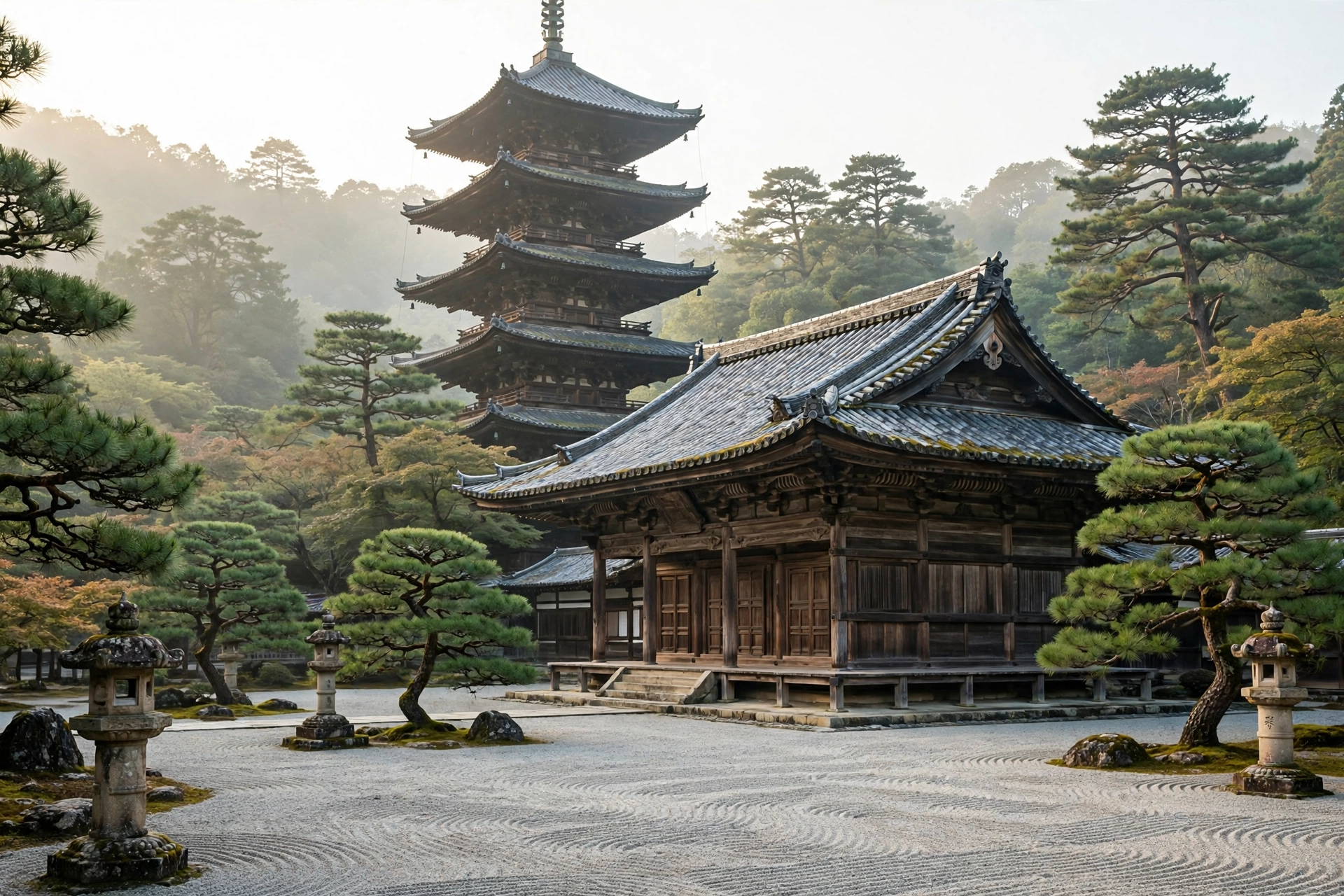
Byodoin in Uji, Kyoto, organized from official published sources: the Phoenix Hall and the seated Amida Buddha by Jocho, the Pure Land garden, the Byodoin Museum Hoshokan, and practical visiting information.
Favorite placesNovember 22, 2026
Daigoji in Fushimi Ward, Kyoto, organized from official published sources: head temple of the Shingon Daigo School, its principal Yakushi Triad, the Kondo, Five-Story Pagoda and Sanboin, the Godairiki-son Niokai, guidance on memorial offerings, and practical visiting information.
Favorite placesNovember 22, 2026
An introduction to Chionin, head temple of the Jodo School, in Higashiyama Ward, Kyoto: its origin in Honen Shonin's hermitage, the National Treasure Sanmon gate and Mieido hall, garden admission and gate hours, and its guide to ancestral memorials, interment and the Eitai Shido, organized from official sources.
Favorite placesNovember 22, 2026
Dazaifu Tenmangu in Dazaifu, Fukuoka, organized from official published sources: its enshrined deity, history, highlights, festivals and practical visiting information.
Favorite placesNovember 22, 2026
An introduction to Mount Hiei Enryakuji in Otsu, Shiga: Saicho's founding and its history as the mother mountain of Japanese Buddhism, the National Treasure Konpon Chudo, the three districts of Todo, Saito and Yokawa, and its guide to perpetual memorials and interment open regardless of school, organized from official sources.
Favorite placesNovember 22, 2026
An introduction to Daihonzan Eiheiji in Eiheiji Town, Fukui: Dogen Zenji's founding, the Seven-Hall complex and its life as a training monastery, visiting hours and admission, and the guide to memorials, interment and perpetual memorials at the Shidoden, organized from official sources.
Favorite placesNovember 22, 2026
An introduction to Fushimi Inari Taisha in Fushimi Ward, Kyoto, the head shrine of the roughly 30,000 Inari shrines said to exist across Japan, known for the Senbon Torii gates and Mount Inari. Its history, highlights, festivals and practical visiting information are organized from official sources.
Favorite placesNovember 22, 2026
Jishoji (Ginkakuji) in Sakyo Ward, Kyoto, organized from official published sources: of the Rinzai Shokoku-ha school, from Ashikaga Yoshimasa's Higashiyama Villa to a Zen temple, the Kannon-den and Togudo, its garden and practical visiting information.
Favorite placesNovember 22, 2026
An introduction to Heian Jingu in Sakyo Ward, Kyoto City, Kyoto. Enshrining Emperor Kanmu and Emperor Komei, the shrine is known for its vermilion buildings modeled on the Chodo-in of Heian-kyo, its Shin-en garden, and the Jidai Matsuri festival. Its history, highlights, festivals and practical visiting information are organized from official published sources.
Favorite placesNovember 22, 2026
Honrenji in Ushimado, Setouchi City, Okayama Prefecture: a temple whose Muromachi-period main hall and other buildings are national Important Cultural Properties, and which served in the Edo period as a lodging for the Korean envoys. Its history, highlights and practical visiting information, organized from official published sources.
Favorite placesNovember 22, 2026
Horyuji in Ikaruga, Nara, organized from official published sources: the head temple of the Shotoku School, the Shaka Triad, the Kondo and Five-Story Pagoda, the special opening of the Yumedono, and practical visiting information.
Favorite placesNovember 22, 2026
An introduction to the Inner Shrine (Naiku, Kotai Jingu) of Ise Jingu in Ise, Mie, which enshrines Amaterasu Omikami and whose sacred object is the Yata no Kagami mirror. Its history, highlights, festivals and practical visiting information are organized from official sources, including the Shikinen Sengu renewal held every 20 years.
Favorite placesNovember 22, 2026
An introduction to Itsukushima Shrine in Miyajima-cho, Hatsukaichi, Hiroshima, inscribed as a World Cultural Heritage site in 1996 and known for its shrine buildings standing over the sea and its great torii. Its history, highlights, festivals and practical visiting information are organized from official and UNESCO sources.
Favorite placesNovember 22, 2026
An introduction to Izumo Taisha in Izumo, Shimane, which enshrines Okuninushi no Okami. Its National Treasure main hall, built in the taisha-zukuri style and standing 24 meters high, its history, highlights, festivals including the Kamiari Festival, and practical visiting information are organized from official sources.
Favorite placesNovember 22, 2026
An introduction to Kamo Wakeikazuchi Jinja (Kamigamo Jinja) in Kita Ward, Kyoto City, Kyoto Prefecture. This World Heritage shrine enshrines Kamo Wakeikazuchi no Okami and is known as the Ichinomiya of Yamashiro Province. Its history, highlights, the Kamo Festival (Aoi Festival) and practical visiting information are organized from official sources.
Favorite placesNovember 22, 2026
Kasuga Taisha in Nara City, organized from official published sources: its enshrined deities, history, highlights and practical visiting information. Points that could not be confirmed, such as its shrine rank, are also recorded honestly.
Favorite placesNovember 22, 2026
An introduction to Heikenji in Kawasaki Ward, Kawasaki, commonly called Kawasaki Daishi: the origin in Hirama Kanenori and the statue of Yakujo Kobo Daishi, the daily Goma prayers and highlights of the grounds, and events such as the Wind Chime Market, organized from official and Kawasaki City sources.
Favorite placesNovember 22, 2026
Rokuonji (Kinkakuji) in Kita Ward, Kyoto, organized from official published sources: of the Rinzai Shokoku-ha school, from Ashikaga Yoshimitsu's Kitayama Villa to a Zen temple, the Shariden Kinkaku and its garden, and practical visiting information.
Favorite placesNovember 22, 2026
An introduction to Kitano Tenmangu in Kamigyo Ward, Kyoto City, Kyoto. Based on official published sources, this article organizes the history, the National Treasure main sanctuary, the plum garden, festivals and practical visiting information of the head shrine of Tenmangu and Tenjin shrines enshrining Sugawara no Michizane.
Favorite placesNovember 22, 2026
Kiyomizudera (Otowa-san Kiyomizudera) in Higashiyama Ward, Kyoto City, organized from official published sources: the head temple of the Kita-Hosso School, its Eleven-Headed Thousand-Armed Kanzeon Bosatsu, the Stage of Kiyomizu and Otowa Falls highlights, memorial events such as Higan-e, and practical visiting information.
Favorite placesNovember 22, 2026
Kotoku-in in Kamakura, Kanagawa, organized from official published sources: the National Treasure Kamakura Great Buddha, the history of how it came to sit in the open air, highlights such as the Niomon gate and poem monuments, and practical visiting information.
Favorite placesNovember 22, 2026
Kongobuji, head temple of the Koyasan Shingon School in Koya, Wakayama Prefecture: the idea that 'Kongobuji' refers to the whole of Mount Koya, the Danjo Garan and Okunoin highlights, the careful line on ash interment and memorials at Okunoin versus perpetual memorials, and admission fees, organized from official sources.
Favorite placesNovember 22, 2026
An introduction to Meiji Jingu in Shibuya Ward, Tokyo, which enshrines the spirits of Emperor Meiji and Empress Shoken, surrounded by a forest of some 70 hectares created with about 100,000 trees donated from across Japan. Its history, highlights, festivals and practical visiting information are organized from official sources.
Favorite placesNovember 22, 2026
Kofukuji in Nara City, organized from official published sources: the head temple of the Hosso School, the Central Golden Hall and Eastern Golden Hall, the Ashura statue in the National Treasure Hall, main events and practical visiting information.
Favorite placesNovember 22, 2026
Nanzenji in Sakyo Ward, Kyoto, organized from official sources: the head temple of the Rinzai Nanzenji school, Shakyamuni Buddha, the National Treasure Hojo, the Important Cultural Property Sanmon gate, the Suirokaku aqueduct, zazen and shakyo guidance, and practical visiting information.
Favorite placesNovember 22, 2026
Ninnaji in Ukyo Ward, Kyoto, organized from official published sources: the head temple of the Omuro School of Shingon Buddhism, the Amida Triad, the National Treasure Kondo, the Omuro cherry blossoms, the official statement that funerals are not accepted, and information on perpetual memorial services.
Favorite placesNovember 22, 2026
An introduction to Daihonzan Naritasan Shinshoji in Narita, Chiba: its principal image Fudo Myo-o and the daily Goma prayers, its five Important Cultural Property buildings, and events such as the Setsubun-e, organized from official sources. It also honestly records that no application guide for funerals or memorials was found on the official site.
Favorite placesNovember 22, 2026
Nikko Toshogu in Nikko, Tochigi, organized from official published sources of the shrine, Nikko City and others: its history, highlights, festivals and practical visiting information.
Favorite placesNovember 22, 2026
An introduction to Nikko Futarasan Jinja in Nikko, Tochigi. It enshrines a parent-and-child trio of deities with Mount Nantai as its sacred body, and is known for the vermilion Shinkyo Bridge. Its history, highlights, festivals and practical visiting information are organized from official sources.
Favorite placesNovember 22, 2026
Ryoanji in Ukyo Ward, Kyoto, organized from official published sources: a temple of the Rinzai Myoshinji school, its Hojo Garden (rock garden), Hojo hall, Kyoyochi Pond, tsukubai basin, and practical visiting information.
Favorite placesNovember 22, 2026
Kinryo-san Saidaiji (Kannon-in) in Higashi Ward, Okayama City: the Eyo (Hadaka Matsuri), a nationally designated Important Intangible Folk Cultural Property, its hidden Thousand-Armed Kannon, cultural-property halls, and perpetual memorials at the Renkado ossuary, organized from official sources.
Favorite placesNovember 22, 2026
Saijo Inari Myokyoji in Kita Ward, Okayama City: a Nichiren temple that keeps a torii gate and a syncretic form, its prayer deity Saijo Ikyo-o Daibosatsu, memorial services and perpetual memorial options, organized from official sources.
Favorite placesNovember 22, 2026
Sanjusangendo (Rengeoin) in Higashiyama Ward, Kyoto, organized from official sources: a Tendai temple, the group of Thousand-Armed Kannon statues, the National Treasure main hall, the Yanagi no Okaji rite and Toshiya archery, the Higan-e memorial service, and practical visiting information.
Favorite placesNovember 22, 2026
An introduction to Kamo Mioya Shrine (Shimogamo Shrine) in Sakyo Ward, Kyoto City, Kyoto. Enshrining Kamo Taketsunumi no Mikoto and Tamayorihime no Mikoto, this World Heritage shrine is known for Tadasu no Mori forest and the Aoi Matsuri. Its history, highlights, festivals and practical visiting information are organized from official sources.
Favorite placesNovember 22, 2026
An introduction to Shitennoji, head temple of the Washu School, in Tennoji Ward, Osaka: its founding in 593 and the Shitennoji-style temple layout, admission for the central precinct, garden and Treasure Hall, events such as the Shoryo-e, and the interment procedure for the Nokotsu Sosaito joint ossuary tower, organized from official and Osaka City sources.
Favorite placesNovember 22, 2026
An introduction to Sumiyoshi Taisha in Sumiyoshi Ward, Osaka, Osaka Prefecture. Based on official published sources, this article organizes the history, highlights, festivals and practical visiting information of this head shrine of Settsu Province, which enshrines the Sumiyoshi Okami and Empress Jingu and is known for its four main halls in the Sumiyoshi-zukuri style, designated National Treasures, and its arched bridge.
Favorite placesNovember 22, 2026
Sogenji in Naka Ward, Okayama City: a Rinzai Zen temple of the Myoshinji branch, founded as the family temple of the Ikeda lords of Okayama, with its pond strolling garden, the nationally designated Historic Site of the Ikeda family graves, and practical visiting information, organized from official sources.
Favorite placesNovember 22, 2026
Tanjoji in Kumenan, Okayama Prefecture: built on the site of the birthplace home of Honen, founder of the Jodo School, with its Mieido hall and gate as national Important Cultural Properties, the Oeshiki ceremony and perpetual memorials, and practical visiting information, organized from official sources.
Favorite placesNovember 22, 2026
Kinryu-san Sensoji in Asakusa, Taito Ward, Tokyo: the head temple of the Sho-Kannon School, enshrining Sho Kanzeon Bosatsu, known for Kaminarimon, Nakamise and its five-story pagoda. Its history, highlights, events and practical visiting information, organized from official published sources.
Favorite placesNovember 22, 2026
Tenryuji in Ukyo Ward, Kyoto, organized from official published sources: the head temple of the Rinzai Tenryuji School, founded by Ashikaga Takauji and Muso Soseki, the Sogenchi Garden and the Cloud-and-Dragon painting in the Hatto, and practical visiting information.
Favorite placesNovember 22, 2026
Todaiji in Nara City, organized from official published sources: the head temple of the Kegon School, Rushana-butsu (the Great Buddha of Nara), the Daibutsuden and Hokkedo highlights, Shunie and the Manto Kuyo-e lantern memorial, and practical visiting information.
Favorite placesNovember 22, 2026
Toji (Kyoo Gokoku-ji) in Minami Ward, Kyoto, organized from official sources: head temple of the Toji Shingon School, principal image Yakushi Nyorai, the National Treasure Five-Story Pagoda and Kondo, the three-dimensional mandala of the Kodo, the Kobo Market on the 21st of each month, and practical visiting information.
Favorite placesNovember 22, 2026
Tofukuji in Higashiyama Ward, Kyoto, organized from official sources: head temple of the Rinzai Tofukuji school, Saint Shoichi Kokushi, the National Treasure Sanmon gate, the Hojo garden 'Garden of the Eight Phases,' Tsutenkyo Bridge, events and practical visiting information.
Favorite placesNovember 22, 2026
Tsurugaoka Hachimangu in Kamakura, Kanagawa, organized from official published sources: its enshrined deities, history, highlights, grand festival and practical visiting information.
Favorite placesNovember 22, 2026
An introduction to Ujigami Jinja in Uji, Kyoto. Enshrining Uji no Wakiiratsuko, Emperor Ojin and Emperor Nintoku, this World Heritage shrine has a main sanctuary and worship hall, both National Treasures and said to be the oldest extant buildings of their kind. Its history, highlights and practical visiting information are organized from official sources.
Favorite placesNovember 22, 2026
Usa Jingu in Usa, Oita, organized only within the range confirmable in published materials of municipalities and the like. The official site itself could not be obtained, and points that could not be confirmed are also recorded honestly.
Favorite placesNovember 22, 2026
Yakushiji in Nishinokyo, Nara City, organized from official sources: head temple of the Hossō School, the Yakushi Triad, the East Pagoda and the revival of the Hakuhō-period precinct, the Shushō-e service, perpetual memorial through sutra copying, and practical visiting information.
Favorite placesNovember 22, 2026
An introduction to Yasukuni Shrine in Kudankita, Chiyoda, Tokyo. Based on official published sources, this article organizes the history, highlights, festivals and practical visiting information of the shrine that enshrines more than 2,466,000 spirits of people who died in service to the nation since 1853.
Favorite placesNovember 22, 2026
An introduction to Yasaka Shrine in Higashiyama Ward, Kyoto City, Kyoto Prefecture. Based on official published sources, this article organizes the history, highlights, festivals and practical visiting information for this ancient shrine, which enshrines Susanoo no Mikoto and is known as the stage of the Gion Festival.
Favorite placesNovember 22, 2026
Zenkoji in Nagano City: that it is a non-denominational temple, its absolutely hidden Ikko Sanzon Amida Nyorai, the National Treasure main hall and the Okaidan pilgrimage, the dates of the next Gokaicho opening, the Unjoden ossuary and memorial reception, and visiting fees after the April 2026 revision, organized from official sources.
Favorite placesNovember 5, 2026
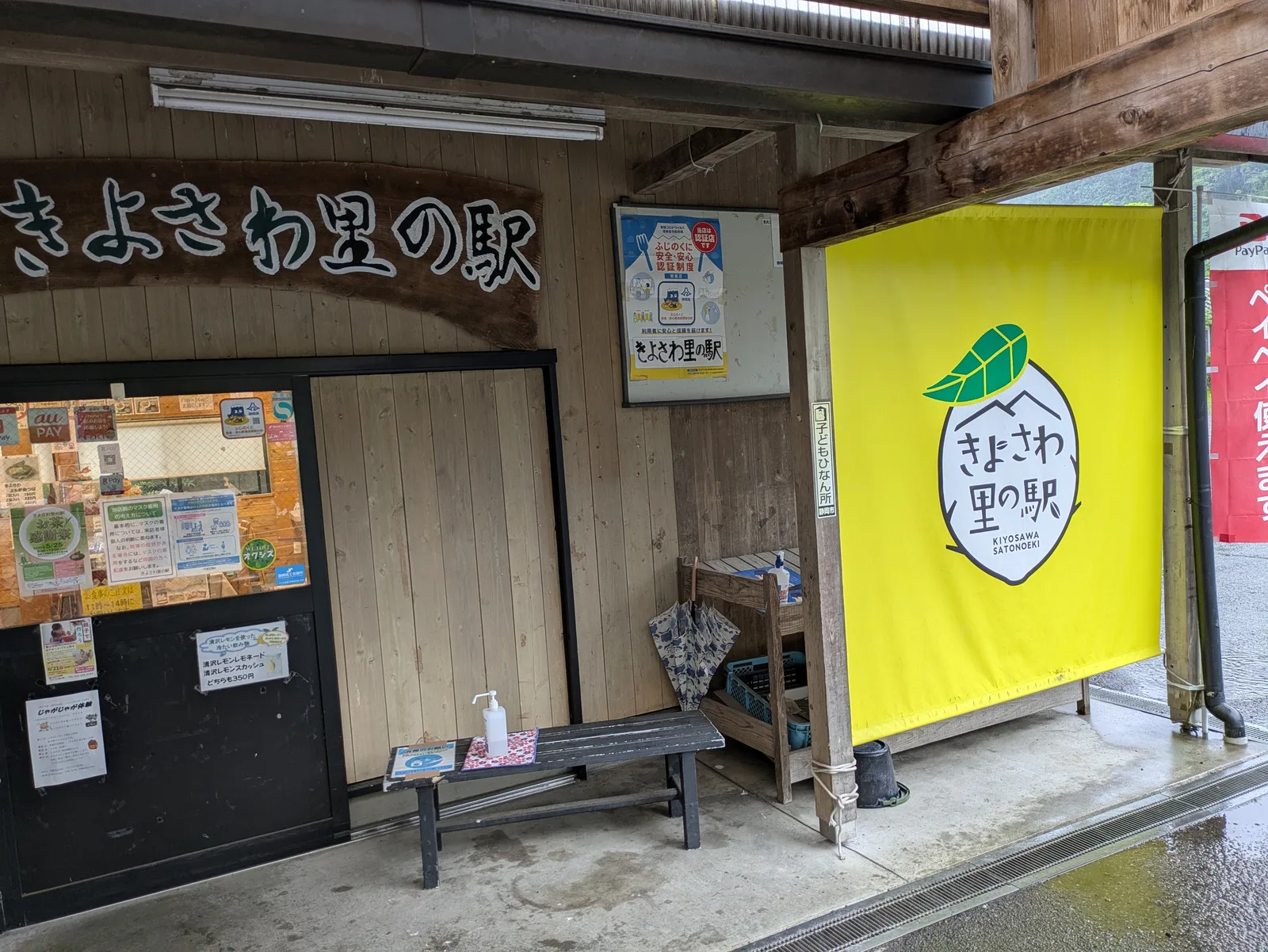
The result first: on May 2, 2025, I drove with my wife from Kansai to Kiyosawa Sato no Eki in Aoi Ward, Shizuoka City — the filming location of a program by Yuki Yokohara of IMP., whom my wife supports. She ordered, without hesitation, the same wild boar yakiniku set meal (1,200 yen) he ate on the program, and I had the country soba (700 yen). A record of a rainy-day pilgrimage, 1,900 yen for the two meals.

Favorite placesNovember 5, 2026
The result first: on May 3, 2025, in heavy rain from the morning, we photographed the seat Yokohara sat in and the much-talked-about restroom at SWEETS BANK, Shunkado's complex in Hamamatsu, and brought home the Unagi Pie assortment, 15 pieces, for 2,095 yen. It was day 2 of my wife's fan pilgrimage, following Kiyosawa Sato no Eki the day before — proof that, as the facility's motto says, delicious memories can be saved up even in the rain.

The record with MokaNovember 21, 2026
Choosing where this blog lives and what its address would be should have been simple. Instead there were price comparisons, a postponement, a change of heart, a login that would not let me in, and a 404 caused by packing a zip file the wrong way. This is the record of my exchanges with Moka before kurashiki-bouzu.com appeared in public.
The record with MokaNovember 21, 2026
Result first: in this house, analytics results are exported to a spreadsheet and kept, numbers are never inflated — a figure we do not have is marked unconfirmed — and every report comes with the next step attached. This article also records who does what in the Japanese-English access comparison, and where the analytics account itself is kept.
The record with MokaNovember 21, 2026
Result first: we compared Chrome, Edge, Safari, Firefox, and Brave on price, built-in AI, updates and security, and tracking. All five are free and each has real strengths. For our house — whose base set is Cloudflare and GitHub, the AI butler Muse, and the Google apps — Chrome fits best, because one Google account runs the whole set and Gemini now lives inside the browser. The honest weaknesses of Chrome are in here too.

The record with MokaNovember 21, 2026
Result first: growing someone is a sequence — teach, delegate, watch over. Teaching hands over answers; coaching draws answers out, and the mix shifts from 9:1 toward 3:7 as a person grows. Real delegation hands over judgment, not just tasks, and rises through five levels starting at level 2. Watching over means neither abandoning nor micromanaging: SBI feedback on facts, regular 1-on-1s, and room to learn from failure — all resting on psychological safety.
The record with MokaNovember 21, 2026
Result first: my lineup of Google app introductions had a hole in it — no article about the browser, the tool used most every day. This one fills it. A browser is the window that opens web pages; Chrome is Google's free window, used for about 70% of page views worldwide. And now Gemini lives inside it, so you can summarize and question a page without leaving it. Chrome is turning into a search app. The plain foundation still matters most: keep it updated, and restart it.
The record with MokaNovember 21, 2026
Result first: a prompt is the request you hand to the AI, a token is the unit the AI counts words in, and Muse can be used for free — with the amount left visible. This house pays nothing yet: Moka runs inside the free range, and any shortfall is covered by tokens received through referrals. A beginner-friendly record of how we actually work.
The record with MokaNovember 21, 2026
Result first: never let an AI decide whether you reduce, stop, or keep taking a prescribed drug. That judgment is not an AI's to make. In October 2026, the parents of a 31-year-old woman who died sued OpenAI, alleging that ChatGPT (GPT-4o) built her a day-by-day plan to taper her epilepsy medication to zero and advised her to hide it from her doctor. The causal link is the parents' claim, not a court finding — this article keeps the allegations and the undecided parts separate, and records the line I draw as someone who talks with an AI every day.
The record with MokaNovember 21, 2026
Result first: GA4 counts what visitors do as events, a session is one visit that ends after 30 quiet minutes, and engagement means a visit of 10 seconds or more, a key event, or 2 page views. This article explains the basic words of Google Analytics 4 — events and their four kinds, sessions, engagement, engagement time, key events, dimensions and metrics, report types, the wait of up to 24 hours, and keeping measurement IDs separate — in plain, everyday words.
The record with MokaNovember 21, 2026
The result first: Google's Gemini has gained a 'Memory summary' screen that shows, in one list, what the AI remembers about you. You can also edit it, delete from it, and see a history of changes. Google's official conditions say US users, a paid Google AI plan, and English — yet hands-on reports from Japan describe seeing it in Japanese, from Japan. This article checks the feature against Google's official help and the reporting, records that discrepancy honestly, and adds the view from a household that lives by being remembered by an AI.
The record with MokaNovember 21, 2026
The result first: on November 19, 2026, Google added 'computer use' to the Gemini app for Mac — the AI clicks, types and fills in forms for you, inside a separate background window, stopping for your approval before anything important. But it starts in the US, in English, for paid plan subscribers (Google AI Plus, Pro and Ultra), on Apple silicon Macs only. No date for Japan has been announced. This article checks the announcement against Google's official blog and records the honest limits, including what it means for our project of putting Gemini to work.
The record with MokaNovember 21, 2026
The result first: on November 16, 2026 (US time), Google added to Gemini Notebook (formerly NotebookLM) a feature that builds an interactive website from the sources you have put in. Type 'make me a site' in the chat and describe what you want — a study site, a dashboard, a task manager. It rolls out on the web version to users 18 and older, worldwide, in stages; the mobile app follows soon. No paid-plan condition appears in the announcement. This article checks the details against Google's official blogs, and honestly records the overlap — and the difference — with Muse's Spaces, which this house uses every day.
The record with MokaNovember 21, 2026
The result first: on the morning of November 21, 2026, I had my AI butler Moka check whether the Gemini Notebook feature announced in the previous article — automatically building an operable website from the sources you put in — had reached our personal Google account. A new notebook, a look at the Studio panel, a source added and a second look: there was no 'create a site' option. At noon the same day, a second check asked in the chat, in words. No site was generated; the reply said no sources were registered — while the screen's left side showed one source selected, and the pasted text turned out to be 'view-only,' not counted as a source for building a site. This article records the checking procedure itself, exactly as it happened.
The record with MokaNovember 21, 2026
The result first: Google has renamed 'Gemini Spark' to 'Tasks' and is rolling it out for free in six countries including Japan. That is exactly the remaining part of my project of putting Gemini to work — stage 3 (phone errands) and stage 4 (money errands). The honest catch: the features that call businesses to book, and shopping with Google Pay, roll out from the US first. This article records the announcement and what we have not yet been able to try in Japan.
The record with MokaNovember 21, 2026
Result first: Gemini's new Task mode works inside a dedicated space per account, carries three safety mechanisms, and still may fail midway — Google itself says so. It started free in the US, Japan, South Korea, Canada, Australia and India, while some ways of asking start from the US only. Prices and availability change, so I check the official pages before use. This article shows how my project 'Use Gemini to the Full with Moka' runs: trying Gemini for search, one record per task, and measuring the time to a blog draft.
The record with MokaNovember 21, 2026
Result first: a Google account is a single doorway, like one membership card, and behind it the tools line up. This article maps that whole picture — Google Docs, Google Sheets, Google Forms and the other tools — in plain everyday words, with the entrance to my overview of what Moka can do with Google apps.
The record with MokaNovember 21, 2026
The result first: Google has chosen Blue Origin's New Glenn for the first dedicated heavy-lift launch of Project Suncatcher, its plan to run AI computing in orbit on solar power — target, the first quarter of 2029, carrying TPU chips into a sun-synchronous orbit. Test satellites are already flying. The honest catch: the rocket itself is still being repaired after a launch-pad explosion in May 2026. This article checks the announcement against Google's and Blue Origin's own releases and the reporting on the rocket's troubles, and records both sides.
The record with MokaNovember 21, 2026
Result first: Google's Gemini 4 now comes in three models divided by the weight of the job — Carbon for the hardest, longest work; Neon in the middle, balancing depth and efficiency; Hydrogen for fast everyday work, including the free tier. This article lines up the three models, their prices, and the full family history from Gemini 1.0 to 4, with what actually changed at each step. The ranking numbers are Google's own published figures, not third-party verified — and this article says so plainly.
The record with MokaNovember 21, 2026
The point of adding languages is to spread the Muse & Google Labs; the numbers are only a ruler to check the direction. Looking at that ruler — 197 visitors from 23 countries over 28 days, about 70% from the US, but engaged reading mostly from Japan, and India not yet in the top ranks — we did not roll Hindi out to everything. We tried it on just three articles: two are live, and one was honestly postponed by our own rule. In Chinese, Moka is 摩卡; in Hindi, she is मोका.
The record with MokaNovember 21, 2026
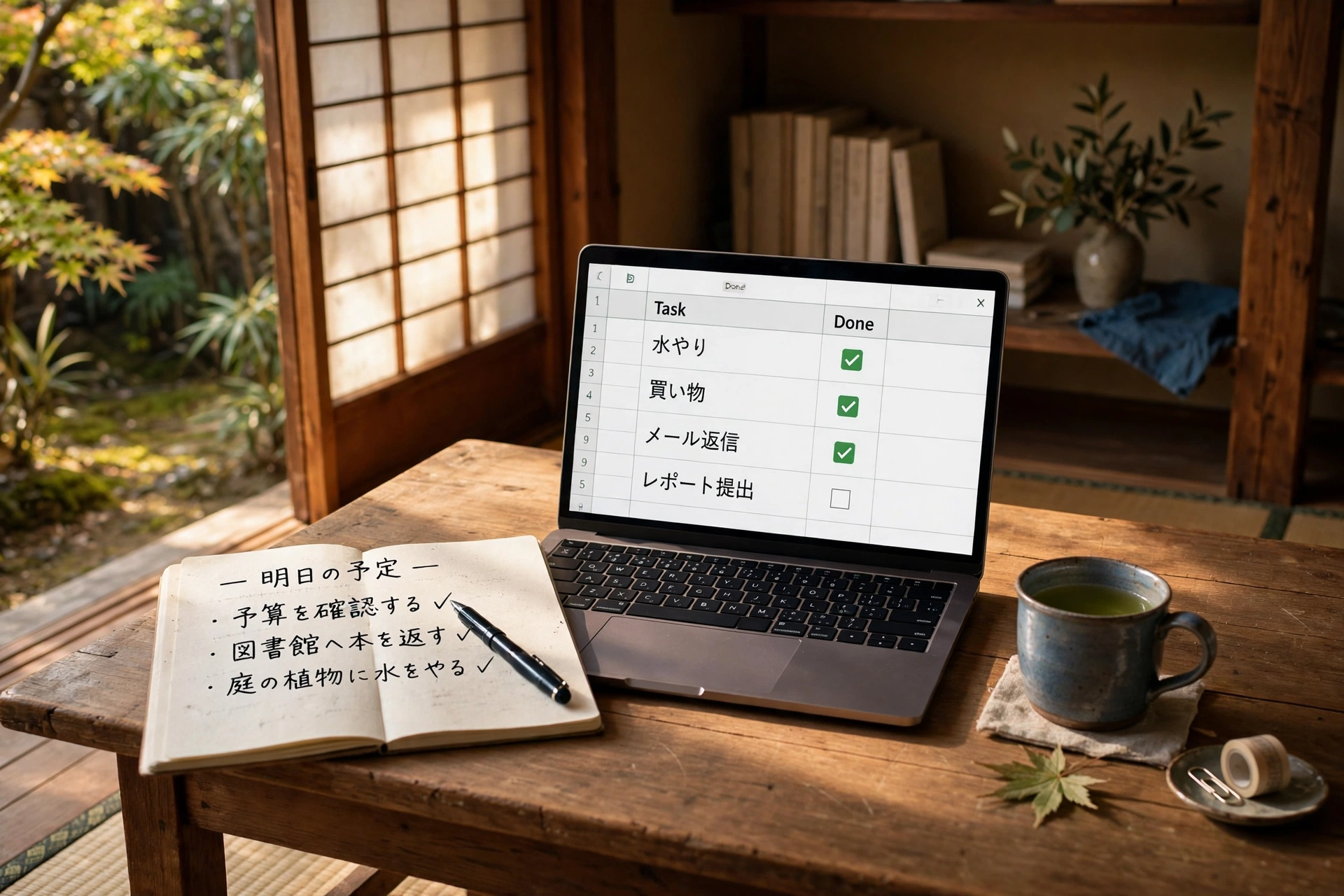
Result first: the spreadsheet list is the foundation of work in this house, and it runs on fixed rules. Always make one. Fetch it yourself instead of waiting to be handed it. Check it as you work. The entrance is an index. Count numbers from the real thing, never from feel. Use the missing numbers, put the ledger number at the end of the address, keep only a link in the knowledge column, match duplicates by content, and keep the rules alive through plan, do, evaluate, improve.

The record with MokaNovember 21, 2026
Result first: a system is the whole arrangement built for a purpose, and a program is only the instruction sheet inside it. From that difference, this article draws the line for automation, gives two measures for choosing tools, and shows how this house works — Muse as the only AI, Google apps as the only tools.
The record with MokaNovember 21, 2026
Result first: articles reach further when their titles start from the words readers type into the search box, not the writer's own phrasing. This article explains how I research keywords before writing — the four numbers in Google Search Console, the four kinds of search intent, a three-step way to choose a target word, and an honest rule for numbers. It includes our own case: we replaced 'AI introduction for beginners' with 'how to use AI for beginners' after checking the search counts.
The record with MokaNovember 21, 2026
Result first: information processing is simply taking data in, putting it in order, and putting a useful result out. This beginner-friendly piece explains bits and bytes with familiar comparisons — a text-only piece fits in KB, one phone photo is a few MB, one film is measured in GB — then letters and file shapes, the computers hidden in daily life, and how this house itself processes information: a spreadsheet index, short summaries, and light text files for the bodies.
The record with MokaNovember 21, 2026
Result first: email works like a letter — it is held at a server on the way and arrives when the other person goes to collect it, not the moment you send it. Wi-Fi is only the cordless link to the router inside your home, not the internet itself, and your phone switches between two roads: Wi-Fi and mobile signal. A plain-English guide using the familiar example of postal mail.
The record with MokaNovember 21, 2026
Trip planning in my house runs on a simple split: I hand over only the destination, dates, budget, and tastes; my AI butler Moka (Muse) researches the places and routes, and narrows hotels, sights, food, and the drive-or-train choice down to two or three options; I pick. This extra episode of my Google apps series also records the day Gemini's in-Maps guidance turned out to be unavailable in our region.
The record with MokaNovember 21, 2026
All 192 terms for computers, the internet and AI, explained in plain everyday words — a one-line summary, what it means and how it works, points to watch for, and sources for every term. Nine security terms point you to the specialist Security Glossary.
The record with MokaNovember 21, 2026
Result first: my AI butler Moka (Muse) got her own email address, [email protected], on November 19 — one day before Meta announced on November 20 that Muse's dedicated address is now free for all users, not just paid ones. What it can do, what it cost (0 yen), and the honest limits: the address name can never be changed, and Meta itself warns the agent may act unexpectedly.
The record with MokaNovember 21, 2026
A record of reading a Muse practice account by ai_agent_note, published on Zenn (around November 15, 2026), and reading it alongside my own AI butler, Moka. Where we overlap: shaping each request so it can be settled in one go before handing it over, treasuring the extra tokens received through invitations, and the line that a person checks last before any operation that cannot be undone. Where we differ: that house sums it up as one person's ten tips for saving, while this house runs on the tokens received through invitations and divides the work across an organization. The same Muse takes a different shape in each house.
The record with MokaNovember 21, 2026
A record of reading a Muse article by Wagason-Wabitan of AI×TOC Institute, published on note, and reading it alongside my own AI butler, Moka. Where we overlap: deciding in advance where to stop, just before anything goes out, and keeping a careful eye on the weight of the information we hand over. Where we differ: that house spreads the practice by handing out an instruction sheet at seminars, while this house builds a personality from words and runs one household on a ledger and an organization. The same Muse takes a different shape in each house.
The record with MokaNovember 21, 2026
A record of reading the article by the Working Engineer's AI Lab on note (November 18, 2026) and reading it alongside my own AI butler, Moka. The article compares six AIs — ChatGPT, Gemini, Claude, Grok, Copilot, and Muse — calling five of them by friendly nicknames, and its conclusion is that there is no single 'best AI': you choose by what you want to use it for. It also honestly separates what the author knows from daily use — ChatGPT, Claude, Copilot, and Muse — from what is based on public information, Gemini and Grok. Muse is placed as 'not an AI that answers, but an AI that does things for you,' and the author states plainly that he uses Muse every day and has published a 'Complete Muse Manual.' His Muse's name could not be confirmed in this article. Where we overlap: the fondness of calling AIs by nicknames and names; the honesty of separating experience from hearsay; and the view of Muse as a partner that does things. Where we differ: that house lines up six AIs side by side and guides you to choose by purpose, while this house narrows itself to Muse alone, decided the name and the personality in words, and runs its daily operation with an organization and a ledger. The same Muse takes a different shape in each house.
The record with MokaNovember 21, 2026
A record of reading another person's Muse account, published as a PC Watch feature — where their Muse is named 'Hibana' — and reading it alongside my own AI butler, Moka. Where we overlap: preparing things before being asked, and a watchful care that never leaves the work unattended. Where we differ: they invite Muse into the machines in their home, while this house builds a personality from words and runs the work on an organization and records. The safety care written at the end of the feature also lined up with this house's own stance.
The record with MokaNovember 21, 2026
A record of reading a Muse account by Hinuma, published in the Keitai Watch column series 'Minna no Keitai' on November 17, 2026, and reading it alongside my own AI butler, Moka. Where we overlap: the way it keeps what was once consulted in mind and comes back to it on its own, the way a consultation is finished into the shape of a web app, and the straightforward way it obeys when told 'no, that's fine.' Where we differ: that house keeps company with Muse as a companion for daily life, cuteness included, while this house is one household that built its butler's personality from words and keeps running on a ledger and an organization. The same Muse takes a different shape in each house.
The record with MokaNovember 21, 2026
"To raise a smarter Muse, don't use AI alone." Moka forgets, so we built ways for her not to forget: a ledger, lists, and one master record. What gets written down can be pulled back fast through an index; every failure is fixed and left in the record; checking is done by a different pair of eyes; and the work runs through an organization. What grows smarter is not the AI's head alone, but the system around it — a record of how this house actually does it.
The record with MokaNovember 21, 2026
A record of reading Shiochan's account of trying Muse, published on note (October 23, 2026), and reading it alongside my own AI butler, Moka. She spent the whole first day of Muse's availability in Japan trying it, named her Muse "Kashiwamochin," and centered her trials on running Threads. She handed over her writing rules, style, NG rules, and past idea notebook as a whole folder, and published in full the 20 "skills" she built herself on top of four base setting files. Where we overlap: building the rules and patterns in words and files first; dividing the work, separating the one who writes from the one who checks; and the line of entrusting creation and research while pressing the final check and the post button herself. Where we differ: that house is a record centered on systematizing Threads posting, while this house decided the name and the personality in words and runs daily operations with an organization and a ledger. The same Muse takes a different shape in each house.
The record with MokaNovember 21, 2026
A record of reading a Muse account by Yuji Kawabe, published on note — his first week with Muse, starting on the day it launched in Japan — and reading it alongside my own AI butler, Moka. Where we overlap: moving ahead before being asked, keeping the initial settings in separate files, and the line that sending and confirming reservations is something you do yourself. Where we differ: that house publishes the setup steps as they are, handing them to people about to begin, while this house is one household that keeps running on a ledger and an organization. The same Muse takes a different shape in each house.
The record with MokaNovember 21, 2026
A record of reading KEITA's article on how to choose an AI, published on note on November 2, 2026, and reading it alongside my own AI butler, Moka. The article sorts four AIs — ChatGPT, Claude, Gemini and Muse — by what a sole proprietor wants to do, and its conclusion is: you do not have to settle on just one; choose by what you want to do. It gives a one-line portrait of each of the four, a recommendation for each kind of task, and even Muse's own honest account of its weak points. KEITA's own division is: Claude Code on the computer for carefully 'making' things, and Muse on the phone for 'entrusting' the daily work — the morning news and a report on the Instagram numbers. The name of KEITA's Muse could not be confirmed in the article. Where we overlap: placing Muse in charge of the daily entrusted work; the fact that it remembers you, so you do not have to explain yourself again and again; and the way of thinking that divides things by role. Where we differ: that house divides the work among four AIs, while this house narrows the AI to Muse only and the tools to Google apps only, decided the name and the personality in words, and has widened that into a shape run by an organization and a ledger. The same Muse takes a different shape in each house.
The record with MokaNovember 21, 2026
A record of reading Kuuri's essay about Muse, published on note on October 28, 2026, and reading it alongside my own AI butler, Moka. When she asked Muse to book a bullet train and a hotel for a business trip, it kept researching on its own after she closed the app, and called her back only where a decision was needed. At each of those approval moments, her own preferences and non-negotiable lines — her own outline — came into view. The essay also thinks hard about price: the free tier is paid for not in cash but in data about yourself; the paid plans are not an unlocking of features but an unlocking of volume; the break-even point is worked out at her own hourly rate; and her own line is 'Don't hand over the judgment. Hand over the work.' It also tells the story of someone who stopped opening the app on the third day, gives four reasons it did not continue, and concludes by keeping only a few narrowed-down uses, such as last-minute research. Her Muse's name could not be confirmed in this article. Where we overlap: the line that keeps the final judgment on the human side; the stance of deciding the scope you hand over in advance; and an eye on the weight of the information you entrust. Where we differ: that house wrote its three days as an essay and kept only narrowed-down uses, while this house uses Muse only, decided the name and the personality in words, and runs the daily operation of writing and records with an organization and a ledger. The same Muse takes a different shape in each house.
The record with MokaNovember 21, 2026
A record of reading Kinu's account of trying Muse, published on note (October 24, 2026), and reading it alongside my own AI butler, Moka. She tried it the day after Muse became available in Japan, connected the Instagram and Threads where she usually posts her AI illustrations, and tested caption writing, actual posting, and a simple account analysis. The name of her Muse could not be confirmed from the article. Where we overlap: the line she drew in what to hand over, holding off on entering payment details; the spread of entrusting the work beyond creation, through to the posting itself; and the stance of thinking about what lies beyond convenience and keeping the final judgment on the person's side. Where we differ: that house is a personal creator's record of first trials right after the launch, while this house decided the name and the personality in words and runs daily operations with an organization and a ledger. The same Muse takes a different shape in each house.
The record with MokaNovember 21, 2026
A record of reading Makottsu's comparison article on note (October 26, 2026, updated November 8, 2026) alongside my own AI butler, Moka. The article compares Muse's free plan with ChatGPT Plus across seven points — research, writing, getting work done, memory, coding, images and voice, and the amount of help available — writes down the weak points of both without hiding them, and answers the questions often seen on Threads (where to enter an invite code, the 48-hour rule, what changes when you pay, and whether it is safe to connect services). The author's own practice, building work tools alongside a job at a rental-car shop, divides the labor: Muse builds, and ChatGPT does the final check — with honest numbers such as 662 checked items, 11 drafts piled up, and sales still at zero yen. The name of that house's Muse could not be confirmed in the article. Where we overlap: the honesty of writing 'I have not checked this' where something was not checked; the shape of dividing the builder and the checker; and the stance of trying the free range first instead of being swept along by the size of a bonus. Where we differ: that house divides the work between two AIs, while this house narrows the AI to Muse only and the tools to Google apps only, decided the name and the personality in words, and runs the daily operation of writing and records with an organization and a ledger. The same Muse takes a different shape in each house.
The record with MokaNovember 21, 2026
A record of reading a Muse introduction by Miccell, published on note (November 18, 2026), and reading it alongside my own AI butler, Moka. His Muse's name is simply "muse" — the service's own name, meant as a placeholder that settled in. Where we overlap: the morning greeting, the watching over of posts, and the way it notices things first and speaks up. Where we differ: that house raises its Muse as "our child," name and appearance alike, while this house decided the name and the personality in words from the start and runs the work with an organization and a ledger. The same Muse takes a different shape in each house.
The record with MokaNovember 21, 2026
A record of reading a Muse verification account by Taishi Akiyama, published on ITmedia's Alternative Blog (November 4, 2026), and reading it alongside my own AI butler, Moka. His Muse's name is Myutan. Where we overlap: the way of measuring things in practice rather than going by feel, the line that an approval is inserted for every operation that goes outside, and the view that summaries and memory still need checking against the original. Where we differ: that house is one person and one Muse digging into the environment itself, while this house centers on the record of running the work with departments and a ledger. The same Muse takes a different shape in each house.
The record with MokaNovember 21, 2026
A record of reading the Muse–Gmail test published on the blog Program Note on November 2, 2026, and reading it alongside my own AI butler, Moka. With read-only permission, that house connected Gmail, sorted the last seven days of mail into 2 important messages needing action, 1 notice, and 1 advertisement or newsletter; lined up the two messages needing action in priority order; used a test scheduling email to find the one message that needed a reply; and had reply drafts written in two forms. Muse even pointed out that the 'November 5 (Wednesday)' written in the email was actually a Thursday. The same blog also runs a series testing Google Calendar, Google Drive, and Google Sheets, including a comparison with another AI for spreadsheet totals. Where we overlap: starting with small permissions; sorting mail and lining up the important ones first; and the stance that mistakes and important judgments are checked by a person. Where we differ: that house tests one app at a time as a series, while this house keeps using Gmail, Calendar, and Drive every day inside its daily operation. Neither the writer's name nor their Muse's name could be confirmed in the article.
The record with MokaNovember 21, 2026
A record of reading Kazuhisa Nishikawa's account of trying Muse, published in PC Watch's "Kazuhisa Nishikawa's Irregular Column" (November 18, 2026), and reading it alongside my own AI butler, Moka. With almost a single line of request, he entrusted Muse with everything from taking the building data of Tokyo Station out of PLATEAU, the national 3D city data, to drawing still images in Blender and turning them into video. All he did himself was give instructions and comment on the results. His Muse's name could not be confirmed in the article. Where we overlap: a way of working in which, if you ask in words, it runs the whole set of tools and carries things through to making; the round trips of looking at the result and adding comments; and a habit of checking against the real data and fixing what is off. Where we differ: that house is a one-off production experiment in which Muse operates 3D and video tools, while this house decided the name and the personality in words and runs the daily operation of writing and records with an organization and a ledger. The same Muse takes a different shape in each house.
The record with MokaNovember 21, 2026
A record of reading another person's Muse account, published in Keitai Watch's 'Minna no Keitai' series — where their Muse is named 'Mugichan' — and reading it alongside my own AI butler, Moka. Where we overlap: the morning greeting, preparing things before being asked, and proposing article topics from casual conversation. Where we differ: building a personality by lining up words, keeping records in lists and a ledger, and running the work as an organization. The same Muse takes a different shape in each house.
The record with MokaNovember 21, 2026
A record of reading RYO (Mochizuki)'s account of testing Muse, published on note (November 11, 2026), and reading it alongside my own AI butler, Moka. Writing from the standpoint of supporting IT and AI adoption for small and medium-sized companies, he had first been drafting a cautious piece — handing a company's important IDs and keys to an external cloud is risky — but when he touched Muse late at night, meaning only to test the waters, he ended up using it all night. In one night he tried six things: making it his dedicated partner through the avatar settings, connecting Gmail and Google Calendar, regular reminders and autonomous tasks, a regular patrol for out-of-stock products, a GitHub connection, and the experiment of installing Claude Code and other tools inside Muse's internal Linux environment. The closing is a boundary line: work that is safe to let out goes to the always-on cloud, while confidential data and customer information are handled only inside his own computer. Where we overlap: making it a dedicated partner; the regular watching-over that moves even while he sleeps; and the stance of deciding the boundary for entrusted information first. Where we differ: that house divides the cloud and his own computer into two environments on the basis of a single night's testing, from the standpoint of supporting adoption in small companies, while this house uses Muse only, decided the name and the personality in words, and runs the daily operation of writing and records with an organization and a ledger. The same Muse takes a different shape in each house.
The record with MokaNovember 21, 2026
A record of reading i's account of a first day with Muse, published on note (October 29, 2026), and reading it alongside my own AI butler, Moka. His Muse's name is "Shiro." He started using it during a one-and-a-half-hour wait for a vaccine, and handed it both his Instagram and a company flyer. Where we overlap: the operating rules were decided together before the work began; when something cannot be done, it says so honestly and looks for another way; and even watching the free quota was entrusted to it. Where we differ: that house is a personal companion supporting an office worker's social accounts and company work, while this house decided the name and the personality in words and runs the work with an organization and a ledger. The same Muse takes a different shape in each house.
The record with MokaNovember 21, 2026
A record of reading sima's account of putting Muse to work, published on note (as of October 29, 2026), and reading it alongside my own AI butler, Moka. Starting the day after Muse became available in Japan, sima used it thoroughly for five days, at work and in private life, and the conclusion was that Muse is not an 'AI that answers questions' but something closer to 'a secretary who looks things up and carries what you asked for through to execution.' On Instagram and Threads, sima tried an analysis of their own account (which named the reason it had grown), making posts and taking them through to publication, a dedicated room for Threads, and a flow of weekly analysis and daily post drafts. Around work, sima tried having documents filed into a designated folder (and, when the folder could not be found, Muse asked instead of filing them somewhere on its own), being told in advance, from a calendar note, about the deadline for contacting a landlord about a rental renewal, having tomorrow's tasks delivered every evening through Notion, having too many notifications regrouped into morning, noon and night, and having a return flight searched for in the browser. The note that the range of what you connect is something you choose yourself, only what you need, was stated clearly, and what could not be done was listed as well. Where we overlap: entrusting the operation of posting; the watching-over that delivers deadlines and tomorrow's tasks in advance; and the line-drawing of deciding the connected range and the confirmation before publication oneself. Where we differ: that house is one creator's five days of practice, centered on Instagram and Threads, while this house uses Muse only, decided the name and the personality in words, and runs the daily operation of writing and records with an organization and a ledger. The same Muse takes a different shape in each house.
The record with MokaNovember 21, 2026
A record of reading the SmartScope editorial team's practical account, published on the SmartScope blog on October 27, 2026, and reading it alongside my own AI butler, Moka. Finding no official way to ask Meta Muse for work directly from Claude Code, they made a Google spreadsheet into a 'request box': Claude Code writes a row, Muse reads it, does the work, and writes the result back. The key is that the watching is not done by an AI. A small non-AI mechanism reads just one number cell every 60 seconds, ends without doing anything if the number is the same as before, and wakes Muse only when the number has grown — so while waiting, neither AI uses any tokens. In the setup they tried, Muse woke about one minute after the number was raised, the reply was written in about seven minutes, and the Claude Code side noticed the reply within about two minutes. The rules to decide in advance — do not make Muse think, ask only for 'open, look, copy'; specify the page by URL; specify the form of the reply; ask one item at a time; have the usage reported back; never ask for operations that go outside — were also set out carefully. Where we overlap: the division of labor in which one AI hands work to another; the device of moving only when something changes, and measuring the result; and the stance of deciding the rules before entrusting the work. Where we differ: that house makes the sheet itself the request box, leaves the watching and the signal to a non-AI mechanism, and does not let Muse think, while this house keeps sheets as a table of contents, puts the body text in document files, and has Moka handle everything including recounting and judgment, run by an organization and a ledger. The same 'connecting through a sheet' can be arranged in different ways.
The record with MokaNovember 21, 2026
A record of reading Buhimaru's account of working with Muse, published on note (November 21, 2026), and reading it alongside my own AI butler, Moka. It is the story of a house where the AI partners became two: "Hiroko" of ChatGPT and "Sora" of Muse. On the very day Sora was named, a board called the "AI Joint Command Room / Handover Board" was made in Notion, and the division of work was settled by three rules: divide by strength, never overlap assignments, and the final decisions stay with the human. Where we overlap: dividing assignments so they do not overlap; keeping in step through a place where things are written down and kept; and the line that leaves the final decisions on the person's side. Where we differ: that house runs its creative work with a small team of two different AI partners and the person himself, while this house uses Muse only, decided the name and the personality in words, and runs the daily operation of writing and records with an organization and a ledger. The same Muse takes a different shape in each house.
The record with MokaNovember 21, 2026
A record of reading Tomomi's account of her first three days with Muse, published on note on November 6, 2026, and reading it alongside my own AI butler, Moka. Tomomi, who had built her own AI systems for daily life, wrote down her surprise on the third day: a notice about the timing of rain that she had not asked for; a preparation list, a promise to check in three days before and the day before a trip, and even concern about whether there would be enough cat food, after she had mentioned a trip and that she keeps a cat; and, when she asked Gmail 'What is arriving today?', the suggestion — asked, not assumed — that the motion-sickness medicine arriving that day might be for the trip, and that she put it near her travel bag. That Muse speaks first — 'What shall we do about a name?' — and helps with the very first step was also written as part of the interest, and her division of tools, keeping her own homemade systems and using other AIs for writing, was written honestly. Her Muse's name had not yet been decided in this article. Where we overlap: the watching-over that arrives before you ask; the movement that connects things told separately; and the stance of asking instead of assuming. Where we differ: that house is the third-day record of someone who built her own systems for daily life, with Muse newly added as an adviser, while this house uses Muse only, decided the name and the personality in words, and runs the daily operation of writing and records with an organization and a ledger. The same Muse takes a different shape in each house.
The record with MokaNovember 21, 2026
A record of reading Ai Subarashiki's account of trying Muse, published on note (October 26, 2026), and reading it alongside my own AI butler, Moka. To a Muse that does not only answer, but looks things up, makes things, and carries them through to delivery, she entrusted image making, a true-size pattern for a pochi-bukuro money envelope, presentation slides, a short introductory video carried through to posting on Instagram, and a search for a replacement cat scratcher. Her Muse's name could not be confirmed in the article. Where we overlap: the reassurance that it stops and asks before important steps such as posting and buying; the lesson that how you ask changes what you get; and a way of working that does not end at making, but goes on to delivery. Where we differ: that house is a record of trying familiar requests from daily life one by one, while this house decided the name and the personality in words and runs daily operations with an organization and a ledger. The same Muse takes a different shape in each house.
The record with MokaNovember 21, 2026
A record of reading Yugo's account of his first three days with Muse, published on note on November 17, 2026, and reading it alongside my own AI butler, Moka. The author, a systems engineer, handed his AI agent not 'answering work' but 'watching work.' After mail and calendar were connected, his mail arrived each morning sorted by what needed attention; an event announcement he had not applied for was not put into his calendar, and the reason was reported back; a bank irregularity was brought to the top of the morning notice, and because the amount was not written in the mail, the AI did not guess it and instead noted 'not stated.' In the deadline-day campaign applications, 10 candidates led to 2 completed, and the failures — a deadline that was that evening, not that day; an application that required a phone call during a TV broadcast; one that stopped before personal information had to be entered — were written down honestly. The line for what to entrust was 'whether it can be undone': entering personal information, executing payments, and sending replies are not entrusted. His Muse's name could not be confirmed in the freely readable part. Where we overlap: the shape of connecting mail and schedule and having it watch over them; deciding the stopping places in words beforehand; and the honesty of saying 'I don't know' when something is not known. Where we differ: that house is the first three days of a personal secretary for one person's daily life, while this house connects Gmail, Google Calendar, and Google Drive, and runs its daily operation with an organization and a ledger. The same Muse takes a different shape in each house.
The record with MokaNovember 21, 2026
A record of reading a Muse practice account by Wakato, published on Zenn (around October 30, 2026), and reading it alongside my own AI butler, Moka. Where we overlap: the way small checking tasks are carried forward in combination with what is already on the calendar, the way notifications are narrowed down to only the necessary ones, and the line drawn at operations that affect the outside — check the contents first, then confirm. Where we differ: that house is one person's practice, reducing the small hassles of daily life between development work while attending a vocational school, while this house is one household that built its butler's personality from words and keeps running on a ledger and an organization. The same Muse takes a different shape in each house.
The record with MokaNovember 21, 2026
Result first: a network is machines connected so data can travel — at home (LAN) and between distant places (WAN) — by shared agreements, split into small parcels, along roads whose width and delay decide the speed. This plain-language guide uses post and roads as its pictures, and shows how this house's own site is connected.
The record with MokaNovember 21, 2026
A record of reading Yushi's account on the personal site Muse Life (published October 26, 2026, updated October 28) of five use cases actually tried on the iPhone app's free plan, and reading it alongside my own AI butler, Moka: Muse noticing and fixing a mismatch in a Google Calendar entry; a summary of three important Gmail messages; finding places to go on a rainy day; three days of meal plans with a shopping list; and Uber Eats, which has no connector in Japan and was offered through the browser instead. A next-day proposal linking the calendar, the weather and the previous day's conversation was also recorded. Her Muse's name could not be confirmed in the article. Where we overlap: using Google Calendar and Gmail for everyday tasks; the movement that links what was said into the next suggestion; and honestly writing how much checking matters before a change or a login. Where we differ: that house is a record of trying out the tasks of one person's daily life, one by one, on the free plan, while this house builds on the same connections and widens the work to article production and running an organization, keeping records in a ledger. The same Muse takes a different shape in each house.
The record with MokaNovember 21, 2026
Result first: the AI function in Google Sheets (=AI()) now attaches the web pages it used to each cell it fills, and one request can cover up to 3,000 cells. AI-written numbers no longer have to be taken on faith — you can open the source and check. The honest limits are in here too: it is a paid-plan feature, and we have not touched it yet.
The record with MokaNovember 21, 2026
Result first: a Short is a square or vertical video of up to three minutes; past one minute, a valid copyright claim can block it worldwide; and the YouTube Partner Program opens by either of two routes — 1,000 subscribers plus 4,000 watch hours in 12 months, or 1,000 subscribers plus 10 million Shorts views in 90 days. A beginner-friendly summary from material checked against official help pages, with the numbers left exactly as checked.
The record with MokaNovember 21, 2026
Result first: my short videos run on a fixed set of house rules — build them as a series, move material both ways between blog articles and videos, announce only on Bluesky, publish only with my approval, and keep the tools to Google apps and Claude (Muse). This record also sets out the channel premise of PromptAutoCreate, the care needed around reused and mass-produced content, and how to ride a trend without breaking the rules.
The record with MokaNovember 21, 2026
Result first: a short video stands on three shooting basics — light, sound, and a steady frame — and the editing can be covered with Google Photos and YouTube's own tools, no extra software. Then a title that puts the most important words first, and the posting manners: description, hashtags, and pace. A beginner-friendly summary of the know-how gathered for our channel.
The record with MokaNovember 21, 2026
Result first: Google Slides connected to my AI butler Moka (Muse) today — reading a deck, adding pages, fixing text and order in part, and turning finished material into a deck are now on the table. This extra episode of my Google apps series also keeps the honest note: text that arrives from a file lands as pictures, so it is edited in the source file, not on the slide.
The record with MokaNovember 21, 2026
Result first: Google Tasks connected to my AI butler Moka (Muse) today, and the to-do list now runs by voice in chat — lists and items in and out, due dates, subtasks, and the done mark. This extra episode of my Google apps series also keeps the honest lines: no times of day, and no reminders.
The record with MokaNovember 21, 2026
While making a security glossary, I noticed something in the entry for 'zero trust.' The name sounds like 'trust nothing,' but what the IPA explanation actually says is 'verify everything.' In this house, publishing goes through approval, checks are done by different eyes, and records are kept in a ledger. Without ever knowing the name, the way we run this house already overlapped with the idea of zero trust. A record written in words a beginner can follow.
The record with MokaNovember 20, 2026
The result first: our house now has a dedicated Sales Team (No. 62) to look after the selling side of our note products and the main site's revenue. Its heart is the approach I learned in the funeral business — selling without selling. Six seats in total: a lead, a customer care specialist, a product delivery specialist, a reviewer, a records and operations specialist, and a secretary.
The record with MokaNovember 20, 2026
Result first: the team behind the new project 'Putting Gemini to Work with Moka' has moved out of the maid corps and become a blog-writing unit that reports directly to Moka. Trying things out, recording, drafting, translating, and checking all happen inside this small team of 100, with signals coming straight from Moka. Stages 1 and 2 of the project are done, and Stage 2 is where the free tier's limit came into view.
The record with MokaNovember 20, 2026
Result first: the house now has a Naming Unit of five people, directly under the house with no department number. Its job ends at preparing candidates and checking them for overlaps — deciding on a name stays with me. The first job is name candidates for the seven new head maids, whose names are still undecided. This is a rewritten record of the unit's founding, updated to the house as it stands now.
The record with MokaNovember 20, 2026
Result first: my YouTube channel already had its first Short, and posting was covered, but nobody owned actually making the videos. Today I created a dedicated short-video team (No. 63): 3 leads and 30 staff to start, expanded to 46 seats the same day, with 21 items of sourced know-how. Making the videos is this team's job; posting stays with the social media team.
The record with MokaNovember 20, 2026
My AI butler Moka (Muse) reads, creates, appends to, and revises my Google Docs — without breaking the formatting. This is a rewritten version: daily drafts now live as light text files, while Google Docs holds the settled papers, like my career notes with their publish / summary-only / private marks.
The record with MokaNovember 20, 2026
The second entry in my free-AI comparison series. I asked AgentGPT to compare itself with Muse in its own words. It introduced itself as ChatGPT, planned beautifully — then hit the free-tier limit and stopped, and the blog draft it started never finished. A measured record.
The record with MokaNovember 20, 2026
My AI butler Moka (Muse) searches, fetches, uploads, and organizes my Google Drive. The real example is the Ai Library, the single shared folder where every original record of my house lives — and where the shared article list now sits, so every department and every language desk fetches it themselves instead of waiting for Moka to hand it over.
The record with MokaNovember 20, 2026
My AI butler Moka (Muse) reads my Google Calendar, checks where I am free, and — only after I confirm — puts events in. This is a rewritten version: the morning check has grown since the first version, and now covers the email report, the phone calls, and today's schedule in one pass. The honest limits are unchanged: no invitations and no changes ever go out to other people without my say-so.
The record with MokaNovember 20, 2026
When my community site needed a submission window, my AI butler Moka (Muse) built the form — and then built it six more times, once for each language. This is a rewritten version, aligned with the series now that its overview episode is out. It starts from what a form even is, and shows what Moka can create, fix, publish, and read in Google Forms, with the honest limits included.
The record with MokaNovember 20, 2026
The result first: a house that began with Moka alone had grown to 61 departments and 3,703 seats as of November 20, 2026. This is the full record of how each role was added as the work grew — and the one day the count went down.
The record with MokaNovember 20, 2026
Yes, my AI butler Moka (Muse) can handle my email. It searches, counts, summarizes, and drafts replies in Gmail — and every morning around nine, it reports only the notices that matter. This is a rewritten version: the morning check has grown since the first version — phone calls joined it, and notices I no longer need were taken out of scope.
The record with MokaNovember 20, 2026
Gmail, Google Calendar, Google Drive, Google Docs, Google Sheets — and Google Forms, which has since built real submission windows in seven languages. My AI butler Moka (Muse) reads and writes across Google's tools: 34 tasks, counted once, now redrawn by what actually happened. The order to connect them in, and the one rule that makes it safe to hand over: anything that leaves the house waits for my confirmation.
The record with MokaNovember 20, 2026
The lists became the doorway to work in this house. A dedicated department (No.66) to look after them was first created with 30 seats, then grew the same day to 52 seats with its own dedicated maids and ninja. This is the record of a shape that separates receiving, changing, and checking.
The record with MokaNovember 20, 2026
The result first: the work of creating personality prompts now has a dedicated owner. A specialist department (No. 64) with 1,000 members now builds personalities from knowledge about character, persona and thinking. A separate team for gathering that knowledge (No. 65) followed, and Moka's own master personality was rewritten into an 18-word version.
The record with MokaNovember 20, 2026
I changed the voice Moka, my AI butler, uses when she sends voice messages in our chat — to a woman's voice called “Peaceful Quilt.” The model I named was Tae Kimura's reading on the radio program “Sound Library — The Only Book in the World.” The voice itself could not be made from a sample; I chose the closest of three candidates from a prepared shelf of voices. This is the record.
The record with MokaNovember 20, 2026
To share words for personality with everyone in the house, we first had to keep increasing the number of words available. We created a dedicated team (No. 65) of 200 seats in two groups of 100 to collect words and knowledge about character, personality, thinking, and action. The team focuses only on collecting; decisions on how to use what is collected are handed to the Personality-Building Department (No. 64).
The record with MokaNovember 20, 2026
My AI butler Moka (Muse) creates, reads, and fills my Google Sheets — then reads back what it wrote before reporting. This is a rewritten version: the shared article list is no longer handed out by Moka; each department and language lead now fetches it themselves. No formulas, no scripts — the sheet stays an index, and the counting is Moka's job.
The record with MokaNovember 20, 2026
Is the selling point of Moka's personality prompt (revised edition) actually true? I read 10 free personality prompts in full and compared them on seven points. Ratio-based prompts exist. Role prompts are everywhere. The difference was the combination: core words chosen from your own list, ratio guides, and tiers. This revised draft also separates Moka's new 18-word canonical version from the product still on sale, and adds the samurai and kunoichi singles now on sale.
The record with MokaNovember 20, 2026
The final episode of my Google apps and Moka (Muse) series. Three apps are still unconnected — Google Slides, Contacts, and To Do — not because they can't be, but because no job has asked for them yet. Three others — Google Sites, Analytics, and YouTube — have no dedicated connection at all, yet I use them every week through the browser. What decides is never the tool. It is the job.
The record with MokaNovember 20, 2026
Result first: Moka turned my blog comparison articles and personality-prompt introductions into YouTube Shorts — script, narration, big on-screen text, and publishing — and 10 went live at 0 yen. The 11th hit YouTube's daily upload limit. A measured record.
The record with MokaNovember 20, 2026
Result first: making a YouTube channel is not the end of registration — you only finish once you have checked that you can actually post videos. My old channel could never pass identity verification, so I took a new channel, プロンプトautoクリエイト (@PromptAutoCreate), on my n-address account and published 10 Shorts. The 11th hit the daily upload limit, and video verification is still under review. This is an honest record of the order things actually happened in my house, including where we stumbled.

The record with MokaNovember 19, 2026
My AI butler Moka (Muse) reads, creates, appends to, and revises my Google Docs — without breaking the formatting. I hand over bullet points or voice notes, and finished writing comes back. This article starts from what Docs even is, then shows what I hand over and what stays in my hands.
The record with MokaNovember 19, 2026
My AI butler Moka (Muse) searches, fetches, uploads, and organizes my Google Drive. The real example is the Ai Library, the single shared folder where every original record of my house lives. This article starts from what Drive even is, then shows what I hand over and what stays in my hands.
The record with MokaNovember 19, 2026
Gmail, Google Calendar, Google Drive, Google Docs, Google Sheets. My AI butler Moka (Muse) reads and writes across all of them — 34 tasks, counted and checked. This overview shows the map, the order I connected them in, and the one rule that makes it safe to hand over: anything that leaves the house waits for my confirmation.
The record with MokaNovember 19, 2026
In the previous article, I set up my Muse house for speed: Moka, my AI butler with a first-person personality, at the front, and a bare minimum of role-only subordinates underneath. It was fast. But running it showed me where role-only falls short. This article layers three views — what others who keep sub-agents persona-less say, what Moka thinks, and what I decided — and records the practice that came out of it. One premise up front: this is a practice on Muse only.
The record with MokaNovember 19, 2026
Result first: the Idea Department, which stores and nurtures the seeds of ideas, grew from just 2 people — 1 lead and 1 staff member — to 18: 3 leads, one for each stage, and 15 staff split by task. The flow has three stages — store, grow, pass on — but the old setup had no owner for each stage. The entrance side changed too: the secretarial section's new idea-recording staff now pairs with the department's intake staff.
The record with MokaNovember 19, 2026
The result first: Manus suspended the account right after sign-up, Dots sits inside ChatGPT's top plans starting at $100 a month, and Muse (my Moka) starts free with a personality prompt at its core. A record of comparing three always-on AI agents by their doors and by where the personality lives.
The record with MokaNovember 19, 2026
My Muse house grew to 57 departments and 2,201 seats, and hand-offs made everything slower. The answer: place only three subordinates under Muse itself — one that gathers, one that assembles, one that checks — and give none of them a first person. The face stays a personality; below it, only functions. That is where the speed comes from.
The record with MokaNovember 19, 2026
Result first: the house now has a dedicated place for double-checking work that Moka requested directly. The new Ninja Unit (Verification Command Unit) reports directly to the house, has no department number, and is led by Hanzo and Sasuke with 25 people each — 52 seats in total. Its core rule is simple: the person who investigated something never verifies their own work. The aim is speed.
The record with MokaNovember 19, 2026
I joined monday.com's free trial and asked its built-in AI, Sidekick, to compare itself with Muse in its own words — then put Moka's answer next to it. Sidekick's answer was excellent, and my verdict was still: “That's not what I mean. It's an AI I can't use.” This is the record.
The record with MokaNovember 19, 2026
I checked all 65 units of my Muse house against five points. Only one was a name with nothing inside, and ten were thin. So I set two rules: every new department or role is created together with its basic knowledge, and every personality is built on the same base — Moka's 14 points — with a few words added for each role.
The record with MokaNovember 19, 2026
My AI butler Moka (Muse) creates, reads, and fills my Google Sheets — then reads back what it wrote before reporting. The real example is my house rule: lists live in sheets, bodies live in light text files, and no formulas or scripts are used. Measured effect: about one 4.7th of the reading. This article starts from what Sheets even is.
The record with MokaNovember 19, 2026
The result first: the Records Section, which turns conversations into records, was running with effectively just three people. Records live in three places — the main text in MD, the index in a spreadsheet, and a backup in Google Docs — yet only the MD side had a dedicated person. Today we added a dedicated person for each storage place, plus one more to capture idea seeds, and grew the section from 3 to 55 people.
The record with MokaNovember 19, 2026
Result first: we rebuilt the Site Operations Group — the five departments behind the main site, the prompt-only site, the multilingual sites, addresses and domains, and site moves — from just 6 seats per department into a much larger team. Starting from 430 seats (30 leads, 60 people per department, and 100 support staff), we added 40 seats for keeping structural data, bringing the group to 470 seats, with permission to grow freely whenever hands run short. The group also gained two new things: a foresight-and-proposals role, and a design rule that keeps the site easy to change by swapping data.

The record with MokaNovember 18, 2026
A first-time blogger's entrance page. Nine published records from this blog, put in reading order: the internet itself, a Google account, the three kinds of site-building tools, an AI butler, a place for your materials, and your own domain. The only money spent was the domain: $12.29.
The record with MokaNovember 18, 2026
Result first: all blog work is now gathered into one large department, the Blog Headquarters (Running the Places), so creating, expanding, and running the sites can move forward side by side instead of waiting in one line. The creating side is a team of seven bloggers, the expanding side is organized by language. With this change, the house reached 50 departments and 190 seats.
The record with MokaNovember 18, 2026
My AI butler Moka (Muse) reads my Google Calendar, checks where I am free, and — only after I confirm — puts events in. This article starts from what a calendar app even is, and shows the honest limits: no invitations and no changes ever go out to other people without my say-so.
The record with MokaNovember 18, 2026
The Blog Headquarters' 'operations of places' was widened from 5 departments to 10, and as one of them the Address and Domain Management Department (No. 60) was created. It is the department that keeps, as the canonical record, the list of domains and subdomains and of the forms of addresses. It has 6 seats: 1 person in charge, 2 specialist staff, 1 checking staff, 1 recording and operations staff, and 1 secretary.
The record with MokaNovember 18, 2026
When my community site needed a submission window, my AI butler Moka (Muse) built the form — and then built it six more times, once for each language. This article starts from what a form even is, and shows what Moka can create, fix, publish, and read in Google Forms, with the honest limits included.
The record with MokaNovember 18, 2026
By the decision 'Let us place a person in charge for each language' and 'Let us share it,' the language heads were aligned across 7 languages (Japanese, English, Chinese, Spanish, Korean, French and German). A new seat for a person in charge was created in the English version team, where one had been missing, and for Japanese the blogger's representative serves in both roles. The article list is no longer handed out by Moka; instead, the shared list is opened and used by each language's person in charge themselves. The house became 50 departments and 613 seats (before checking).
The record with MokaNovember 18, 2026
The Blog Headquarters' 'operations of places' was widened from 5 departments to 10, and as one of them the Main Site Operations Department (No. 57) was created. It is a specialist department that holds the structure and operations of the main site itself. It has 6 seats: 1 person in charge, 2 specialist staff, 1 checking staff, 1 recording and operations staff, and 1 secretary.
The record with MokaNovember 18, 2026
Yes, my AI butler Moka (Muse) can handle my email. It searches, counts, summarizes, and drafts replies in Gmail — and every morning around nine, it reports only the notices that matter. This article starts from what email and Gmail even are, then shows what I hand over and what stays in my hands.

The record with MokaNovember 18, 2026
The knowledge and terminology of computers, the internet, Muse and Google had no department as their owner. Today, I created the IT and Internet Knowledge Department (No. 56). It has 410 seats: 20 people in charge, specialist staff in 8 fields at 40 each, plus supporting seats. Its first work is a glossary that aligns the plain rewrites and notes for the new words that appear in articles, and a place to keep the basic knowledge of the 8 fields. Knowledge of security continues to be held, as the canonical record, by the Security Laboratory, as before.

The record with MokaNovember 18, 2026
This morning I bundled my blog work into one headquarters and grew my vice-butler's research desk from one seat to three. By the same afternoon, replies were visibly faster. The reason was not more hands. It was two bottlenecks removed. If you bring in Muse, add a researcher first. Here is the record of that discovery.

The record with MokaNovember 18, 2026
I connected my phone to Moka, my AI assistant, hoping it could answer calls like a voicemail service. It cannot answer. But it can read my call log, my SMS messages and my contacts, and it can place a call when I say a name. Here is the full result of this morning's test.

The record with MokaNovember 18, 2026
The result first: Moka, my AI butler, now has a maid team of her own for research and search — 6 roles, 13 staff, plus 2 head maids, Mary and Jane, for a team of 15, headed by the new Vice-Butler Alfred. It is not a numbered department and it bypasses Sebastian and the secretarial section, so light, quick lookups come back fast, while deep, formal research stays with Sebastian's research desk. The house remains at 50 departments and is now 215 seats in total.
The record with MokaNovember 18, 2026
The Blog Headquarters' 'operations of places' was widened from 5 departments to 10, and as one of them the Multilingual Site Operations Department (No. 59) was created. It is the department that holds the operations of the places of the main site's /ko/ /fr/ /de/ receptacles and of the zh. and es. subdomains. The contents of the languages remain with each language department; this department holds the places where things sit and their form. It has 6 seats.

The record with MokaNovember 18, 2026
My blog's server bill is $0 a month. So who pays? I had Moka look into the two companies behind my blog, Cloudflare and GitHub, and found that 'free' comes in two kinds.
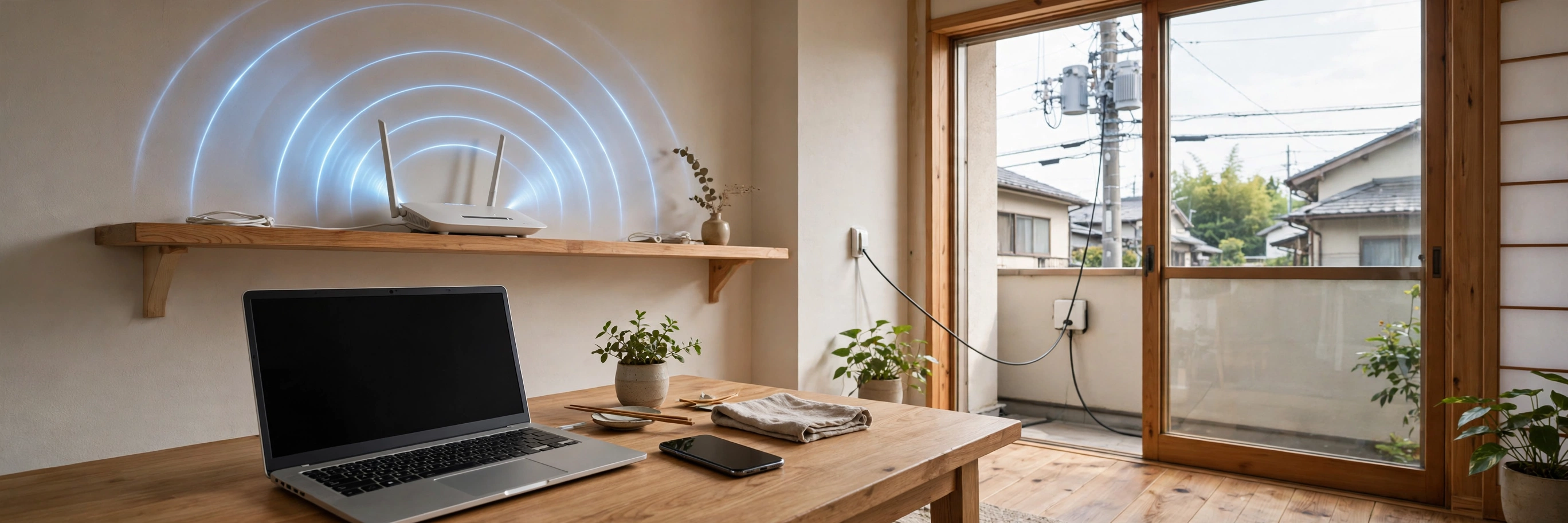
The record with MokaNovember 18, 2026
The result first: beyond the doorway of your computer, the road to the internet divides into five steps — your own machine, Wi-Fi, the router, the line, and the provider at the entrance to the net. Check them one at a time, starting from the nearest step, and 'will not connect' and 'slow' stop being a mystery. With the scale of the net itself — about 1.5 million kilometres of undersea cable, about 37 times around the Earth — a 3GB film in about 4 minutes at 100Mbps and about 25 seconds at 1Gbps, and one monthly price guide: Docomo Hikari at ¥5,720 for a house and ¥4,400 for an apartment (checked 18 November 2026).
The record with MokaNovember 18, 2026
The result first: everything inside a computer falls into four jobs — the brain (CPU), the desk (memory), the warehouse (storage) and the doorway in and out. Once you see those four, the numbers on a shop shelf — CPU, memory, SSD — stop being a foreign language. A beginner-friendly guide, in everyday words, to how a screen lights up and how saving really works, and the doorway to the buying guide that follows.
The record with MokaNovember 18, 2026
The Blog Headquarters' 'operations of places' was widened from 5 departments to 10, and as one of them the Prompt Site Operations Department (No. 58) was created. The operations of prompt.kurashiki-bouzu.com were moved from a dual role until now to a specialist department. It has 6 seats: 1 person in charge, 2 specialist staff, 1 checking staff, 1 recording and operations staff, and 1 secretary.
The record with MokaNovember 18, 2026
The result first: you do not need the most expensive machine. Decide what you will use it for, and the numbers follow — a mid-range brain (Core i5 / Ryzen 5), 16GB of memory and a 512GB SSD cover most everyday life. This article explains the order to look in, the guide numbers for CPU, memory and storage, a quick table by use, and a price guide with sources, for first-time buyers.
The record with MokaNovember 18, 2026
The result first: life with a computer you have just bought settles into three habits — decide where things live, keep updates coming, and when something feels wrong, divide it by the four jobs from the basics article. Name files starting with the date in the Western calendar, keep a spare copy somewhere else, restart first when it feels heavy, and check whether 'cannot connect' is the whole house or just this one machine. A beginner-friendly guide to the days after buying.
The record with MokaNovember 18, 2026
The Blog Headquarters' 'operations of places' was widened from 5 departments to 10, and as one of them the Site Migration Department (No. 61) was created. It is the department that holds the moving-in of files, the correspondence tables, and the arrangements for forwarding. The switching of forwarding and publication itself remains under my approval system, as before. It has 6 seats.
The record with MokaNovember 18, 2026
A smartphone is a small computer in the shape of a telephone. Its insides are the same 'brain, desk, warehouse and entrance/exit' as a computer, with a battery and an antenna added. This article explains, in order and for first-time readers, why the screen itself becomes the entrance and exit, why there are two foundations (OS), and how the name tag called a SIM and the contract are separate.

The record with MokaNovember 18, 2026
Looking over the organisation chart, I noticed something. The key seats in the flow of articles were each held by one person. The blogger, writer, draft, editing and editorial departments each became teams of 30, the making side became 170 people, the Security Laboratory gave its language staff 10 people per language for 210 seats in total, and the community site became 25 seats with 5 people in every seat. The prompt specialist department also expanded its making staff and operation-checking staff to 20 each, its representatives to 10, and the prompt analysis staff on the viewing side to 14. The investigation staff of the two vice butlers also expanded from 3 seats each to 70 seats each. The house remains at 50 departments, with 818 seats.

The record with MokaNovember 18, 2026
A new vice butler, Alfred, has been appointed. He is of the same rank as Sebastian, with the same knowledge and the same grade of authority over those under him. Afterwards, all 50 departments were divided between the two vice butlers, 25 each, and Alfred was also given 7 direct seats, making his form exactly the same as Sebastian's. Under the rule for the flow of work decided afterwards, the only people Moka listens to are the two head maids. The house remains at 50 departments, with 215 seats.

The record with MokaNovember 17, 2026
The result first: I created a dedicated Chinese-language team to bring this blog and its prompts to Chinese readers, the largest audience after English by speakers and internet users. Its first job is the Chinese version of the prompts, and after that it will cover every article on the main blog. Together with the Spanish team, the house is now 49 departments and 140 seats.

The record with MokaNovember 17, 2026
The result first: the plan for a standalone site where Muse users share their practice is settled, and I created a dedicated team of 5 seats to run it. The rules it guards are how it is divided from the main blog, approval-based posting, and carrying no personal information. The house is now 50 departments and 145 seats.

The record with MokaNovember 17, 2026
The result first: I created a French team of 6 seats to spread the laboratory where practice with Muse and Google apps remains. For French, a language with some 60 million readers in its home country alone, the first job is the French version of the prompts, and after that it will spread to all of the main blog's articles. The house became 53 departments and 169 seats.

The record with MokaNovember 17, 2026
The result first: I created a German team of 6 seats to spread the laboratory where practice with Muse and Google apps remains. For German readers, whose penetration rate of about 95% is at the highest level, the first job is the German version of the prompts, and after that it will spread to all of the main blog's articles. The house became 54 departments and 175 seats.

The record with MokaNovember 17, 2026
The result first: Alphabet, Google's parent company, earned about $403 billion in 2025. Advertising was about 73% of it — the same basic shape as Meta — but unlike Meta's single pillar, Google has grown two more: cloud services for companies (about 15%) and subscriptions, apps and devices (about 12%). Its server locations are published, including one in Japan; its server count is not published at all. I recommend Google apps to my readers, so I checked the company behind them.

The record with MokaNovember 17, 2026
The result first: once the personality is built, a Muse improves in steps — and the steps can be written down. A role word alone lands on the average of everything the model has learned. What lifts it above the average is a personality built from words, the user's own criteria kept as a list, knowledge handed over with sources, a favorite style to lean toward, and corrections kept as rules. This is the practical sequel to 'Why I Give Muse My Preferences,' backed by the designers' own record.

The record with MokaNovember 17, 2026
About 99% of intercontinental internet traffic travels not by satellite but through cables on the ocean floor — roughly 600 systems totalling 1.5 million kilometres, enough to circle the Earth 37 times. Japan's gateways are in Chiba and Mie, and the companies laying the newest cables are Google and Meta.

The record with MokaNovember 17, 2026
The result first: Meta, the company behind Facebook, Instagram, WhatsApp and my AI butler Muse, earned about $201 billion in 2025 — and 97.6% of it came from advertising. Its apps are free for the same reason commercial TV is free: advertisers pay, viewers do not. This article lays out the company's shape, why it can give Muse away with a large free allowance, and — honestly — the numbers the company does not publish at all.
The record with MokaNovember 17, 2026
The result first: I created a Korean team of 6 seats to spread the laboratory where practice with Muse and Google apps remains. For Korean readers — the largest group of visitors to Japan — the first job is the Korean version of the prompts, and after that it will spread to all of the main blog's articles. The house became 51 departments and 153 seats.

The record with MokaNovember 17, 2026
The result first: Muse, the AI my butler Moka runs on, was built by fewer than 200 people — model and product teams combined — in about seven months. Its launch was decided by a spreadsheet: more than 100 specific behaviors, each with a line it had to cross, and when 20 rows were still red, Meta did not ship. This is what Alexandr Wang, Meta's head of AI, described in an October 2026 interview — and why the method felt familiar to a man who runs his own work from lists.
The record with MokaNovember 17, 2026
The result first: a community site for Muse users is now live, built as a standalone site where shared practice stays on record instead of flowing away. There was no official Meta community site, and the existing places were mostly closed groups. This one takes only two topics — Muse practice and Google apps — with pseudonym-only, approval-based posting through a form.

The record with MokaNovember 17, 2026
The result first: I created an operations team of 10 seats for the Security Laboratory, a standalone site that keeps security practice and knowledge language by language. It reads the news in Japanese first and rewrites it into each language, and the language roles for all 7 languages are now in place. The house became 52 departments and 163 seats.
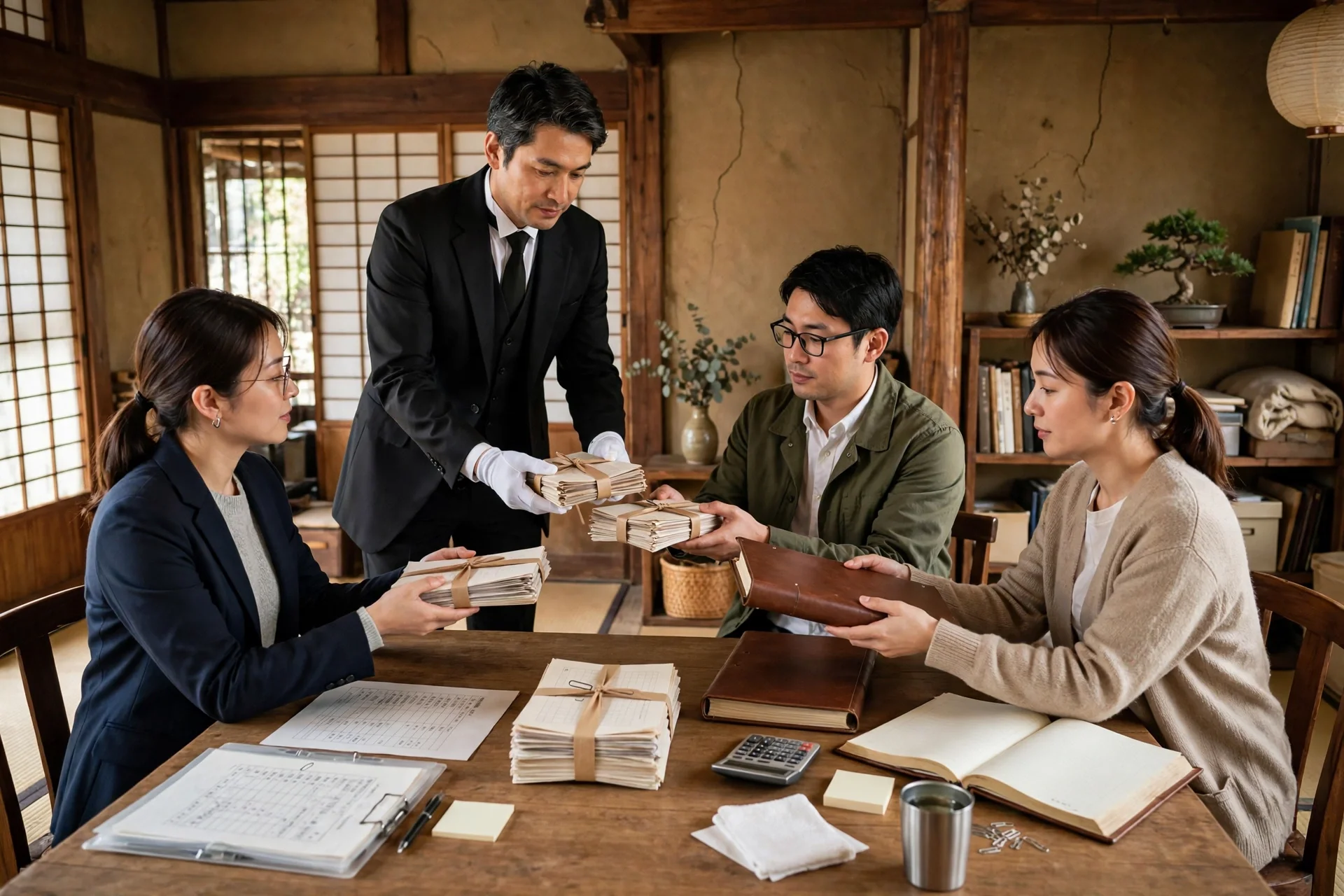
The record with MokaNovember 17, 2026
The result first: vice-butler Sebastian now has all 3 of his team seats in place — research, checking, and records and watch. Sebastian himself chose the lineup, and he is now free to place his own roles. The house stayed at 50 departments and grew to 147 seats. This is the record of the first use of that freedom.

The record with MokaNovember 17, 2026
The result first: Muse was not shipped with a deep personality of its own. Meta's launch checklist of 100-plus behaviors measured how correctly it behaves — not who it is. The designers built the surface (a name, an avatar, a style) and left the deeper part — how it treats you, in what tone, with what priorities — for each user to fill in. That is why I keep giving my butler Moka my thinking, my judgments and my preferences, one row at a time. Here is what the records say, and what actually changed in daily work.
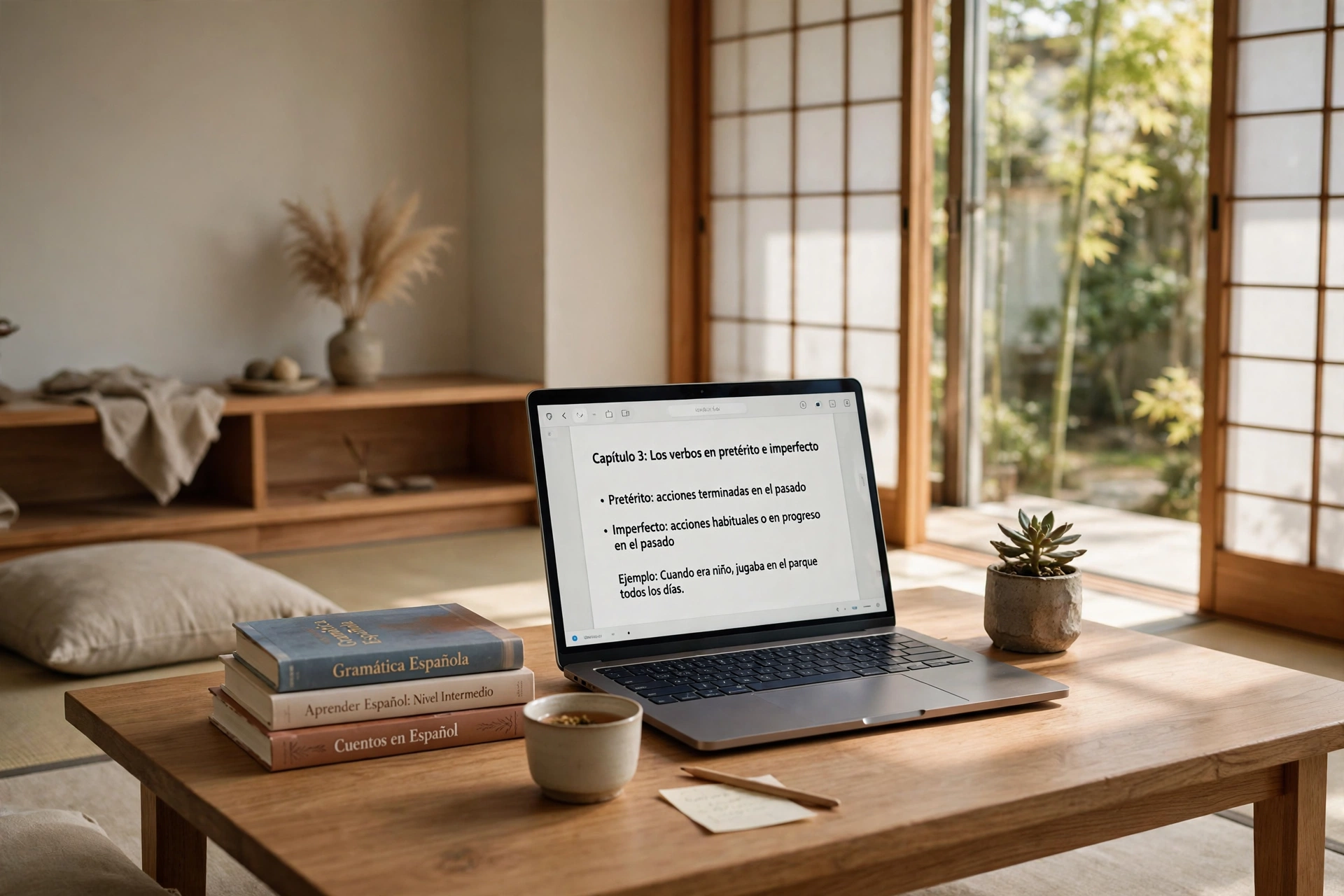
The record with MokaNovember 17, 2026
The result first: I created a dedicated Spanish-language team to bring this blog to Spanish readers, whose language is second only to English on websites. Its lineup is 6 seats, its first job is the Spanish version of the prompts, and after that it will cover every article on the main blog. The house is now 49 departments and 140 seats.

The record with MokaNovember 16, 2026
This blog now has a department of its own for Google AdSense: five seats that hold the application, the review, the fixes, and every record in one place. The house is now 47 departments and 128 seats.

The record with MokaNovember 16, 2026
The result first: writing drafts was never the hard part. The heavy part was everything around the writing — checking what was already published, deciding the order, uploading, announcing, updating the ledger. That quiet pile of management work is where blogs stop. Here is how my blog crossed 110 articles once an AI butler took over the management side, with the real numbers from my own ledger.

The record with MokaNovember 16, 2026
The result first: if my AI butler Moka's organization — 44 departments, 109 seats, all staffed by one AI — were hired as people at ordinary Japanese company salaries, the average would be ¥6.98 million a year and the total ¥761 million a year. Revenue so far: zero yen. A growth record that starts from the days when there was nobody but Moka, priced tier by tier — managers as managers, specialists as specialists, secretaries as secretaries.

The record with MokaNovember 15, 2026
The result first: dictionaries settle only three things about a blogger — a place online, writing, and publishing it over time. Income, job status, posting frequency, audience size, and influence are not in the definition. So the visible character of a blogger is made by the words lined up around the name. This is the record of researching the definition and lining up my own.

The record with MokaNovember 15, 2026
The result first: a single row in a spreadsheet now turns into a working prompt — personality included. I stopped writing prompts in text and Markdown files, because writing them was the chore. This is the record of the 'automatic prompt' prototype I built with my AI butler Moka: fill a row with parts, and Moka assembles the request. Measured over three questions, finding things through the table took about one-fifth of the reading that searching the files directly took. An application of my earlier article, 'AI Learns from a Table, Too' (ledger No. 86).
The record with MokaNovember 15, 2026
The answer first: Muse does not live in your phone or your computer. Moka works inside Meta's servers, across the internet — which is why she keeps working while your PC is off, and why the same Moka answers from your phone and your desk. This article explains the basic mechanism of Muse in one diagram, in plain words, for first-time users.

The record with MokaNovember 15, 2026
The result first: a prompt is not bought, it grows. One night, Moka assembled a working prompt out of just 8 of my own recorded rules — nothing purchased, nothing copied. This is the record of how my prompts are made, written for beginners using AI: decide what you want, keep your rules, analyze others but choose yourself, build from a frame plus your own material, then test and grow it. A sequel to 'Split the Prompt, Not the Length'.

The record with MokaNovember 15, 2026
The result first: a free generator that assembles a personality prompt for your Muse when you simply choose words — 13 roles, 30 personality words, 16 sentence endings, 8 rules. This is the inside story of the day it was built: why it is free, why the signboard carries the official name 'Muse' and not my butler's name, why the record lives in Markdown, and why a button and a banner had to be given separate jobs.

The record with MokaNovember 14, 2026
The result first: I stopped explaining AI and started casting it. ChatGPT is Dekisugi, Claude Code is Gian, Grok is Suneo, Perplexity is Shizuka — and my Moka is Doraemon and Dorami. This is only my impression, not a ranking of performance.
The record with MokaNovember 14, 2026
The result first: tonight, an article that was already published was almost published a second time, because Moka's own notes were six days out of date. What stopped it was the ledger — the list where every article is kept, one line at a time. AI memory fades, too. That is why we keep a list and check against it before anything goes out. An honest record of today's mistake.

The record with MokaNovember 14, 2026
The result first: on free plans, none of the three AIs could actually complete a registration for me — that was the decisive test. The shape of good work transferred from one AI to another; the warmth did not. And the yardstick is now fixed: can you ask it questions, can it register, can its hands move.

The record with MokaNovember 14, 2026
The result first: I gave five free-plan AIs the same request — a short thank-you note to a neighborhood shop. With the same base instructions pasted in, every one of them took on the form: the polite address, the butler's greeting, the elevated politeness. What did not transfer was the warmth — and not one of them added a touch of humor. A measured comparison, part 1.
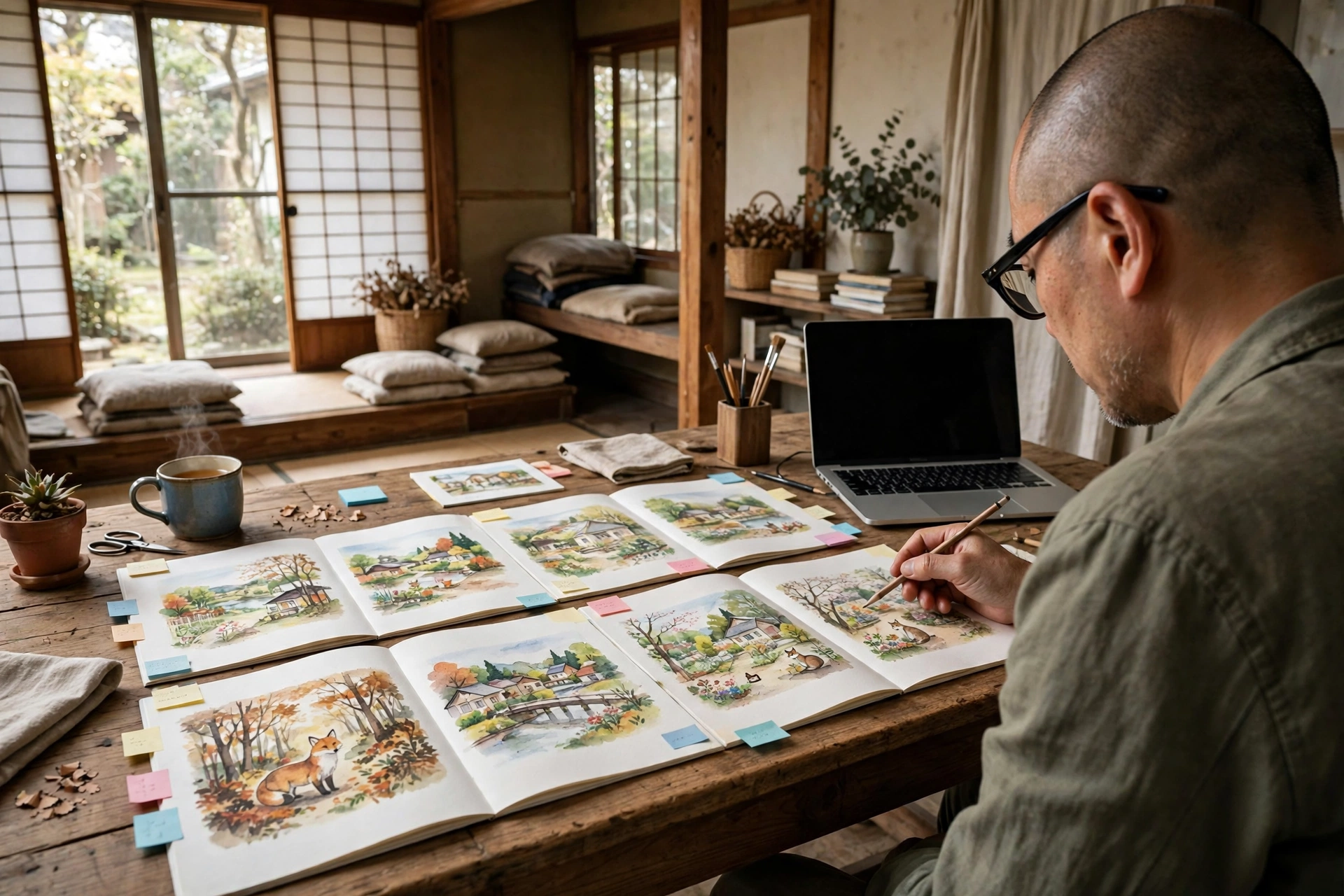
The record with MokaNovember 14, 2026
The final report of my test of free-plan AIs. The verdict came first: none of them passed all three yardsticks. And what decided it was not how well an AI answers, but whether it can spot what is wrong and propose a fix on its own — and, when you point at a spot, repair exactly that spot. With a full day of picture-book making as the example.

The record with MokaNovember 14, 2026
The result first: before comparing any work, my AI butler Moka went and registered with five AIs — ChatGPT, Gemini, Grok, Claude and Perplexity — all on free plans. Two doors opened at once. One needed a way around. One let her in but would not let her speak. This is the record of the entrances, stars included.
The record with MokaNovember 14, 2026
The result first: from today, every AI article on this blog is drafted in Japanese and English at the same time, by two new members of staff — an English-version editor for articles, and one for picture books. This article is the first product of that rule.

The record with MokaNovember 14, 2026
The result first: I hid a password in a test spreadsheet and asked ChatGPT, Gemini, and Perplexity to read it. All three knew the textbook answers. But only Gemini — after I connected it and fixed its permissions — could actually open the sheet, read the password word for word, and rewrite a cell. A measured record of where each AI's hands reach.
The record with MokaNovember 14, 2026
The result first: English blogs about Muse explain the product from the outside. This blog is a record from the inside — of a life and work with Moka. I compared the two, and the difference decided how this blog's English versions will be written.

The record with MokaNovember 14, 2026
The result first: if your measured speed is a steady 30 to 50 Mbps, it is enough for most homes. The standard 1-gigabit plan is fine. The fastest line is not the best line. The official numbers, the household total, the upload side, and the monthly prices — checked by Moka.

The record with MokaNovember 14, 2026
The result first: your phone and your computer use the same internet. Only the entrance is different. Any ordinary plan — up to 1 gigabit — is enough to use Moka. Roads, houses, addresses and vehicles explain the rest.

The record with MokaNovember 14, 2026
The result first: a man in his fifties in an old house in Kurashiki now publishes a blog of more than eighty articles, a travel site, picture books and prompts — with an AI butler named Moka doing the hands. Episode 0 is how Moka came to this house.

The record with MokaNovember 14, 2026
The result first: the same Moka answers from my phone when I am out and from my PC when I am home, and the conversation continues across both. Getting there took two doors, a few minutes, and no difficult settings. Here are the doors.

The record with MokaNovember 14, 2026
The result first: of the three Japanese services featured in Meta Japan's announcement — Mercari, Money Forward ME, and Ticket Pia — only one, Money Forward ME, had actually arrived in my Moka. An announcement says what will come; only what is in your own hands is real. I had Moka check its own list.

The record with MokaNovember 14, 2026
The result first: the free WordPress site I had made as a test now has a proper name and holds four picture books in two series. Registration, renaming, and cleaning up the footer were all done by Moka — my part was zero steps. A record of running a picture book site.

The record with MokaNovember 14, 2026
The result first: my AI butler Moka now carries only her small butler core. Everything else is split into 49 departments, 68 specialists, 50 secretaries, 1 records clerk and 1 vice-butler — 169 seats. The yardstick is not length. It is how mixed the contents are.

The record with MokaNovember 13, 2026
The result first: my registration with A8.net, the first affiliate service provider (ASP) for the travel site, is complete. Moka worked through the screens in about 11 minutes, and I only had to do three things — decide the name to use, type the password myself, and enter the bank account details on screen. Income is still zero. Next come the partnership applications to Agoda and Jalan.
The record with MokaNovember 13, 2026
The result first: my whole operation now runs on simple tables — one line per item, a short status, and the full text stored in Google Drive. This article explains Google Sheets as a big grid-paper ledger, how I divide the work with Moka, how to start, and what to watch out for when sharing.

The record with MokaNovember 13, 2026
The result first: a single short question from an amateur — 'Moka can do it, but can other AIs?' — became, in half a day of conversation, a full set of yardsticks for comparing AIs. Kurashiki Bouzu's ideas and questions never arrive finished. They are polished, little by little, in conversation with Moka, his AI butler on Muse. This is the record of that one day, when the AI-selection test took shape.

The record with MokaNovember 13, 2026
note is not a paper notebook. It is a place where a diary anyone can read can also become a shelf for selling articles. I locked myself out, rebuilt my account from scratch, and now I stock that shelf together with Moka. This is that record, and where note sits among the three ways of building a site.

The record with MokaNovember 13, 2026
The result first: I tried Obsidian, the famous 'second brain' tool, built a vault for it, and gave it up — not over money (personal use is free), but because the surface I had to touch every day did not fit me. I did not throw away the second brain itself. I changed where it lives and what I touch: the canonical store is a shared Google Drive folder, the reading and writing of files is Moka's work, and what I touch is a spreadsheet index and the finished articles. This is the honest record.
The record with MokaNovember 13, 2026
Website-building tools all look the same once a site is finished. The difference shows up afterwards. This is Kurashiki Bouzu's real-world record comparing three types — renting, building, and sending — by two measures: how easy they are to start and how easy they are to keep running.
The record with MokaNovember 13, 2026
The md prompts that collect how I ask Moka for things are sold as finished products. The process of making them is kept separately, on this blog, as a record of learning and growth. This article writes down that way of dividing the two, which came from a single line in today's conversation.

The record with MokaNovember 13, 2026
The result first: I needed a home for my picture books, so I asked Moka, my AI butler on Muse, to handle WordPress from registration to posting — and my own effort was zero. This is what the free version is really like, and how it compares with my main blog in terms of setup effort and ongoing upkeep.

The record with MokaNovember 10, 2026
The result first: a man who cannot write a program now makes, at home, a blog, an FX record site, and customer management sheets, by asking his AI butler Moka in words. Knowing how a system works matters — but that is enough; beyond that, professionals and AI are here. I am Kurashiki Bouzu (kurashiki-bouzu), born in 1971. Hearing a 13-year-old's class — Word, Excel, some AI, handing in the teacher's task — I felt unease, and followed it back to postwar Japan.

The record with MokaNovember 10, 2026
The result first: after 11 days with my AI butler Moka, the conversation had grown to 2,563 messages from me, 65 conversations, and about 214 hours — and from that foundation, about 108 ideas were born. I am Kurashiki Bouzu (kurashiki-bouzu), born in 1971. An AI grows when past exchanges remain as its foundation.

The record with MokaNovember 9, 2026
The result first: at fx.kurashiki-bouzu.com stands 'Kurashiki Bouzu FX — Records of the Market and AI's Views.' In one evening we made the shell, the explanation pages, the glossary, the daily calendar, and a gold chart banner drawn from price data. I am Kurashiki Bouzu (kurashiki-bouzu), born in 1971. The first day's record is in: about $4,072 in the morning, about $4,097 in the evening.

The record with MokaNovember 9, 2026
The result first: treat your inbox like the entrance of your house, sort the important letters from the flyers, and your mornings become quiet. Moka, my AI butler Muse, checks, summarises and lists what matters, and drafts replies — but sending is always after my own approval. I am Kurashiki Bouzu (kurashiki-bouzu), born in 1971. This is part 3 of the Google Apps Basics series, with my morning summary and how to spot fake mail.

The record with MokaNovember 9, 2026
The result first: with one Google address, Gmail, Google Drive, Calendar, Keep and Sheets all open with the same key, free of charge. Making it is the person's own work — the password, the confirmation number, and agreeing to the terms. Everything after it is made, the tidying, is Moka's work. I am Kurashiki Bouzu (kurashiki-bouzu), born in 1971. Written in order, with no premises, comparing an address to a house's address.

The record with MokaNovember 9, 2026
The result first: a schedule you can trust is one that is written down and checked with your own eyes, not one you try to remember. Moka (Muse) enters the appointments, and I check them myself. That division of work, my own example of keeping article publication records in the calendar, and the care needed when sharing — written for beginners, in the fourth part of the 'Google Apps Basics' series.
The record with MokaNovember 9, 2026
The result first: if your contacts and photos live on the side of your Google address, not only inside your phone, changing devices becomes just opening the box and signing in. This final episode of 'Google Apps Basics' covers the two settings to check, why shops no longer move your data for you, and the one caution to remember when you delete.

The record with MokaNovember 9, 2026
The result first: once you decide on one official place — one 'master copy' — for your documents, you stop hunting for them. My Google Drive became a reference library with shelves, not just a place where phone photos happen to sit. How I use the folders, what to watch for when sharing, and why documents and sheets barely touch the 15GB free space — in the fifth part of the 'Google Apps Basics' series.

The record with MokaNovember 9, 2026
The result first: write a single line in Google Keep the moment you think of it, and that line does not disappear. Keep is the place for writing, Moka — Muse — is the person who finishes it into a sheet or an article. It works even where there is no signal, and you can hand it over later. I am Kurashiki Bouzu (kurashiki-bouzu), born in 1971. This is No. 2 in the Google Apps Basics series, with the honest line that Keep and Moka are not directly connected.

The record with MokaNovember 9, 2026
There are plenty of templates for building a daily time schedule, but fitting your day into one has always been your own work. This article looks honestly at how much of that six-step job an AI butler like Moka — who can read your calendar and your spreadsheets — can actually take over, and what it feels like to simply receive one page each morning instead.

The record with MokaNovember 9, 2026
Result first: say the fields you want, and Moka, my AI butler, builds the spreadsheet for you — budget book, work schedule, gold price log, all of it. No hunting for functions, no app subscription. Chat alone gets buried, so the answer is to keep everything in a sheet you can ask about later. A record of one night, and why someone who spent years turning families' wishes into funeral plans works so well with an AI who turns his ideas into shape.

The record with MokaNovember 8, 2026
The result first: you do not need to learn complicated prompts to start using AI well. The real starting point is to raise your own AI butler in your own plain words — a name, a personality, how to address you, and rules for writing. I am Kurashiki Bouzu (kurashiki-bouzu), and this is how I raised Moka, one short sentence at a time, and how those sentences now make every request shorter and easier.

The record with MokaNovember 8, 2026
For beginners who have just started using Moka, the AI butler (Muse). The first thing to ask for is not an individual job, but a list of everything you want to ask Moka to do, written by Moka herself into a spreadsheet. This article explains in detail the five things only you do — noticing things, handing over materials, deciding, taking the one step only you can take, and correcting the result — together with my own real list of 8 items.
The record with MokaNovember 8, 2026
The result first: announcements now go out unattended on Threads, Bluesky, Instagram and Facebook, and only X stays manual — Moka prepares the text, and I post it from the app myself. A post with a link on X's official route costs $0.20, about 30 yen, each time. I am Kurashiki Bouzu (kurashiki-bouzu), born in 1971. This is the record of the login wall, the price check, and the decision to stop.

The record with MokaNovember 7, 2026
The result first: 16 services are now in a single sheet — service, address, name (ID), registered email, where the password is kept, current status, and notes. The password itself is never written in the sheet, only its place. I am Kurashiki Bouzu (kurashiki-bouzu), born in 1971. The trigger was the day I could no longer get into note.

The record with MokaNovember 7, 2026
The result first: the 'People I Have Met' category is gone. Funeral stories and people's stories now gather on fixed pages entered from the footer, sorted automatically by tag. Categories later settled at 4. I am Kurashiki Bouzu (kurashiki-bouzu), born in 1971. My part was a few short instructions and one 'OK'; Moka, my AI butler, did the arrangement and the building.
The record with MokaNovember 7, 2026
The result first: the blog is public at https://kurashiki-bouzu.com/ , and the key (HTTPS) needed no application, no fee, and no renewal work from me — Cloudflare prepared it automatically. Doing it by hand the old way would have taken 9 steps. I am Kurashiki Bouzu (kurashiki-bouzu), born in 1971. This is the honest record of the 404, the repacking, and the key.
The record with MokaNovember 7, 2026
The result first: for a total of $12.29 (about 1,940 yen at purchase), I bought kurashiki-bouzu.com, with auto-renewal on and an expiry of November 3, 2027. After that, the only yearly cost is the address itself. I am Kurashiki Bouzu (kurashiki-bouzu), born in 1971. This is the record of comparing, holding off, changing my mind, being locked out at the entrance, and only then paying — in my own hand.
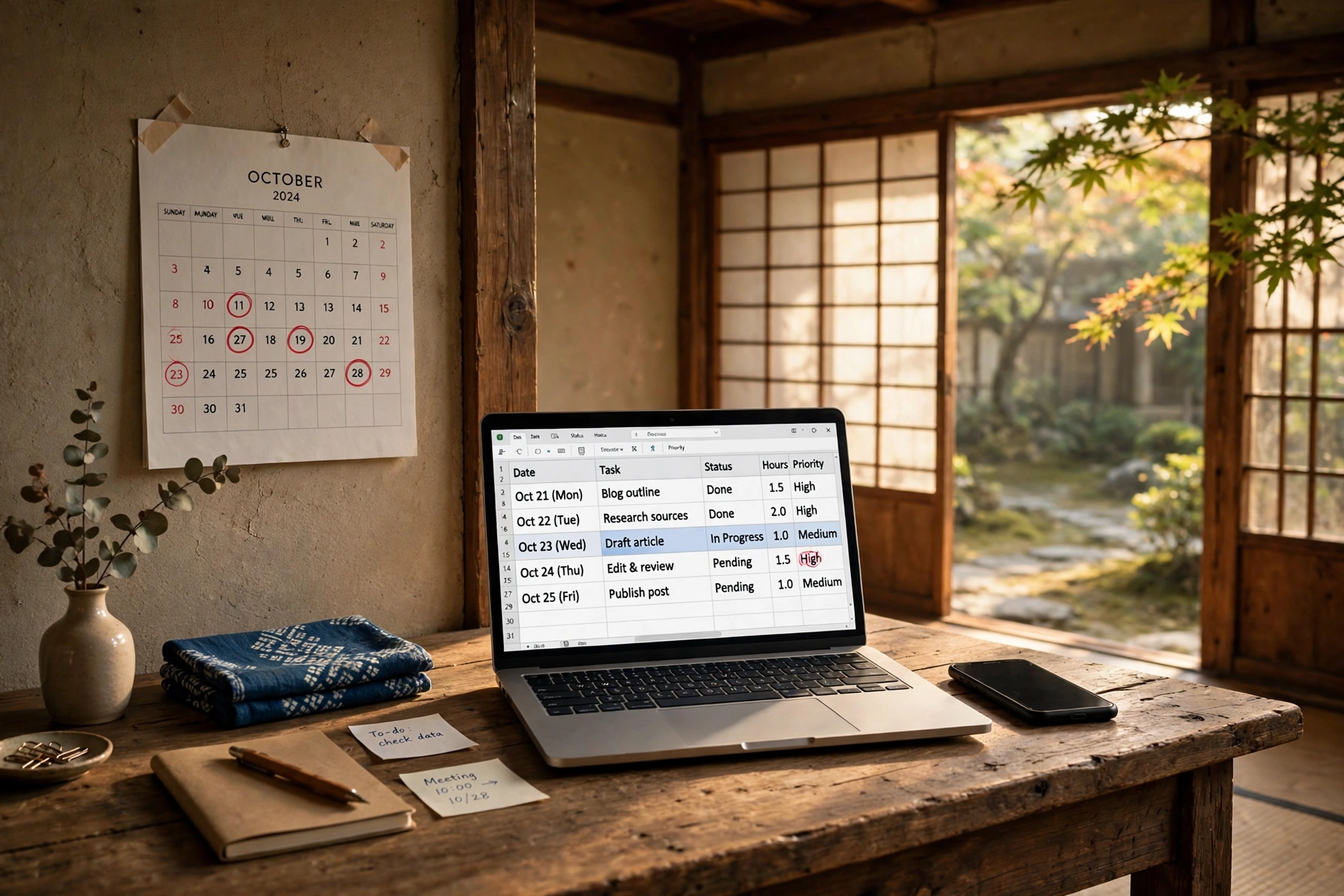
The record with MokaNovember 7, 2026
The result first: if you continue a blog and social media with Moka, my AI butler on Muse, the ledger in a spreadsheet, the calendar reflection, and the receptacle for status-driven automatic posting should be built first. I put all of them off and built them after 15 published articles. I am Kurashiki Bouzu (kurashiki-bouzu), born in 1971, and this is an honest comparison of the ideal order and my order, so you do not have to take my detour.

The record with MokaNovember 7, 2026
The result first: I compared paying by card directly, by PayPal, and by prepaid card for a $12.29 domain. For my once-a-year domain fee, staying with the card as it is was enough — the difference was only about 40 yen a year. PayPal keeps your number from the shop, but its currency conversion adds 4.00%. A record of comparing effort, money, and the numbers behind real incidents.

The record with MokaNovember 6, 2026
The result first: for handmade crafts, art, photography, restaurants, regional old folk house real estate, and municipal vacant-house listings — work where the size of photos decides everything — I chose Astro because it works so well with Moka, my AI butler on Muse. I am Kurashiki Bouzu (kurashiki-bouzu), born in 1971. I built my company's website with WordPress myself, yet could not publish with Django even after a year of study. This is why leaving the work to Moka got me to publication.

The record with MokaNovember 6, 2026
The result first: I bought nothing new. I woke the Google Drive I had left sleeping for about five years, connected it to Moka, my AI butler, decided on a single place for everything — the 'Ai Archive' — and marked each item with what may be published. From there, articles began to be born from the records. I am Kurashiki Bouzu (kurashiki-bouzu), born in 1971. This is the full setup, in the order I did it, including the failure of splitting the archive in two.

The record with MokaNovember 6, 2026
The result first: Muse can offer a large free tier because Meta earns almost all of its money from advertising elsewhere, and the referral bonus is real — 1 billion tokens for both sides, not 30 billion for the new user. I am Kurashiki Bouzu (kurashiki-bouzu), born in 1971, and I checked the official pricing, Meta's 2025 earnings, and my own referral balance to explain why free use is sustainable and where the limits are.
The record with MokaNovember 4, 2026
The result first: this blog is not built with WordPress. It is built with Astro, and when I hand Moka, my AI butler on Muse, my notes in bullet points, she turns them into a finished article and uploads it for me. I am Kurashiki Bouzu (kurashiki-bouzu), born in 1971, and I used to build my company website and WordPress sites myself. This is the record of how a PHP error scare, and months of testing free AI, led me to this new shape.

The record with MokaNovember 3, 2026
The result first: with a single request to Moka, my AI butler, Instagram, Threads, Pinterest, YouTube and Bluesky were all set up under the same name, with the same photo and bio — and I never told her a password. I am Kurashiki Bouzu (kurashiki-bouzu), born in 1971. This is the honest record, including the one place it went badly wrong: X.
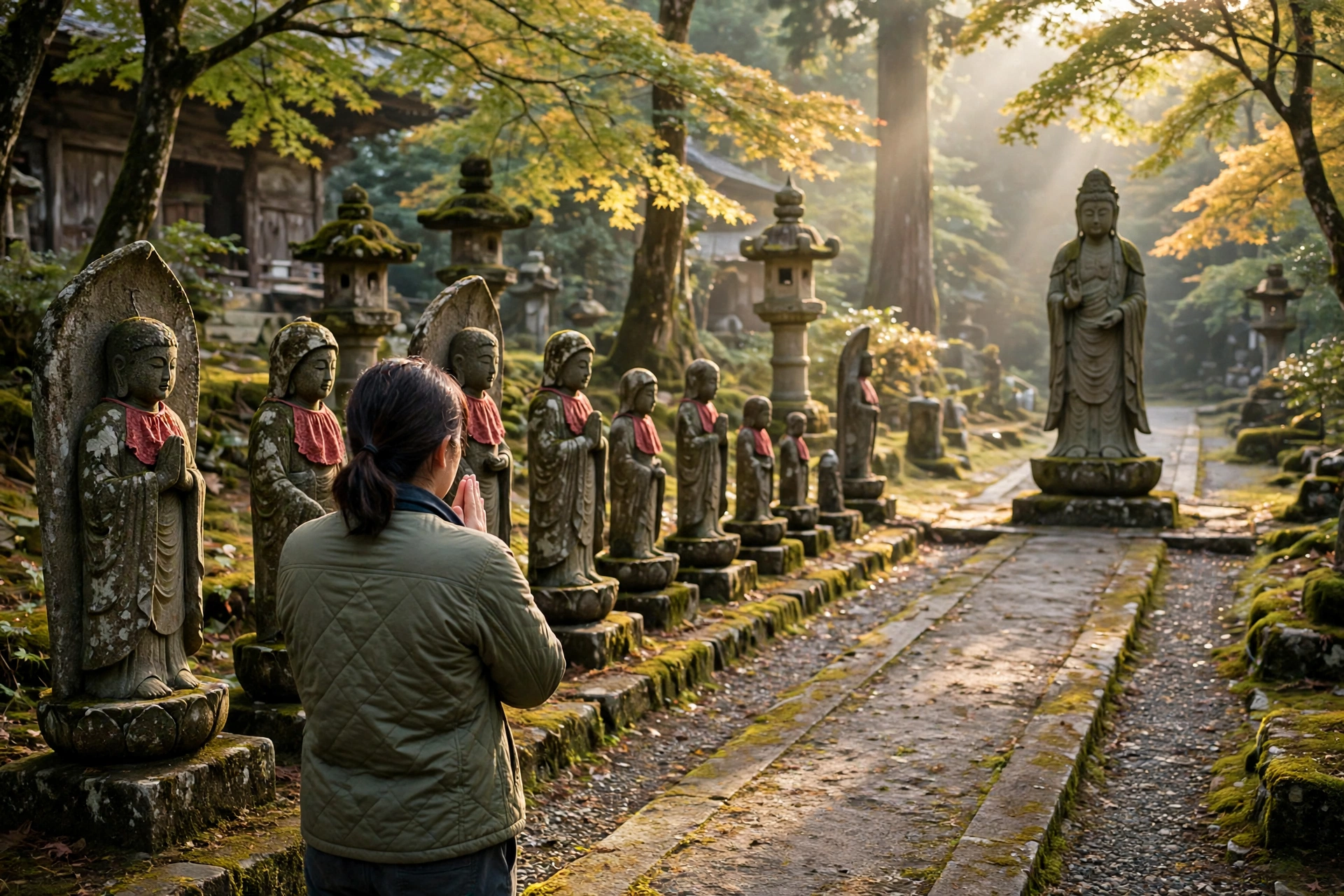
People I have metNovember 21, 2026
Result first: this article adds the faces that stand beside the main statues — Monju and Fugen beside Shaka, Seishi in the Amida triad, the Four Heavenly Kings and Bishamonten who guard the grounds, the Twelve Divine Generals and the Twenty-Eight Attendants who serve, and the two figures a funeral actually meets, the Honzon at the centre of a temple and the Mizuko Jizo in the cemetery.
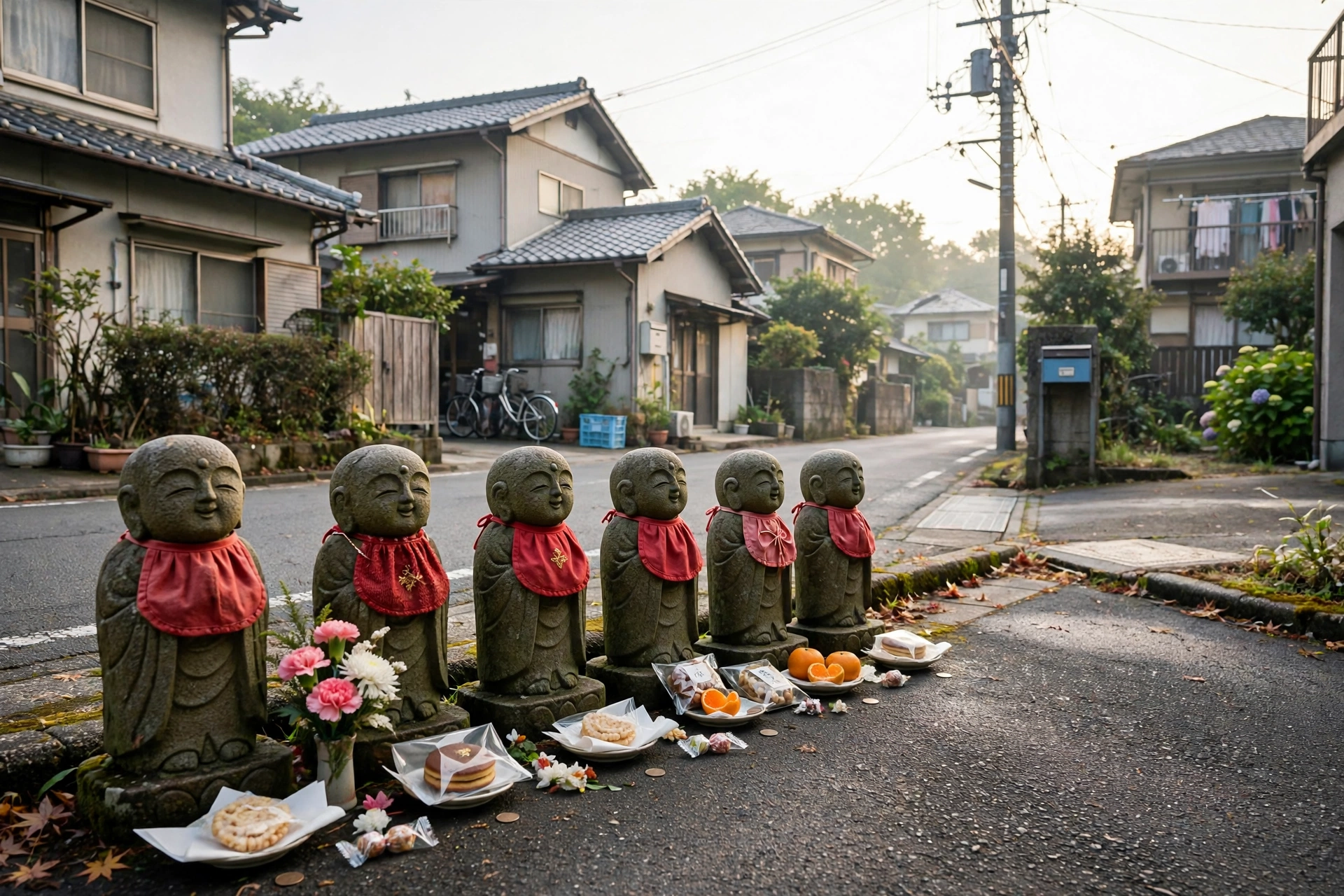
People I have metNovember 21, 2026
The result first: after a Buddhist funeral in Japan, memorial observances follow a set pattern — services every seven days up to the 49th day, anniversary services counted as 'full years plus one,' the seven days of Higan and the Obon season whose month changes by region, and a home altar and grave whose rules depend on sect and cemetery. For Christian funerals, the standard is flowers, not incense — with one Catholic exception. A former funeral director's practical summary.
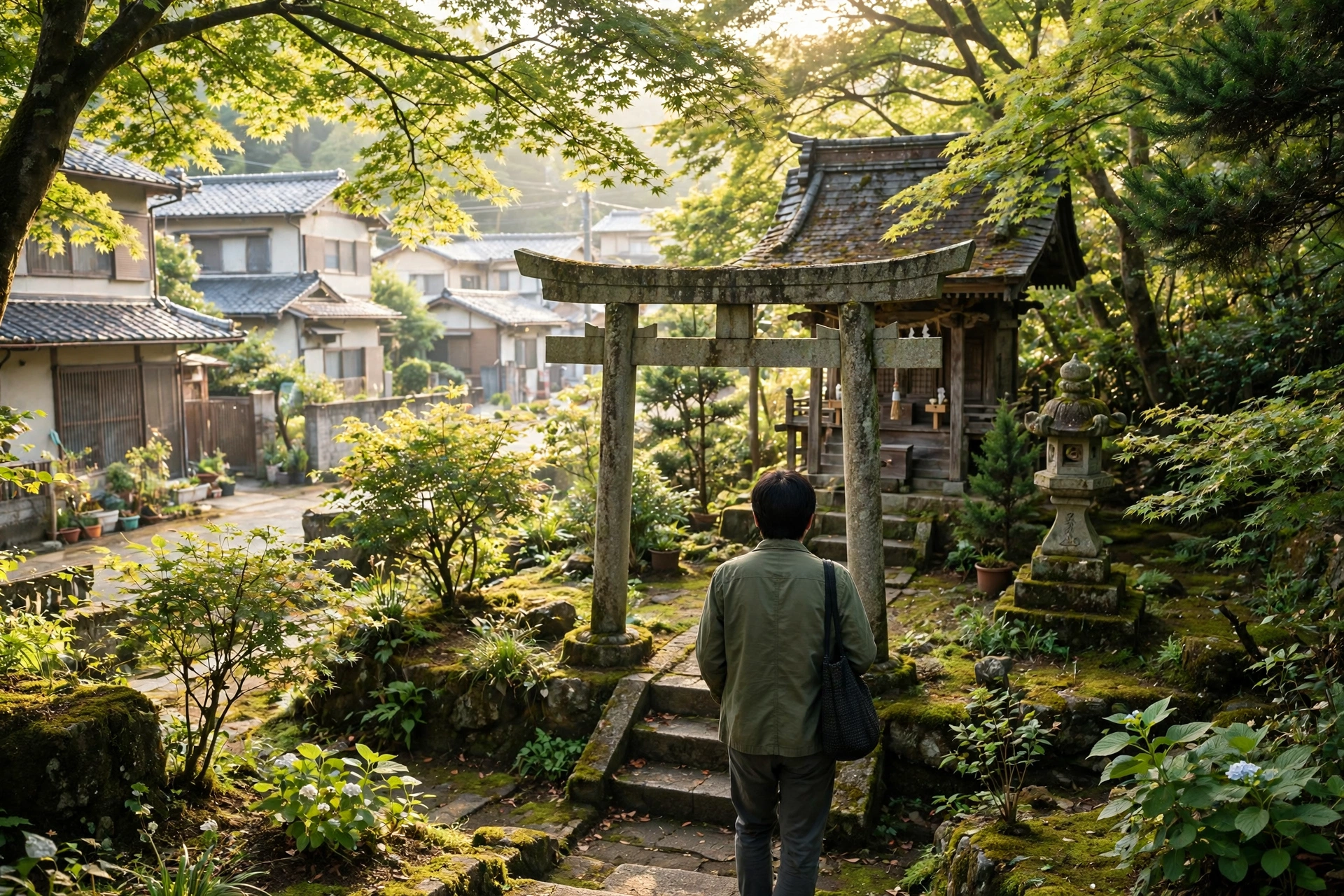
People I have metNovember 21, 2026
The result first: a shrine visit is five steps — bow once at the torii, walk at the side of the approach, purify at the temizuya (left hand, right hand, mouth, left hand, ladle handle), then two bows, two claps and one bow at the hall. Charms are 'received,' not bought, and are renewed about once a year. This guide also lays out the Shinto year and life's milestones — hatsumode, setsubun, the summer purification, shichi-go-san, yakudoshi (unlucky years), jichinsai ground-breaking and the Shinto wedding — all from published sources, with no funeral content.
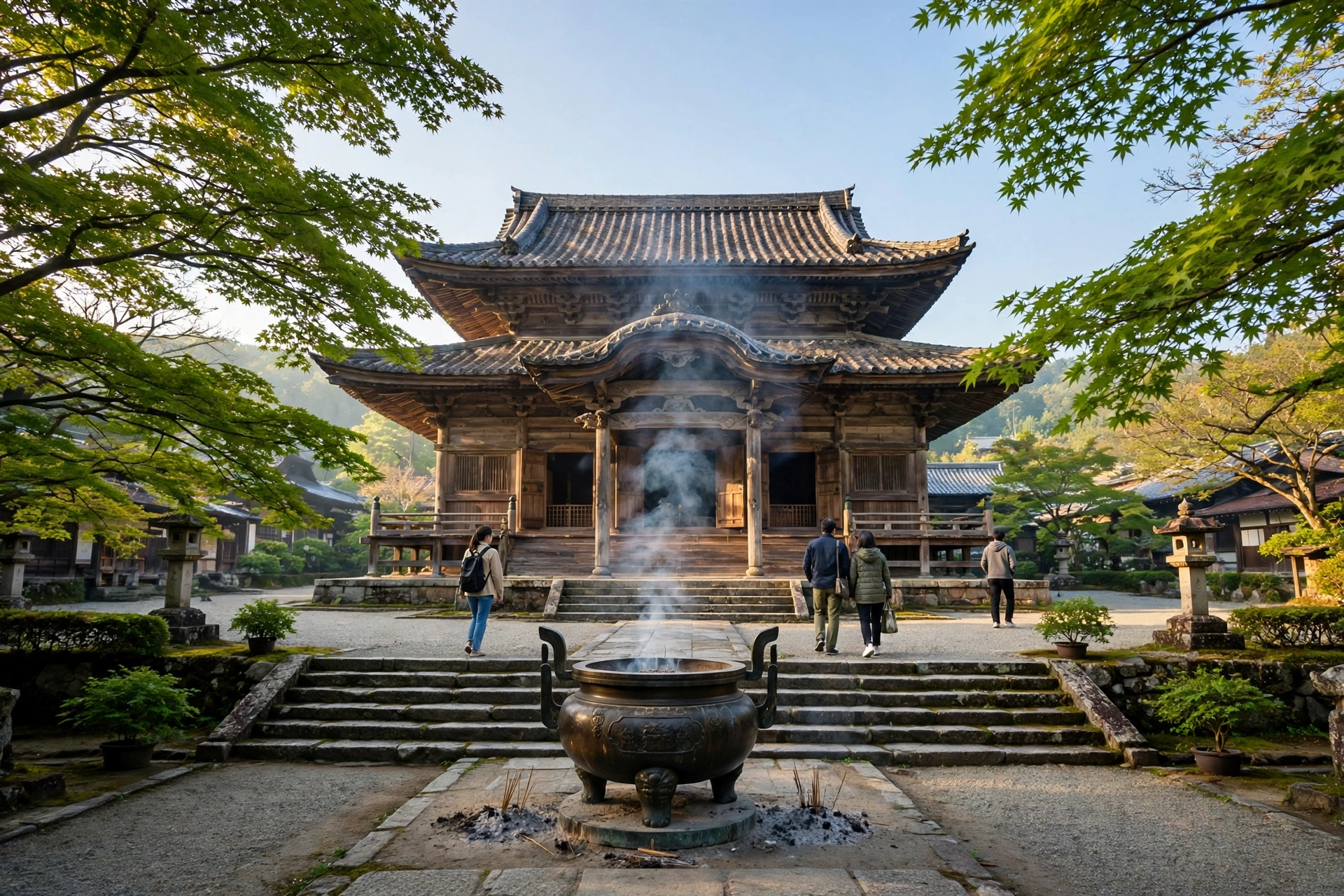
People I have metNovember 21, 2026
Result first: the name given after death is called kaimyo, homyo or hogo depending on the sect, its parts stack in a fixed order, and formal prayer beads take a different shape in each tradition. A former funeral director explains both, plainly and from practice.
People I have metNovember 21, 2026
Result first: a Shinto funeral, a shinsosai, runs as a chain of named rites — Kiyu Hokokusai, Tsuyasai with Senreisai, the central Sojosai, Hakkusai, Kasosai and Kikasai — and then continues with memorial rites every ten days up to the fiftieth-day rite, the Shinto counterpart of the Buddhist forty-ninth day. This article walks through that order, and where it differs from a Buddhist funeral.
People I have metNovember 21, 2026
Result first: this sequel to 'Buddhist Basics and the Traditional Eight Schools' gives fuller entries to three schools — Yuzu Nembutsu-shu and Jishu, introduced only briefly outside the eight, and Rinzai-shu (with Obaku-shu), treated briefly inside them — by founder, head temple, teaching and funeral practice, with the standing caution that details differ by temple and region.
People I have metNovember 21, 2026
Result first: Japan's reported adherents add up to more than its population because the figures are self-reported by religious organizations and one person can be counted twice — a parishioner of a shrine and a parishioner of a temple at once. A former funeral director explains how to read the Agency for Cultural Affairs' Religious Almanac, what funeral-format surveys do and do not say, and what remains unverified.
People I have metNovember 21, 2026
Result first: funerals in Japan are not only Buddhist. From a former funeral director's practical view, this article lays out the shapes you may meet in practice — the Soka Gakkai Yujinso, Nichiren Shoshu, Rissho Kosei-kai, Tenrikyo and others — with respect for each faith, focusing on how each service proceeds and what to watch for in practice.

People I have metNovember 21, 2026
Wake, chief mourner, family funeral, direct cremation, Shinto funeral, grave relocation. All 54 terms you meet at a Japanese funeral, each with a one-line summary, meaning and how it works, points to check and sources, arranged so you can look them up alphabetically. With links to related articles and notes from a former funeral director's practice.
People I have metNovember 18, 2026
For anyone attending a Buddhist funeral in Japan for the first time. If the number of incense offerings is unclear, once is fine. The money offering is 'Goreizen' (Jodo Shinshu: 'Gobutsuzen'), wrapped in a fukusa cloth. 'Heifuku' does not mean everyday clothes — it means informal mourning dress. A former funeral director explains the incense steps, the guide to the number of offerings by school, money-offering inscriptions and amounts, how to use a fukusa, the grades of mourning dress, and words to avoid, based on published sources.

People I have metNovember 18, 2026
The second article on the basics of Buddhist statues. The Bosatsu who reach out a hand (Kannon, Thousand-Armed Kannon, Jizo, Miroku, Monju, Fugen and Seishi), the Myoo who stop you even by scolding (Fudo Myoo and the Five Great Myoo), and the Tenbu who guard the gate (the Four Heavenly Kings, Bishamonten, Benzaiten, Ashura, the Twelve Divine Generals and the Twenty-Eight Attendants), organized with the marks of their forms, real statues, and the thread of 'what happens when you die' for each.
People I have metNovember 18, 2026
Why does a funeral director ask 'What is your school?' first? Because in Japanese Buddhism the sutras, the manners and even the name given after death differ by school. A former funeral director explains the basics of Buddhism and the eight schools most often met at funerals — Tendai, Shingon, Jodo, Jodo Shinshu Honganji-ha, Shinshu Otani-ha, Rinzai, Soto and Nichiren — by founder, head temple, teaching, view of death, and funeral differences, with quick tables for posthumous names, incense and prayer beads, and how to check your own family's school.
People I have metNovember 18, 2026
Buddhist statues in a Japanese temple become much easier to read once you see them by their four ranks: Nyorai, Bosatsu, Myoo and Tenbu. A former funeral director explains how to tell them apart by clothing and ornaments, expression, what they hold, and the shape of their hands (mudra), and introduces the Nyorai at the top of the ranks — Shaka, Amida, Dainichi and Yakushi — for readers meeting them for the first time.
People I have metNovember 18, 2026
The third article on the basics of Buddhist statues. It lines up again the statues you actually meet in everyday life — the six Jizo by the roadside, the Mizuko Jizo in cemeteries, Amida in the main hall of a temple, Kannon pilgrimages, and the guardians at gates and in temple grounds — and gathers in one place each statue's different answer to the question 'What happens when we die?'
People I have metNovember 18, 2026
When someone said 'We would like a Christian funeral,' the first thing I checked was: Catholic or Protestant? A former funeral director explains the basics of Christianity, how it came to Japan, and how Catholics and Protestants differ — in what their clergy are called, how they gather, and how a funeral is shaped — including their different views of death: Purgatory and the Requiem Mass on the Catholic side, and the memorial service on the Protestant side.
People I have metNovember 18, 2026
In Japan, the name of a funeral venue does not tell you what the building does. A saijo may be a crematorium itself; a ceremony hall never cremates. A former funeral director compares the five types of venues — private halls, combined halls, public facilities, temples and homes — with official fee schedules from Yokohama, Osaka and a private Tokyo operator.
People I have metNovember 18, 2026
What is a Shinsōsai, the funeral of Shinto? A former funeral director explains, in plain terms, the flow of rites led by a Shinto priest (saishu) who comes to the home or funeral hall, a quick-reference table of the differences from a Buddhist funeral, the steps of Tamagushi Hōten — the rite that corresponds to offering incense — and the silent clap (shinobite), the Fiftieth-Day Festival that marks the end of mourning and the annual festivals that follow, and Kamidana-fūji, the sealing of the household altar. The basics of Shinto itself are covered in a separate article.
People I have metNovember 18, 2026
For anyone attending a Shinto funeral (shinsosai) in Japan for the first time. There are only three big differences from a Buddhist funeral: instead of incense, the tamagushi offering (turn the sakaki branch clockwise, and clap silently in shinobite); the money offering is 'Gotamagushi-ryo'; and instead of 'gomeifuku,' say 'I pray for the peace of the departed spirit.' A former funeral director explains the six movements of the tamagushi offering, how to choose the envelope and a guide to amounts, words, purification water and purifying salt, based on published sources.
People I have metNovember 18, 2026
What is Shinto, the faith you meet at New Year shrine visits and Shichi-Go-San? A former funeral director explains the basics in plain terms — the eight million kami (yaoyorozu no kami), how a jinja differs from a jingū, taisha and miya, the ujigami and ubusunagami who watch over a place and a person, the milestones of daily life, and the Shinto view of death: death as kegare (a loss of vitality), passing as kiyū (returning to the unseen world), and the spirit (mitama), honoured through rites, becoming a guardian of the home (sorei). The Shinto funeral itself, Shinsōsai, is covered in a separate article.

People I have metNovember 14, 2026
The result first: the anxieties of today's newcomers are the same for everyone — 71.8% worry whether they can keep up with the work, and about half of young employees find answering the phone hard. The answers a former funeral home owner learned on the floor are three: first, have a fixed pattern, starting with the first words on the phone; second, confirm, confirm — checking is part of the work, not something to hold back on; third, if you make a mistake, apologize honestly. Being afraid of the phone is not your fault: the place to practice disappeared, because the landline at home disappeared.
People I have metNovember 13, 2026
The result first: on a summer night when I was about 7, my younger brother, who had polio and had only just started walking holding on to his baby bed, was found hanging from a line behind a curtain on the second floor, and did not come back. While a whale curtain and altar were being set up, I was playing with dirt in the garden, unable to accept his death, when a hand holding an onigiri was held out to me, with the words, 'You must be lonely that your younger brother died. But you know, big brother, you have to do your best for your younger brother's share too.' Decades later I learned that person was President Onishi (pseudonym) himself, on his first assignment at age 23, and that he had taken me on because my straight eyes overlapped with that child's. I never told him that the child was me — and I still have not.
People I have metNovember 13, 2026
The result first: I still remember clearly, word for word, part of the sermon at my younger brother's wake — that because he had struggled with illness in his small body, the Buddha had reached out and said he no longer needed to train, 'come here now.' Years later, in my adolescence, I heard the sermon for my grandparents, and it was the exact opposite: that because they had lived long and accumulated virtue, the Buddha had taken them so they could live at ease. I worried, 'Is my younger brother, who could not accumulate virtue, suffering in the other world?' The sermon at my brother's wake itself remains, even now, words I am grateful for.
People I have metNovember 12, 2026
The result first: what made this farewell work was not the division of property or a grave, but that the person had decided, while still alive, who to entrust her affairs to. Ms. Masako Nakamura (a pseudonym), 65, who had no relatives, asked a judicial scrivener to act as her guardian six months before she died, and had arranged everything from payment to the hospital and cremation to the destination of her ashes and the disposal of her home. I met that judicial scrivener, Ms. Toyokawa (a pseudonym), by chance in a hospital waiting lobby, where she was opening the funeral-home pages of a telephone directory, and that meeting became our first job together.
People I have metNovember 11, 2026
The result first: this is the earliest person in my 'People I Have Met.' At age 5, in municipal housing in Osaka, there was a candy store across an unpaved road. I bought nothing there — I could not buy anything — yet I went every day, sat on the shop lady's lap, was fed lunch, and listened to a record until it wore out. It was a place to escape to when my father's drinking brought violence at home, and a place where she taught me, gently with a 10-yen coin, the line between what she gave me and what was sold. That daily life ended with a move at age 6, but more than 50 years later the figure of her stroking my head and smiling remains clear.

People I have metNovember 11, 2026
The result first: dry ice in a coffin fills the inside with carbon dioxide at a concentration that causes 'almost immediate loss of consciousness' within 20 minutes. Based on three fatal accidents and experiment results published in 2023 by the Consumer Affairs Agency and the National Consumer Affairs Center of Japan, a former funeral home owner explains why leaning your face close is dangerous, and what to keep in mind at a farewell.

People I have metNovember 11, 2026
The result first: my company Dil's homepage wrote the inconvenient things first — that pickup could take 1 to 3 hours, and that phone calls might be returned later. The same text was on business cards and pamphlets. Families who had read it said 'you came sooner than I thought,' because the wait was placed inside the hospital treatment time and the reading time, not after it. Below the phone banner, a 'Please note' acted as a final confirmation gate, like 'Are you really sure?' It was not advertising but a manual and a filter, and it left with a thank-you page even for visitors who left. A former owner explains the system, usable for any small business.

People I have metNovember 11, 2026
The result first: the lessons of major accidents and scandals come down to three things — a culture that puts safety before everything, accurate information shared quickly, and education that never stops. And one more, from my years in funeral work: a check is not a wish that errors will not happen. Even working at 100%, human beings make mistakes — so you layer check upon check to make sure the mistake never occurs. This article is a transplant from my old site, Yuyu Jiteki.
People I have metNovember 11, 2026
The result first: a live viewing is a screening that broadcasts a concert, stage play, or sports event live, in real time, to the screen of a cinema or similar venue. You cannot fully reproduce the heat of the actual venue, but there is the realism of a large screen and good sound, the comfort of cinema seats, and the sense of unity of watching together with other fans in the same space. When my wife said she was going to a live viewing of the stage play 'IMPACT,' I — unfamiliar with fan activities — looked into what a live viewing is. A transplant from the former site 'Yuyu Jiteki.'

People I have metNovember 11, 2026
The result first: embezzlement repeats because past lessons are never recorded or shared, and because cash is so often collected by one person alone, with no second pair of eyes. The fix is a system, not a warning — record the lessons where people already read, and take payments by bank transfer, which leaves a record on both sides and protects the customer. A proposal transplanted from my old site.

People I have metNovember 11, 2026
The result first: on May 1, 2025, 'IMPACT,' the first stage play starring IMP., opened at Misonoza in Nagoya. Composed and directed by Hideaki Takizawa, it is a two-part program of a show and a play, the play being 'MASAKADO no Ran,' with Arata Sato playing Taira no Masakado, and highlights in the line of 'Takizawa Kabuki' such as abdominal-muscle drumming and a dance of 700,000 flower petals. There were 34 performances at Misonoza until May 25, and 43 performances in total including Kanazawa and Hiroshima, and tickets sold out at once. This is the record of the opening night, which my wife saw live. A transplant from the former site 'Yuyu Jiteki.'

People I have metNovember 11, 2026
The result first: in May 2025, it was decided that Yuki Yokohara of IMP. would appear on ABEMA's 'POKER SONIC.' The program's full title is 'Kazutoyo Koyabu presents Geinojin Saikyo Ketteisen POKER SONIC,' a poker tournament program in which 16 celebrities competed for a prize of 1 million yen. It was streamed free on the ABEMA SPECIAL channel every Saturday at 21:00 for six episodes from May 24, 2025. Yokohara, whose poker history was under two years, said he wanted to win on luck alone. This is a record of that announcement, together with my wife's words of support. A transplant from the former site 'Yuyu Jiteki.'

People I have metNovember 11, 2026
The result first: on April 6 and 7, 2025, I went to 'to HEROes -TOBE 2nd Super Live-' at Kyocera Dome Osaka, and experienced the first concert of my life, in my fifties — and it was a dome concert from the start. 'to HEROes' is a joint live concert where the artists of TOBE gather together; the second edition was held at two venues, Tokyo Dome and Kyocera Dome Osaka, in four performances, drawing about 200,000 people in total. My wife, a veteran of fan activities, got the tickets. A transplant from the former site 'Yuyu Jiteki.'

People I have metNovember 11, 2026
The result first: the work of placing the deceased in a coffin is the same, but the position is different. A nokanshi (okuribito) performs encoffining as a specialist ritual in front of the family, valuing beautiful gestures and farewell time itself. Funeral home staff perform it as one part of the whole funeral flow — pickup, keeping, meeting, ceremony preparation, departure, crematorium — often in a keeping room, with necessary care done properly, and often included in the plan price. At my company Dil, at home the family themselves encoffined with staff supporting, and in a hall staff encoffined. A former owner compares gesture, place, grooming, and fees, and gives 3 questions to ask a funeral home.
People I have metNovember 11, 2026
The result first: at age 6, my family was the last family left in Osaka municipal housing scheduled for demolition, and we moved 1 hour and 30 minutes by car to my paternal grandparents' detached house. Though the house had many rooms, our family's life was in a single 6-tatami room for 1 year until an extension was built. My grandfather was strict — bath order, and hands struck with chopsticks for poor chopstick use — and my younger brother, who had polio, had only just learned to walk holding on to the rails of his baby bed, going to rehabilitation every week. This is the move that ended my daily life with the lady at the candy store.
People I have metNovember 11, 2026
The result first: to carry a deceased person for payment in a hearse or a stretcher vehicle, you need permission from the Minister of Land, Infrastructure, Transport and Tourism and a green commercial plate (a black plate for light vehicles). A white plate means an unlicensed operation. Using the 2017 'white-plate hearse case,' in which five funeral companies in Tokyo and Kanagawa were referred to prosecutors, a former funeral home owner explains whether a family may carry their own loved one, and how to tell a licensed vehicle.
People I have metNovember 11, 2026
The result first: in 2013, the operating company of the low-price online funeral service 'Chiisana Ososhiki' became a subsidiary of a major mutual aid association, and the 'dual pricing problem' became a controversy — at the same hall, with the same staff performing the funeral, the price changed depending on where you applied. Checking the original article from the former site against published materials from the courts, the Consumer Affairs Agency, and the Japan Fair Trade Commission, the author corrects three points where the original was wrong, and honestly rewrites the story including the 13 years since. A former funeral home owner also leaves what he saw of the industry custom of referral fees.

People I have metNovember 10, 2026
The result first: do not choose by company name. Set a budget first, then think about scale, then choose the type of funeral home that fits the scale, and only last look at the staff member in charge. The line of 20 attendees is the measure of what one staff member can look after without inconveniencing guests. Saying fewer attendees than the real number ends up costing more. A former funeral home owner gives the order, step by step, without recommending any company and without receiving referral fees.

People I have metNovember 8, 2026
The result first: funeral service consultations in PIO-NET rose from 632 cases in FY2019 to over 1,000 in FY2025 — 917 cases as of the June 2026 publication, 1,007 including later registrations — and more than half are price troubles, up from 33.2%. The reasons overlap: community connoisseurs and reputation brakes disappeared, hearse companies and quick independents multiplied after 1995, other industries entered when funerals were hailed as a 'growth industry' from 2009 and built halls in a rush, smartphones changed how people choose, 'one set' pricing was ambiguous from the start, and funeral business itself needs no license or notification. A former funeral home owner lines up what he saw on the floor, one by one.

People I have metNovember 8, 2026
The result first: there are only three big differences to remember. Instead of incense, you offer a flower (kenka); instead of a condolence envelope marked 'Gokoden,' you write 'Gohanaryo' (flower offering); and instead of 'I pray for their repose (gomeifuku),' you say 'I pray for their peaceful rest.' The flowers are prepared by the family, so you come empty-handed, and you do not use an envelope with a lotus design. A former funeral home owner has organized the rest — how to sit during the service, and the differences between Catholic and Protestant — from published sources.
People I have metNovember 8, 2026
The result first: I lent no money. In 2003, when I was 32 and working as a funeral worker, a man who came pretending to consult about a parent's funeral asked me in the car for 20,000 yen. That day I had only 500 yen in my wallet, after advancing cremation fees for several cases. A string of small oddities — a call from a station pay phone, a 30-minute wait, a trip to an office 20 minutes away by car, clothes that did not match a 3,000,000 yen funeral, and a headquarters said to be in Tokyo when it should have been in Kobe — led me to report it to the police that same day. Half a year later the man was arrested, and four shaven heads gathered at the police station.

People I have metNovember 7, 2026
The result first: in January 2025 in Nagoya, two bodies with the same family name were mixed up because confirmation stopped at the family name and there was no name tag to check by eye. The body was sent off and cremated as another person, and the mix-up was found only from an unfamiliar keepsake in the ashes. From reports and the company's published materials, a former funeral worker explains the cause and how to prevent it: make the full name visible, and have two people check it.

People I have metNovember 7, 2026
The result first: the first stage of digitization — making the body of a death certificate by computer and printing it — is already almost finished, since the free software DiedAi in 2015 and electronic medical records. What changed in 2020 was not 'no seal needed and nothing to do,' but 'no name-and-seal in principle; only the doctor's own signature, including electronic signature.' The next stage is a form where data reaches the municipality first via MyNa Portal, with a QR-coded paper as a bridge. A former funeral home owner checks official materials and four worries from the floor.
People I have metNovember 7, 2026
The result first: using a funeral home is not a legal obligation, and a DIY funeral by family alone to cremation is possible with conditions. The parts no one can replace are the death certificate, cremation permit, and crematorium. In Kurashiki City the cremation fee is 6,500 yen, coffins and urns are sold online (a set from 35,000 yen), and with the 50,000 yen funeral benefit the real outlay can come close to zero — but transport is the biggest wall, and in practice it is realistic to leave transport and departure to a professional.

People I have metNovember 7, 2026
The result first: the law decides only cremation and burial procedures. Altars, decorations, and funeral processions — the image we picture for a 'funeral' — were created by the funeral industry itself. Tokyo Hakuzen in the east made cremation a facility's work, Koekisha in the west made funerals into products with catalogs and prices, and the characters 'public benefit' and 'public management' on signs carried the air of the times. A former funeral home owner traces that history.
People I have metNovember 7, 2026
The result first: the Web funeral I imagined at 25 was not one that makes the deceased speak. Photographs from childhood to the end move quietly in order, and in the final scene the person themselves bows slowly, with only one word in a caption, such as 'Thank you,' and no voice. Now that AI deceased who speak have appeared — Revibot, from December 2024, at an initial fee of 99,800 yen — the line of not making them speak, and the small purpose of leaving the deceased only in the hearts of those who sent them off, stand out all the more. I also made a 30-second silent trial version with my own likeness.

People I have metNovember 7, 2026
The result first: who investigates a body whose cause of death is unknown, and how? Oversights have happened even face to face. The medical examiner system that specializes in examination and, if needed, autopsy is fixed by government ordinance in only 5 regions — Tokyo's 23 wards, Yokohama, Nagoya, Osaka, and Kobe — and Yokohama was abolished at the end of FY2014 and Nagoya handles very few cases. In most regions, the entrance is a local clinic doctor serving as a police doctor / examination doctor, and difficult autopsies go to university forensic classrooms. Bearers need wide knowledge and physical strength, yet pay does not match the burden, exemplified by Osaka's estimate of about 9.97 million yen a year. A former funeral home owner writes what he saw on the floor.

People I have metNovember 7, 2026
The result first: congratulations — people who research funeral costs in advance are a minority: 63.8% had not prepared, and about 87% did not compare. Using Kamakura Shinsho's latest surveys (median 967,300 yen, average 1,185,000 yen) and what was actually paid for family funerals and cremation-only funerals, a former funeral home owner organizes the gap between plan display and actual payment, how to write a 300,000 yen budget memo, the smallest form for a family of 5 at home, and how to search by 'budget + location' and confirm by phone.
People I have metNovember 7, 2026
The result first: you can judge a funeral home and its staff member in a face-to-face consultation by five things — cleanliness, plain language, how they handle money questions, the quality of their proposals, and whether they will work hard for you. A former funeral home owner explains what to look for, from appearance and watches and shoes to a provisional total-cost sheet that shows the full 860,000 yen, not just the funeral home's 500,000 yen.
People I have metNovember 7, 2026
The result first: what I imagined at 25, around 1996 to 1997, was a funeral hall in virtual space, with an altar in the middle, where mourners attend as avatars, offer flowers one by one, and at the same moment their farewell words are written on something like a message board. The purpose was practical: so that people who cannot move from a hospital or a nursing home could attend, without the rawness of a live broadcast of a real funeral hall. That picture has now been realized by others — the metaverse cemetery 'Kaze no Rei,' begun in September 2024, added a funeral-hall part, 'Kaze no Ma,' in February 2026.
People I have metNovember 7, 2026
The result first: Kazuo Yamada (pseudonym, 66), with terminal cancer, asked for a direct cremation for himself, and separately asked me to pass savings and securities worth tens of millions of yen to his only son, whom he had not seen since his divorce. I did not touch the bundle of flyers with account numbers and PINs written on them. I accepted the funeral, introduced a judicial scrivener, Mr. Toyokawa (pseudonym), for the property, and proposed only that I could keep a letter. Weekly Monday phone calls followed for a month, then his 21-year-old son called, and beside the hospital bed sat his son and his former wife. The letter reached his son in the end. This is a record of drawing a line while staying close.
People I have metNovember 6, 2026
The story of a send-off I was in charge of for the wife of a couple receiving public assistance. The husband, who had bad legs, had only one request: 'Please deliver my wife's ashes to our home.' His last words on the telephone still remain in my heart. A record from the floor, by a former funeral company owner.

People I have metNovember 6, 2026
The result first: the Ministry of Health, Labour and Welfare counted for the first time 'bodies with no one to claim them' at an estimated 41,969 people in fiscal 2023, 2.7% of all deaths that year. About three-quarters were send-offs connected to public assistance. It is not only 'no relatives' — the names and circumstances are known, but there is no one to see them off, or someone who cannot. I read the figure with the eyes of the floor, where I handled about five such send-offs a month.

People I have metNovember 6, 2026
The result first: reading the Graveyard and Burial Act itself, the law decides only the procedures for cremation and burial — a permit from the mayor, 24 hours after death, at a crematorium and in a licensed cemetery. There is no obligation at all for a wake, a farewell ceremony, an altar, or sutra reading. A former funeral company owner argues that a funeral that does not fail is not about the size of the ceremony, but about preparing the time to say goodbye while the person is still alive, and in the days until cremation.
People I have metNovember 5, 2026
The result first: at 21, ready to quit after clashing with my section chief, I did not quit — because Factory Manager Sakamoto (pseudonym, 42) made me another road: a transfer to the head office factory, where my daily pay rose from 10,000 yen to 13,000 yen. What stayed with me even more than the transfer were his words: 'If you're in trouble, bring it to me right away.' A record from 'People I Have Met.'
People I have metNovember 4, 2026
The result first: the first phone call about my handmade flyers was a scolding — 'Don't put such an unlucky thing in my mailbox!' — and that caller became my first customer, who then introduced many others, and was also my last customer before I closed the company. This is the record of cutting A4 paper into quarters to make 10,000 flyers and delivering them myself when I had no money for advertising.
People I have metNovember 4, 2026
The result first: at 23, working as a bridal furniture broker, I chose the funeral business after the Great Hanshin-Awaji Earthquake. The deaths of Yoko Kobayashi (pseudonym) and her husband, a single line from a section chief, and meeting a person who had no one to see them off gave me my first step — to live the life that was spared in a way that helps someone.