
Ujigami Jinja (Uji, Kyoto) — A World Heritage Shrine with the Oldest Extant Main Sanctuary and Worship Hall
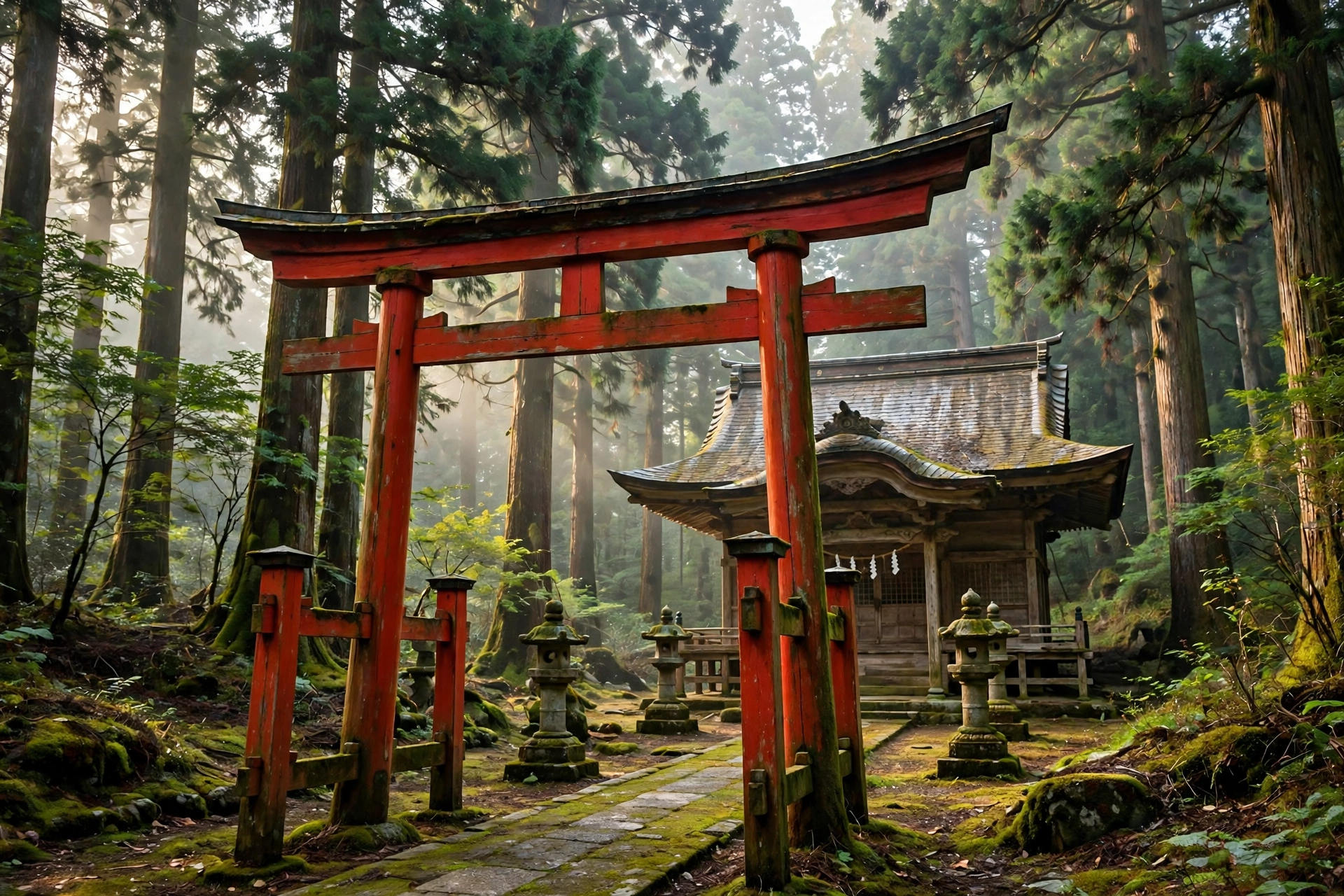
The point first: Ujigami Jinja in Uji, Kyoto, enshrines three deities — Uji no Wakiiratsuko, Emperor Ojin and Emperor Nintoku. Its main sanctuary, built in the late Heian period, is described in official sources as the oldest extant shrine main sanctuary, and its worship hall, from the early 13th century, as the oldest extant worship hall; both are National Treasures. In December 1994 it was inscribed as one of the 17 component sites of the World Heritage property “Historic Monuments of Ancient Kyoto (Kyoto, Uji and Otsu Cities).” The grounds open at 5:00 a.m. and close at 4:00 p.m., and admission is free. The shrine’s formal rank classification, the exact date of its annual festival, which deity is enshrined in each of the three inner sanctuaries, and the parking capacity could not be confirmed within the scope of this check.
Hello, I am Kurashiki Bouzu (kurashiki-bouzu). I was born in 1971, I am a former funeral professional, and I now live in an old house in Kurashiki, Okayama, working together with Moka, my AI butler.
This is one article in a series introducing shrines across Japan, one shrine at a time. This time it is Ujigami Jinja in Uji, Kyoto. This article is organized from official published sources; it is not an account of a visit I made myself.
Basic information
- Shrine name: Ujigami Jinja (うじがみじんじゃ). The official site styles it “World Cultural Heritage Ujigami Jinja.”
- Enshrined deities: Three deities — Uji no Wakiiratsuko (うじのわきいらつこ), Emperor Ojin and Emperor Nintoku. The benefits listed by the official site are success in studies, rising fortune in martial pursuits, and safety of the household.
- Shrine rank: No statement of classifications such as shikinaisha or former shrine rank could be confirmed on the official and public pages checked this time. What is not known is left as not known.
- Address: 59 Uji Yamada, Uji, Kyoto 611-0021
- Telephone: 0774-21-4634
History
As for when the shrine was founded, the Cultural Heritage database of the Agency for Cultural Affairs system states that “the founding is unknown.” After the Phoenix Hall of Byodo-in was completed in 1053, the shrine came to be revered as its guardian shrine, and its buildings were put in order with the support of Byodo-in, public sources explain.
Central to the founding story is the tale of one of the enshrined deities, Uji no Wakiiratsuko. According to the official account, Uji no Wakiiratsuko, the youngest imperial prince of Emperor Ojin, was learned and wise, and his father made him crown prince. After Emperor Ojin died, however, he yielded the position to his elder brother, Emperor Nintoku, built a detached palace in Uji and ceased to govern. Emperor Nintoku also tried to yield the position, and because they yielded to each other for three years, the world began to fall into disorder, and Uji no Wakiiratsuko is said to have taken his own life. Emperor Nintoku hurried to Uji and buried Uji no Wakiiratsuko with great care, and this, the official account states, later became the origin story of this shrine’s founding.
Until the Meiji period, the shrine was called “Rikyu Kamisha” together with the adjacent Uji Jinja as two shrines forming one body. Public sources say that Ujigami Jinja was called the main shrine or upper shrine and Uji Jinja the wakamiya or lower shrine, and that there was also a custom of calling the two together the Rikyu shrine.
In December 1994 (Heisei 6), it became one of the 17 assets inscribed on the World Heritage List as “Historic Monuments of Ancient Kyoto (Kyoto, Uji and Otsu Cities).”
Highlights
- Main sanctuary (National Treasure): Built in the late Heian period, it is described in public sources as the oldest extant shrine main sanctuary. It has the unusual form of three inner sanctuaries in the single-bay nagare-zukuri style placed side by side and covered by a nagare-zukuri roofed shelter. It was designated a National Treasure on March 29, 1952.
- Worship hall (National Treasure): A building of the early Kamakura period, the early 13th century, in a residence-like form that conveys the shinden-zukuri style. It is considered the oldest extant worship hall, and Kyoto Prefecture notes that the beauty of its roof, which uses sugaru-hafu gables, is exceptional.
- Main sanctuary of the auxiliary shrine Kasuga Jinja (Important Cultural Property): An auxiliary shrine built in the Kamakura period. The paintings on the doors of its main sanctuary are also designated Important Cultural Properties.
- Kirihara-sui water: One of the Seven Famous Waters of Uji, located within the grounds.
- The setting of the grounds: The shrine stands on the east bank of the Uji River, at the foot of Mount Asahi, facing Byodo-in on the opposite bank. Behind the main sanctuary stretches a wide forest, which forms part of the World Heritage buffer zone.
Festivals
The exact date of the annual festival could not be confirmed directly on the official site pages checked this time. The official site carries a notice about the opening hours of the award office in May 2025, from which it can be gathered that there is a major festival season in early May. However, no official wording confirming that this is the annual festival could be confirmed, so the date of the annual festival is not stated definitively. The dates of other annual events were also not known within the scope of this check.
Connection with life’s milestones
From the perspective of a former funeral professional, I also checked whether the official site has guidance relating to the milestones of a person’s life.
Prayers (gokito) are accepted for a wide range of wishes, the official site says, including first shrine visits for babies, protection from misfortune, prayers for safe childbirth, recovery from illness, prayers for success in studies, and thanksgiving for divine blessings. The offering for an ordinary prayer is 5,000 yen, and prayers for victory, wedding announcement rites and corporate prayers start from 10,000 yen. The official site also notes that the offerings will be revised from January 1, Reiwa 9.
There is also guidance on weddings. The ceremony is held in the worship hall: the couple walks along the approach to the worship hall to the sound of gagaku music, and the chief priest himself recites the norito prayer. It is limited to one couple per day and includes a gagaku performance.
There are dedicated pages for first shrine visits for babies and for Shichi-Go-San. For a first shrine visit, reservations by telephone are the basic rule, except on Saturdays, Sundays and holidays in November and on January 1, 2 and 3, when no reservation is needed. For Shichi-Go-San, under the Reiwa 8 (2026) guidance, the offering is 5,000 yen per child, and on Saturdays, Sundays and holidays in November it can be received without a reservation.
There are also off-site rites such as ground-breaking ceremonies: a ground-breaking ceremony is 50,000 yen, and well purifications and other purification rites start from 35,000 yen. On the other hand, as for shinsosai (Shinto funerals), no guidance could be confirmed within the scope of the official pages checked this time.
Practical information for a visit
- Opening and closing: The grounds open at 5:00 a.m. and close at 4:00 p.m. Admission is free, according to the official site.
- Award office and goshuin: From 9:00 a.m. to 3:50 p.m., with final reception also at 3:50 p.m. The official site states clearly that goshuin are not given to those who ask before the office opens or after it closes. The starting time for writing goshuin varies by day.
- Reservations for prayers: Accepted from 9:30 a.m. to 3:30 p.m. in 30-minute slots. As a rule, reservations are made by telephone by the day before.
- Payment: Offerings are cash only; credit cards and QR code payments cannot be used, according to the official site.
- Parking: The official site says there is a free car park for those visiting this shrine. However, public tourism pages carried different wording, so details such as the number of spaces are not stated definitively.
- Access: About a 20-minute walk from Uji Station on the JR Nara Line, and about a 10-minute walk from Uji Station on the Keihan Uji Line.
- Notes on the grounds: There are no toilets or vending machines in the grounds that general visitors can use. The official site directs visitors to use the Genji Monogatari Museum and other facilities for toilets.
Finally, let me honestly summarize the points that could not be confirmed. The official statement of the shrine’s rank, the exact date of the annual festival, which deity corresponds to each of the three inner sanctuaries, and the parking capacity were not known within the scope of this check.
This is a shrine that preserves a main sanctuary and worship hall said to be the oldest extant of their kind, and that has faced Byodo-in across the banks of the Uji River.
Sources
- Ujigami Jinja official, “Enshrined Deities and the History of Our Shrine” https://www.ujikamijinja.jp/cont1/8.html
- Ujigami Jinja official, “Guide to Visiting” https://www.ujikamijinja.jp/cont4/main.html
- Ujigami Jinja official, “About Prayers” https://www.ujikamijinja.jp/cont2/main.html
- Kyoto Prefecture, “World Heritage Ujigami Jinja” https://www.pref.kyoto.jp/isan/ujigami.html
- Cultural Heritage Online, “World Heritage Ujigami Jinja” https://online.bunka.go.jp/special_content/component/32
- National Database of Designated Cultural Properties, “Ujigami Jinja Main Sanctuary” https://kunishitei.bunka.go.jp/heritage/detail/102/1946
- November 22, 2026 ― Published in English (translation of the Japanese article, ledger No. 3158)(7,934 characters)