
Kawasaki Daishi (Heikenji) — The Great Head Temple Known as the 'Master Who Wards Off Misfortune'
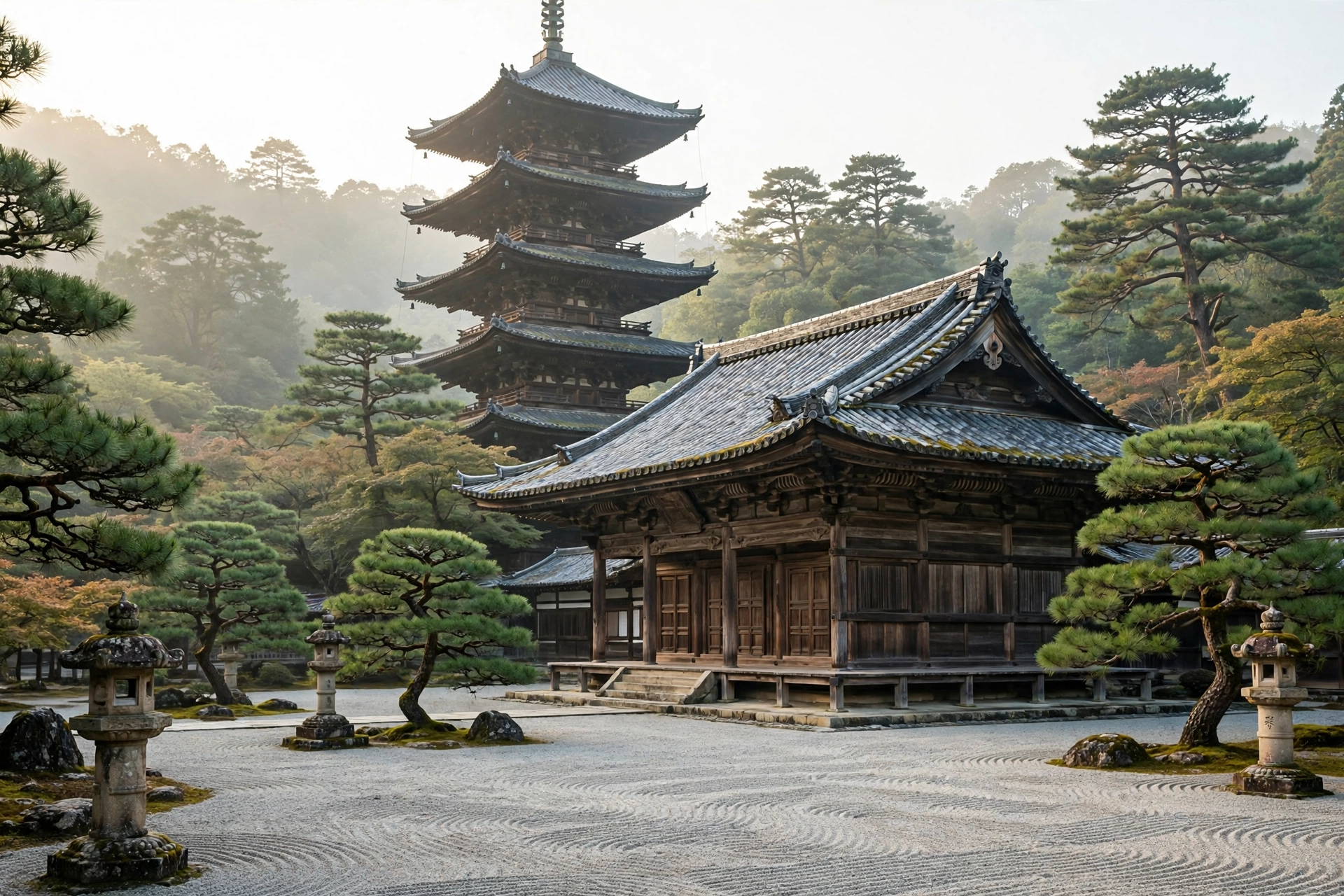
The point first: Kawasaki Daishi’s formal name is Kongozan Kinjoin Heikenji, in Kawasaki Ward, Kawasaki, Kanagawa — a great head temple (Daihonzan) of the Shingon School’s Chisan-ha, known as the “Yakuyoke no Odaishisama,” the Master who wards off misfortune (yakuyoke). Its origin is traditionally told as follows: in his climacteric year at age 42, Hirama Kanenori received a dream oracle, recovered a statue of Kobo Daishi from the sea and enshrined it, and the temple was founded in 1128. Goma prayers are held every day before the principal image in the Great Main Hall, and the 21st of every month is the Master’s fair day. In the range of the official site checked this time, no application guide for funerals or memorial services was found — its guides center on prayers such as Goma, traffic safety and Shichi-go-san — and the postal code, the opening hours of the Great Main Hall, and an official text dividing the roles of founding priest and founder also could not be confirmed. This article states all of that plainly.
I am Kurashiki Bouzu (kurashiki-bouzu), born in 1971, a former funeral professional now living in an old house in Kurashiki, Okayama, working with Moka, my AI butler.
This is one article in a series introducing temples across Japan, one temple at a time. This time it is Kawasaki Daishi, Heikenji, in Kawasaki Ward, Kawasaki City, Kanagawa Prefecture. This article is organized from official published sources such as the temple’s official site; it is not an account of a visit I made myself.
Basic information
- Name: Kongozan Kinjoin Heikenji. Commonly called “Kawasaki Daishi” or “Yakujo Kobo Daishi (the Master who wards off misfortune)”
- School: great head temple (Daihonzan) of the Shingon School, Chisan-ha. Its head temple (Sohonzan) is Chishakuin in Kyoto
- Principal image: the statue of Yakujo Kobo Daishi (Kobo Daishi)
- Address: 4-48 Daishi-cho, Kawasaki Ward, Kawasaki City, Kanagawa Prefecture
The postal code could not be confirmed on the public pages opened this time. An official text recording the division of roles between founding priest (kaisan) and founder (kaiki) is also unconfirmed. Points that could not be confirmed are not stated definitively.
Kawasaki City’s treasure sheet gives the head temple as Chishakuin in Kyoto. It is a great head temple of the same Shingon Chisan-ha as Naritasan Shinshoji, and in the Kanto region Naritasan and Kawasaki Daishi are known side by side. The common name “Kawasaki Daishi” is also established as a station and place name. Many readers may not know that the formal temple name is Heikenji, so this article records both the formal name and the common name.
History
Heikenji was built in Daiji 3 (1128), according to Kawasaki City’s “Treasures of Kawasaki Ward Sheet.”
Its origin is told as follows. Hirama Kanenori, in his climacteric year at age 42, received an oracle in a dream, recovered a statue of Kobo Daishi from the sea and enshrined it; joining forces with Sonken Shonin of Mount Koya, he opened the temple, and from Kanenori’s surname it was named “Heikenji.” Because the founding event is told as an event of a climacteric year, this temple came to be known for faith in protection from misfortune (yakuyoke). It is also known for faith in household safety and traffic safety.
The founding story — that he enshrined a statue recovered in his own climacteric year — leads directly to its present figure as the “Master who wards off misfortune.” This is a temple whose origin and faith are joined in a single line.
Highlights
According to the official precinct map, the grounds include the Great Main Hall (Dai-honden), the Great Mountain Gate (Dai-sanmon), the Fudo-do, an octagonal five-story pagoda, a sutra repository, the Yakushi-den and a hall for traffic-safety prayers for automobiles. In the Great Main Hall, Goma prayers are held every day before the principal image.
The sutra repository holds 7,240 volumes of the Qianlong edition of the Tripitaka, according to the official English page. Note that, because reconfirmation on the Japanese official page is desirable for this point, it is introduced here as the English page’s guide. The Kobo Daishi guidepost was built in 1663 and is designated an Important Historical Monument of Kawasaki City. A guidepost is a remnant of the pilgrimage roads of old.
Events
According to the annual events in Kawasaki City’s treasure sheet, in January there are the New Year Great Goma offering (Gensho Dai-Goma-ku) and the First Daishi on January 20 and 21. In February there are the Setsubun-e bean-throwing ceremony and the Star Festival (Hoshi Matsuri); in July, the Kawasaki Daishi Wind Chime Market; November is the Shichi-go-san children’s celebration and child-rearing prayer month (November 1 to 30), also guided on the official top page. In December there are the Jodo-e (December 8), the Final Daishi of the year, and the New Year’s Eve service (Joya Horaku).
The 21st of every month is the Master’s fair day (ennichi), when events such as a recitation of the Great Prajna Sutra are held. Individual dates change by year, so please check the official site before visiting.
Funerals and memorial services
I will write honestly, from a former funeral professional’s viewpoint. In the range of the official site’s top page and precinct guide checked this time, no application guide for funerals, memorial services, perpetual memorials, interment or tree burials was found on the official site. The official center is guides to prayers — Goma prayer, traffic-safety wishes, Shichi-go-san and the like.
This does not mean that memorials cannot be held at this temple. Kawasaki Daishi is known as a temple of protection from misfortune and of prayer, and its official guides also center on prayer. For funerals and memorial services, the general flow is to consult the local temple with which you have an ongoing relationship. Not writing “possible” about what is not known is the rule of this series.
A supplement from a former funeral professional’s standpoint: temples known for protection from misfortune are visited by many people receiving prayers in climacteric years and milestone years. That there is a hall for automobile traffic-safety prayers is also a form of receiving prayer within a car society. A temple of prayer and a local family temple (dannadera) carrying funerals and memorial services have different roles. That Kawasaki Daishi’s official guide centers on prayer is naturally read as a reflection of that role. The very fact that “there is no guide” is a clue to knowing a temple’s character. In this series, the presence or absence of a guide is written as it is.
That guides accompanying life’s milestones, such as the Shichi-go-san prayer month, appear on the official top page is also characteristic of this temple. Family milestones and protection from misfortune — those two can be called the pillars of Kawasaki Daishi’s faith.
Practical information for a visit
Regarding admission fees for the grounds, no table of amounts could be confirmed on the official top page opened this time. The opening hours of the Great Main Hall are also said to differ by season, but verification in the text of the official Japanese page has not been completed, so no hours are written here. Figures from summary sites and the like are not adopted.
Please check the times of Goma prayers and opening hours in the latest guide on the official site before visiting. Please confirm the official site before your visit.
Finally, I will add one way of seeing this temple. Kawasaki Daishi is widely known for the single point of protection from misfortune, but its grounds hold several objects of prayer — the Fudo-do, the octagonal five-story pagoda, the sutra repository and the Yakushi-den. Centered on the daily Goma prayer in the Great Main Hall, and extending even to a hall for traffic-safety prayer, this is the figure of a temple that has answered the anxieties of modern life in the form of prayer. Many events joined to the town’s life also remain, such as the fair day on the 21st of every month and the Wind Chime Market in July. Not only in a climacteric year — visiting once in a milestone year and touching the founding story would also be good, I think. Dates change by year, so please check the official event guide.
For the details of events and prayers, checking the latest guide on the official site is the basis. Points written in this article as “could not be confirmed,” such as the postal code and opening hours, I hope to verify again in this series once verification on the official Japanese pages is possible. I will not borrow figures I do not know from other sites.
Sources
- Official top page
- Precinct map, English page (official)
- Treasures of Kawasaki Ward Sheet 10-17, Kawasaki Daishi Heikenji (Kawasaki City)
- Kobo Daishi guidepost (Kawasaki City)
- November 22, 2026 ― Published in English (translation of the Japanese article, ledger No. 2888)(7,342 characters)