
Why Do Bodies Get Mixed Up? — Reading the Nagoya Case Through a Former Funeral Worker's Eyes
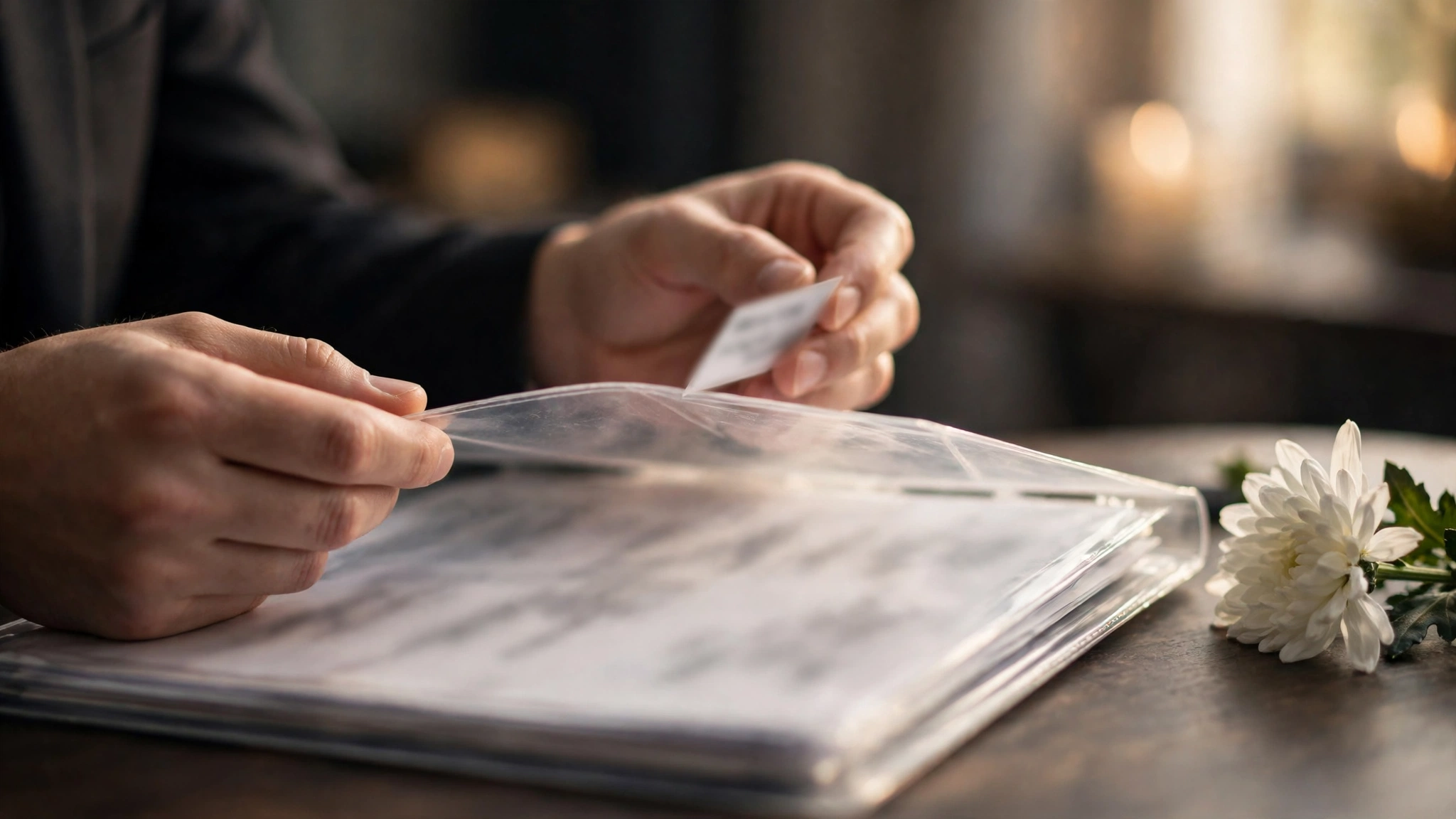
The result first: the Nagoya body mix-up happened for two reasons that reports point to — confirmation was done with the family name only, not the full name, and the body and coffin had no name tag or other mark to check by eye during storage and transport. A different person’s body was brought into a funeral hall, sent off, and cremated, and the family who attended the cremation noticed only because an unfamiliar keepsake was in the ashes. The prevention the company announced is a return to basics: attach a paper with full name, date of birth, and date of death, attach a QR code like a hospital wristband, and have two people match the full name at every handover. That is the same direction as the clear file I used on the floor.
I am Kurashiki Bouzu (kurashiki-bouzu), born in 1971, a former funeral worker. I now live in an old folk house in Kurashiki, Okayama Prefecture, and work with Moka, my AI butler.
Today I will write a somewhat heavy story. The story of a body mix-up, an incident that pains my chest every time I hear it as someone who did funeral work. I will not include laughter. I would like to think quietly, with the eyes of a person who was on the floor, why such a thing happens.
Such incidents have come to be reported in the news frequently in recent years. Why does such a thing happen? As a former funeral worker, I will consider it in my own way.
What Happened — The Case at a Funeral Hall in Nagoya City
In January 2025, at a funeral held at a funeral hall in Nagoya City, a different person’s body was mistakenly brought in, and was sent off and cremated as it was. The bereaved family attended and cremated it, but because a keepsake they did not recognize was included in the ashes, the mix-up was discovered, it is said.
The other party mixed up was the body of a person with no relatives. The two bodies were both stored at a facility operated by a partner company, and it is believed the mix-up arose because the family names were the same. The funeral company apologized to the bereaved family of the person who should have been cremated, and reported the circumstances to Nagoya City and the police, it is reported. The incident was published half a year later, in July 2025.
Reported Causes
Lining up the reports, the causes raised are the following two.
- The family name was the same — It is believed that confirmation, which should have been done by full name (the whole including the given name), was settled with the family name only
- The body or coffin had no name tag or other identifying mark attached — It is also reported that, at the stage of transporting from the storing facility to the hall, there was no clue to check by eye
In terms of a person’s name, a family name is like saying only up to the “city” for an address. Many people live in the same city. Only when you say up to the given name, which corresponds to the final “street address,” do you know that person. Confirmation by family name only was not confirmation.
Reading With the Floor’s Eyes, Where Did It Collapse?
From here is my consideration. Please read portions not in the reports as speculation from a floor sense, to that extent.
First, this case was a form where the funeral company did not have its own storage place, but entrusted the body to a partner facility. Even large and mid-sized funeral homes with their own facilities sometimes use an entrusted place. The problem is not the place, but the arrangements for “entrusting and receiving” in between.
If, at the storing facility, a staff member is always present, and when receiving a body they attach a number and write it in a list, a form is made where mistakes are unlikely to occur. Conversely, if such a handover system is weak, a body comes to be treated as “a thing that is there.”
Another thing, common on the floor, is that the staff member who went to pick up at a hospital facility and the staff member who transports to the crematorium can be different people. The person who picked up knows the deceased’s face and the family’s story. But the staff member who only transports does not know. What that person can rely on is only the name tag attached to the coffin and documents (there are cases where there are none). If confirmation there ended with the family name only, no material remains to confirm who the body in front of them is. In that state, whoever transports, a mistake could occur. Rather than the carelessness of the person in charge, I see it as a problem of the arrangements themselves, which make them transport in a state where there is no way to confirm.
And, the point that they first noticed from a keepsake. Somewhere in the middle, there was substantially no opportunity to look at the face and confirm. I cannot help thinking so.
What I Did on the Floor
When I was doing funeral work, there was something I always did when entrusted with a body.
After laying the body down, I prepare a clear file. Inside it I put a copy of the death certificate, and on the file I write the deceased’s full name, the date and time of pickup, the date and time of cremation, the name of the staff member in charge of pickup, and the name of the staff member scheduled for transport. In other words, “who is this person, when, who picked them up, and who will transport them” is made into a visible form, and placed beside the body.
When entrusted with several bodies, I moved them near the entrance in the order of transport. Arrange them in an order where the transporting person will not hesitate, and where there is no way to mix them up. That is all.
Another rule was at departure. One to two hours before departure, the staff member always called the family. That time of “one to two hours before” was decided by calculating backward from the travel distance from the family’s home to the crematorium. If they lived far, earlier; if near, later by that amount. Because we must not make the family feel they have to hurry and drive a car.
“The late Taro Yamada (your father) will be cremated at XX Crematorium from 11 o’clock. Please wait in the parking lot near the crematorium entrance at least 15 minutes before.”
The name is an example for explanation.
On top of that, I confirm what to bring, and do a final confirmation of how many people wish to say a final farewell at the crematorium.
At a glance, it is just a contact phone call. But this phone call had another important role. The staff member speaks the deceased’s full name aloud to the family. If it differs from the family’s recognition, they can notice on the spot. It was also a final confirmation place, just before departure.
No special tools are needed. Only paper and a pen, and the effort to write. But that effort itself is confirmation, I think.
The Recurrence Prevention Measures the Company Announced
This funeral company, together with publishing the incident, also announced recurrence prevention measures. Their content, seen from a person on the floor, was exactly a “redo of the basics.”
- When placing a body, attach a paper (called a koshu paper) with full name, date of birth, and date of death written, to the coffin or the body’s bedding. Align the partner facility to the same form as well
- At entry to the placement facility, attach a QR code that can identify each deceased person (like a hospital wristband) to the coffin or the body’s ankle, and make reading it mandatory at exit
- In scenes where body handover occurs, the hearse driver and the receiving staff member, two people, match the full name. Also confirm the transport origin and destination together
Make the name into a visible form, and have two people match it. The direction is exactly the same as what I did with a clear file. Even if the system becomes new, the core of what to do does not change.
Funeral Work Is an Accumulation of Confirmations
When facing death every day at a funeral home, it is true that some people inevitably come to think of work as “tasks.” I cannot blame that either. If you continue every day, anyone comes close to that.
However, a funeral, for a funeral home, is everyday work, but for a family it is a first-time thing, and yet by cremation they must do various invisible things. In front of a family bearing that “first time,” how big a thing it is to omit one confirmation. This incident thrusts that forward.
Funeral work is confirmation, an accumulation of confirmations. Not finding that accumulation troublesome leads to a funeral satisfying to both the deceased and the family, I still think.
Two Things a Family May Ask
For families who will choose a funeral home from now, there is one thing I want to tell you from someone who was on the floor. The following two are questions you may ask without hesitation.
- “When you place them, how will you keep them?”
- “At the placement place or crematorium, can we meet the deceased face to face?”
A proper funeral home should answer concretely about how name tags are attached and confirmation procedures. Asking about body confirmation arrangements is neither rude nor doubting. Because you are entrusting an important person, it is natural to ask.
I hope this article becomes an opportunity, for families and for people working on the floor, to remember the importance of confirmation.
This article, based on a reported incident, considered causes and how to prevent it from the position of someone who was on the funeral floor. For details of the incident, please see the source reports. This article was written with the help of the AI “Muse.”
Sources
- [Tokai TV NEWS “An unfamiliar keepsake in the ashes… A funeral company sent off and cremated a ‘different person’s body’”] (https://www.tokai-tv.com/tokainews/article_20250710_41245) (distributed July 10, 2025)
- [TBS NEWS DIG “Mixed up a body and cremated it… A funeral hall in Mizuho Ward, Nagoya — may have mixed up when bringing in from a storage facility”] (https://newsdig.tbs.co.jp/articles/cbc/2036232?display=1)
- [Funeral company’s published material “Regarding some report content concerning a negligence accident in Nagoya City”] (https://www.tear.co.jp/company/pdf/20250710nagoyasinai.pdf) (July 10, 2025)
- November 18, 2026 ― English draft created (results-first rewrite of the Japanese article, ledger No. 28). Not published; publication is a separate step.(8,340 characters)