
Naritasan Shinshoji — The Great Head Temple Beloved as 'Narita's Ofudosama'
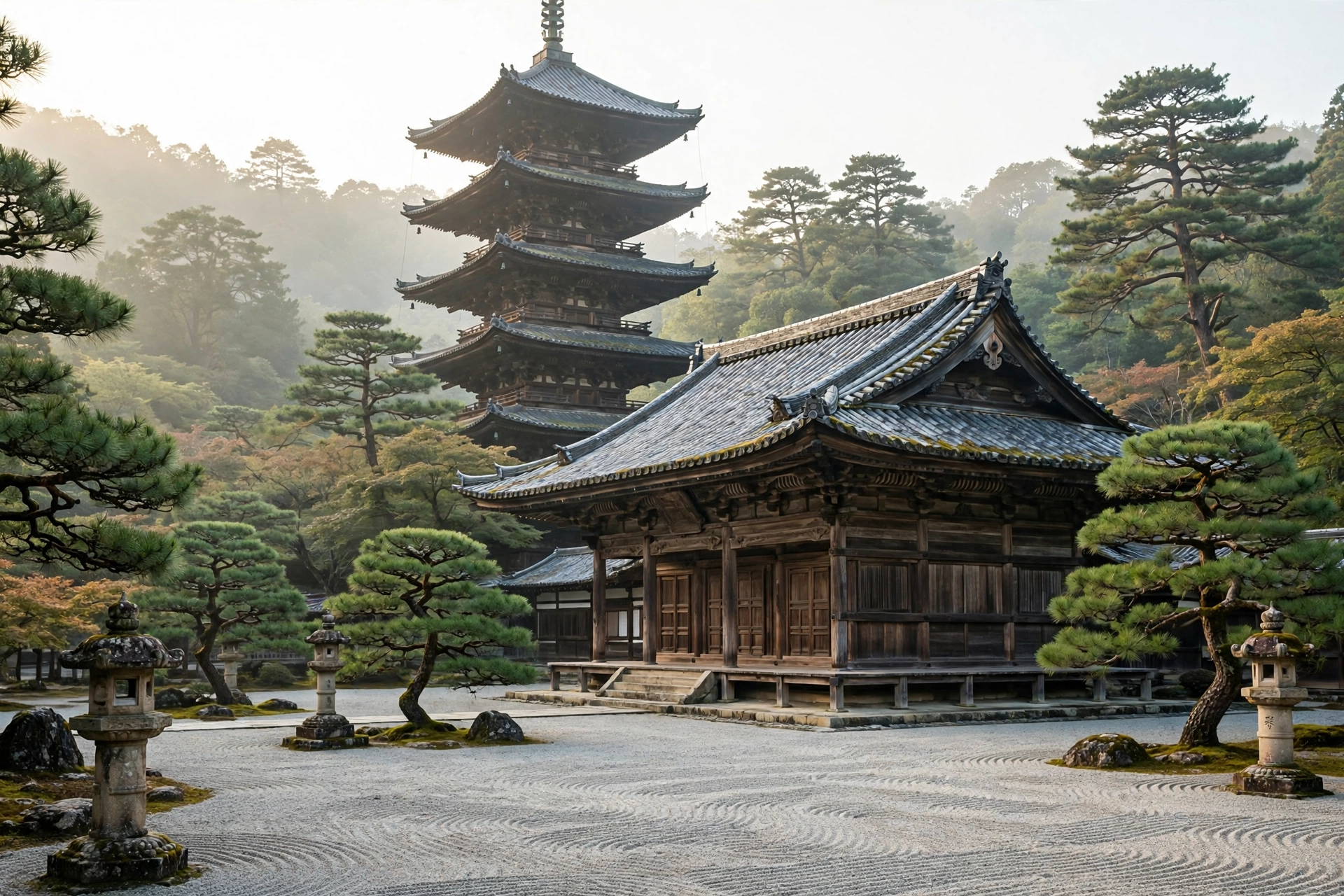
The point first: Naritasan Shinshoji in Narita, Chiba, is the great head temple (Daihonzan) of the Shingon School’s Chisan-ha, beloved as “Narita’s Ofudosama” (the Fudo of Narita), where Goma prayers to its principal image, Fudo Myo-o, are solemnly performed every day in the Great Main Hall. Its origin is traditionally placed in 940 (Tengyo 3), and five of its buildings — the Komyodo, Shakado, Three-Story Pagoda, Niomon gate and Gakudo — are national Important Cultural Properties. In the range of the official site checked this time, no application guide for funerals, memorial services, perpetual memorials, interment or tree burials was found, and this article says so plainly — that absence itself reflects the temple’s character as a temple of prayer centered on Goma. The postal code, and a verified formal name including mountain and sub-temple names, could not be confirmed either, and are not stated definitively.
I am Kurashiki Bouzu (kurashiki-bouzu), born in 1971, a former funeral professional now living in an old house in Kurashiki, Okayama, working with Moka, my AI butler.
This is one article in a series introducing temples across Japan, one temple at a time. This time it is Naritasan Shinshoji in Narita City, Chiba Prefecture. This article is organized from official published sources such as the temple’s official site; it is not an account of a visit I made myself.
Basic information
- Name: Daihonzan Naritasan Shinshoji. Commonly called “Naritasan” or “Narita’s Ofudosama”
- School: great head temple (Daihonzan) of the Shingon School, Chisan-ha
- Principal image: Fudo Myo-o. The statue of Fudo Myo-o with two attendants, the principal image, is designated a national Important Cultural Property
- Address: 1-1 Narita, Narita City, Chiba Prefecture
The postal code could not be confirmed on the public pages opened this time. As for a formal appellation including the mountain name (sango) and sub-temple name, verification by directly opening the text of the official origin page has also not been completed. Points that could not be confirmed are not stated definitively.
The explanation on the official top page introduces the temple as one that solemnly performs the Goma prayer to its principal image Fudo Myo-o every day. Goma is a form of Shingon prayer in which fire is burned on an altar. The center of Naritasan’s faith is this daily Goma. As the common name “Narita’s Ofudosama” shows, faith in Fudo Myo-o has continued in this place for more than a thousand years.
History
The founding of Naritasan is traditionally placed in the mid-Heian period, in Tengyo 3 (940). The founding legend is known: to pray for the suppression of Taira no Masakado’s rebellion, Kancho Sojo, who had received a secret imperial command from Emperor Suzaku, enshrined a statue of Fudo Myo-o and performed Goma. However, the detailed text of this legend could not be directly confirmed in the text of the official pages opened this time. If you wish to know more, please see the guide “The beginning of Naritasan (founding legend)” on the official site.
That it is a temple which gathered wide faith through Narita pilgrimage from the Edo period onward is also treated in public materials. Together with the Naritasan Omotesando approach in front of the gate, it is a component of the Agency for Cultural Affairs’ Japan Heritage “Hokuso Four Cities Edo Travelogue.” A history in which pilgrimage and the gate-front town grew as one is the figure of this temple.
Highlights
There are five national Important Cultural Property buildings: the Komyodo, Shakado, Three-Story Pagoda, Niomon and Gakudo. Chiba Prefecture’s list of cultural properties records that the five buildings were designated together on May 31, 1980 (Showa 55).
In the Great Main Hall, the Goma prayer to the principal image Fudo Myo-o is solemnly performed every day. The Great Peace Pagoda (Heiwa Daito), Naritasan Park and the Calligraphy Museum are also introduced in the official precinct guide. Walking the Omotesando before and after a visit is also a way of enjoying Narita pilgrimage. Not only the buildings — the form of faith received by the whole town is a highlight.
Events
The Setsubun-e is on February 3, when a special demon-expelling bean-throwing ceremony is held in front of the Great Main Hall. In materials issued by the Narita City Tourism Association, the bean-throwing is given as three times — 11:00, 13:30 and 16:00 — but this changes by year, so please check the official guide.
The Hoshiku prayer meeting is held for seven days from Setsubun (February 3). The morning Goma is daily: from 5:30 from April to September, and from 6:00 from October to March, according to the official Q&A. In autumn there is a chrysanthemum exhibition, and the Naritasan Park Autumn Leaves Festival is held in mid-to-late November. Event schedules change by year, so please check the official site before visiting.
Funerals and memorial services
I will write honestly, from a former funeral professional’s viewpoint. In the range of the official site’s top page, Q&A and event guides checked this time, no application guide for funerals, memorial services, perpetual memorials, interment or tree burials was found on the official site. The Q&A contains Buddhist explanations about funerals and services in general, but they are not application guides.
This does not mean that memorials cannot be held at this temple. Naritasan is a temple of prayer centered on Goma prayer, and the official site’s guides also center on prayer. For funerals and memorial services, the general flow is to consult the local temple with which you have an ongoing relationship. Not writing “possible” about what is not known is the rule of this series.
A supplement from a former funeral professional’s standpoint: a great prayer temple and a local family temple (dannadera) carry different roles. A temple visited by crowds for first shrine visits of the year (hatsumode) and for protection from misfortune centers on receiving prayers and wishes. Funerals and annual memorial services, on the other hand, are often carried by local temples that keep long relationships with families. That no funeral application appears in Naritasan’s official guide is naturally read as a reflection of that difference in roles. The very fact that “there is no guide” is a clue to knowing a temple’s character. In this series, the presence or absence of a guide is written as it is.
Note that an official annual list of events (by month and day) also has not finished being confirmed on the pages opened this time. If you visit aiming at an event, please check the date in the latest event guide on the official site.
Practical information for a visit
Regarding admission fees for the grounds, no table of paid-visiting amounts could be confirmed on the official pages opened this time. For that reason, no amounts are written here. About the morning Goma in the Great Main Hall, the official Q&A states that “anyone may freely go up into the Great Main Hall and worship.”
Visiting hours and event times change by season and year. Before your visit, please check the latest guide on the official site.
Finally, I will add one way of seeing this temple. Naritasan is a place of pilgrimage where the grounds and the Omotesando town are one, centered on the Goma of the Great Main Hall. Grounds where five Important Cultural Property buildings survive, Naritasan Park and the Calligraphy Museum, and the bustle of the gate-front. That faith and town walking are inseparably joined is Naritasan’s individuality. The morning Goma starts at different times by season, and the official Q&A says you can go up into the Great Main Hall and worship from early morning. The quiet morning Goma and the lively Omotesando — being able to savor the temple’s two faces according to the time of day you visit is also a pleasure unique to this temple.
For the details of events and visiting, checking the latest guide on the official site is the basis. Points written in this article as “could not be confirmed” I hope to verify again in this series once the relevant official pages are in place.
Sources
- Official top page
- Naritasan Q&A (official)
- National, prefectural and registered cultural properties of Narita City (Chiba Prefecture)
- Naritasan Shinshoji (Ministry of Land, Infrastructure, Transport and Tourism, multilingual commentary database)
- Setsubun-e guide (materials issued by the Narita City Tourism Association)
- November 22, 2026 ― Published in English (translation of the Japanese article, ledger No. 2879)(7,052 characters)