
Meiji Jingu (Shibuya Ward, Tokyo) — Enshrining Emperor Meiji, in a Forest of Some 70 Hectares
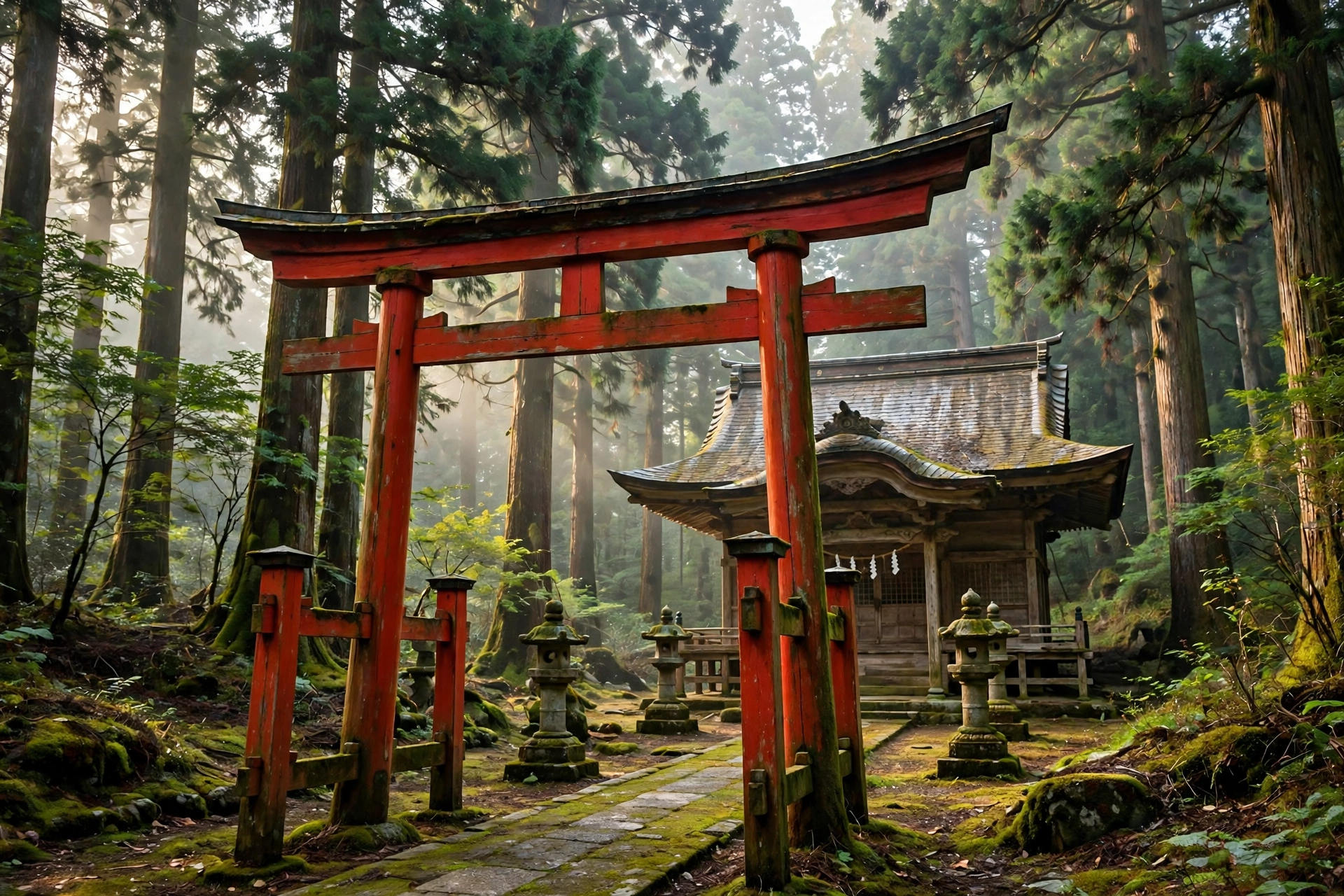
The point first: Meiji Jingu in Shibuya Ward, Tokyo, enshrines the spirits of Emperor Meiji (the 122nd Emperor, 1852–1912) and Empress Shoken (1850–1914), whose imperial tombs are in Kyoto. After their passing, the shrine’s creation was decided out of the people’s wish to revere their virtues forever; the precinct was prepared with about 100,000 trees donated from across Japan and the volunteer labor of young people, and the shrine was founded on November 1, 1920 (Taisho 9). The precinct is a planted forest of about 70 hectares, planned so that over 100 years it would grow into a self-sustaining natural forest needing no human hand. Most shrine buildings were lost in the air raids of 1945 and restored close to their original form in 1958. Prayers (the prayer festival at the Kagura-den) require no reservation, run every 30 minutes from 9:30 to 16:30, and the tamagushi offering is from ¥5,000 per wish. The shrine rank classification, the postal code, National Treasure or Important Cultural Property designations, regular goshuin offerings, parking, and how to apply for a wedding could not be confirmed on the official pages opened this time.
Hello, I am Kurashiki Bouzu (kurashiki-bouzu). I was born in 1971, I am a former funeral professional, and I now live in an old house in Kurashiki, Okayama, working together with Moka, my AI butler.
This is one article in a series introducing shrines across Japan, one shrine at a time. This time it is Meiji Jingu in Shibuya Ward, Tokyo. This article is organized from official published sources such as the shrine’s official site; it is not an account of a visit I made myself, and I say so honestly at the outset.
Basic information
- Formal name: Meiji Jingu.
- Enshrined deities: The spirits of Emperor Meiji (the 122nd Emperor, 1852–1912) and Empress Shoken (1850–1914), according to the official site. Their imperial tombs are in Kyoto.
- Shrine rank: No statement of classifications such as former kanpei-taisha, chokusai-sha or beppyo shrine could be confirmed on the official pages opened this time. The official site does state that an imperial messenger (chokushi) is received at the autumn grand festival.
- Address: 1-1 Yoyogi Kamizono-cho, Shibuya Ward, Tokyo 151-8557. The postal code could not be confirmed on the official pages opened this time.
History
After Emperor Meiji and Empress Shoken passed away, the shrine’s creation was decided out of the people’s wish to revere and look up to their virtues for all time. The precinct was prepared with about 100,000 trees donated from across Japan and the service work of young people, and the shrine was enshrined and founded on November 1, 1920 (Taisho 9), according to the official site.
The precinct is a planted forest of about 70 hectares. The official site explains that the trees were planted under a plan looking 100 years ahead, so that the forest would grow into a self-sustaining natural forest needing no human hand. That one can feel, minutes from a city-center station, as if one had entered a deep forest is thanks to this plan. Most shrine buildings were burned in the air raids of 1945, but were restored in 1958 close to their original form. The main hall was completed in 1958, in the nagare-zukuri style.
Highlights
- A forest of about 70 hectares: The time spent walking the approach is itself a highlight. Minutes from an urban station, you can step into a forest where birds sing.
- Main hall and outer worship hall: Shrine buildings restored in 1958.
- The Meoto Kusu (husband-and-wife camphor trees): Camphor trees in the precinct, visited by many in connection with harmony between married couples.
- The Inner Garden and Kiyomasa’s Well (Kiyomasa no Ido): The garden with Kiyomasa’s Well is also a highlight.
- Meiji Jingu Museum: Opened in 2019, according to the official site.
- Cultural property designations: No statement of National Treasure or Important Cultural Property designations could be confirmed on the official pages opened this time.
- World Heritage: Meiji Jingu is not inscribed on UNESCO’s World Heritage List.
Festivals
- Annual festival / autumn grand festival: November 3 (the birthday of Emperor Meiji). The autumn grand festival is held at 10:00 on November 2 and 3, and the enshrinement anniversary festival at 10:00 on November 1, according to the official “Festivals and Events” page.
- Spring grand festival: At 10:00 on May 2 and 3. The Empress Shoken Festival is on April 11, and the Emperor Meiji Festival on July 30.
- Daily and monthly festivals: The daily festival is held every day at 8:00 and 14:00, and the monthly festival at 9:00 on the 1st and 15th of each month. This is a shrine where festivals continue quietly every day, not only on great festival days.
Connection with life’s milestones
As a former funeral professional, I also checked the guidance on milestones in a person’s life. The prayer festival held at the Kagura-den covers omiyamairi (first shrine visit) and shichi-go-san. For warding off misfortune (yakuyoke), the official precinct guide gives examples such as ages 25 and 42 for men and 19 and 33 for women.
As for weddings, the official “Features” page introduces that a wedding procession (sanshin) advancing through the precinct can be seen. However, details such as the application office could not be confirmed this time. No guidance on shinsosai (Shinto funerals) was found within the official pages opened this time.
Practical information for a visit
- Hours: Open year-round, and worship is free. The gates open around sunrise and close around sunset, with times changing by month. For example, January is 6:40–16:20, June 5:00–18:30, November 6:10–16:10, and December 6:40–16:00, according to the official site. Checking the opening and closing times for your month on the official site before setting out is reassuring.
- Prayers (prayer festival): Accepted at the Kagura-den; no reservation is needed. They are held every 30 minutes from 9:30 to 16:30, and the official guide gives the tamagushi offering as ¥5,000 or more per wish.
- Goshuin: A guide to regular offerings could not be confirmed on the official pages this time (there are official notices conveying offerings of limited-edition stamps).
- Parking: Whether there is parking for worshippers, and where, could not be confirmed on the official pages this time.
Finally, an honest summary of what could not be confirmed in this article. The shrine rank classification, a statement of the postal code and address notation on an official page, National Treasure or Important Cultural Property designations, regular goshuin offerings, parking guidance, and how to apply for a wedding could not be confirmed within the official pages opened this time. Separating what is known from what is not known is how this series proceeds.
Just over 100 years since its founding in 1920. A forest planted by human hands has now become a great wood in the heart of the city. Following the sources, one sees the length of the vision of the people who planted trees looking 100 years ahead.
Sources
- Meiji Jingu official, “About” https://www.meijijingu.or.jp/en/about/
- Meiji Jingu official, “Establishment” https://www.meijijingu.or.jp/en/about/establishment/
- Meiji Jingu official, “Enshrined Deities” https://www.meijijingu.or.jp/en/about/enshrined/
- Meiji Jingu official, “Festivals and Events” https://www.meijijingu.or.jp/en/whattosee/rites/
- Meiji Jingu official, “Visiting guide / gate hours” https://www.meijijingu.or.jp/en/visit/
- Meiji Jingu official, “Prayer festival” https://www.meijijingu.or.jp/en/feelshinto/6.php
- Meiji Jingu official, “Precinct guide” https://www.meijijingu.or.jp/en/map/
- November 22, 2026 ― Published in English (translation of the Japanese article, ledger No. 2951)(6,412 characters)