
Fushimi Inari Taisha (Fushimi Ward, Kyoto) — The Senbon Torii and the Head Shrine of All Inari Shrines
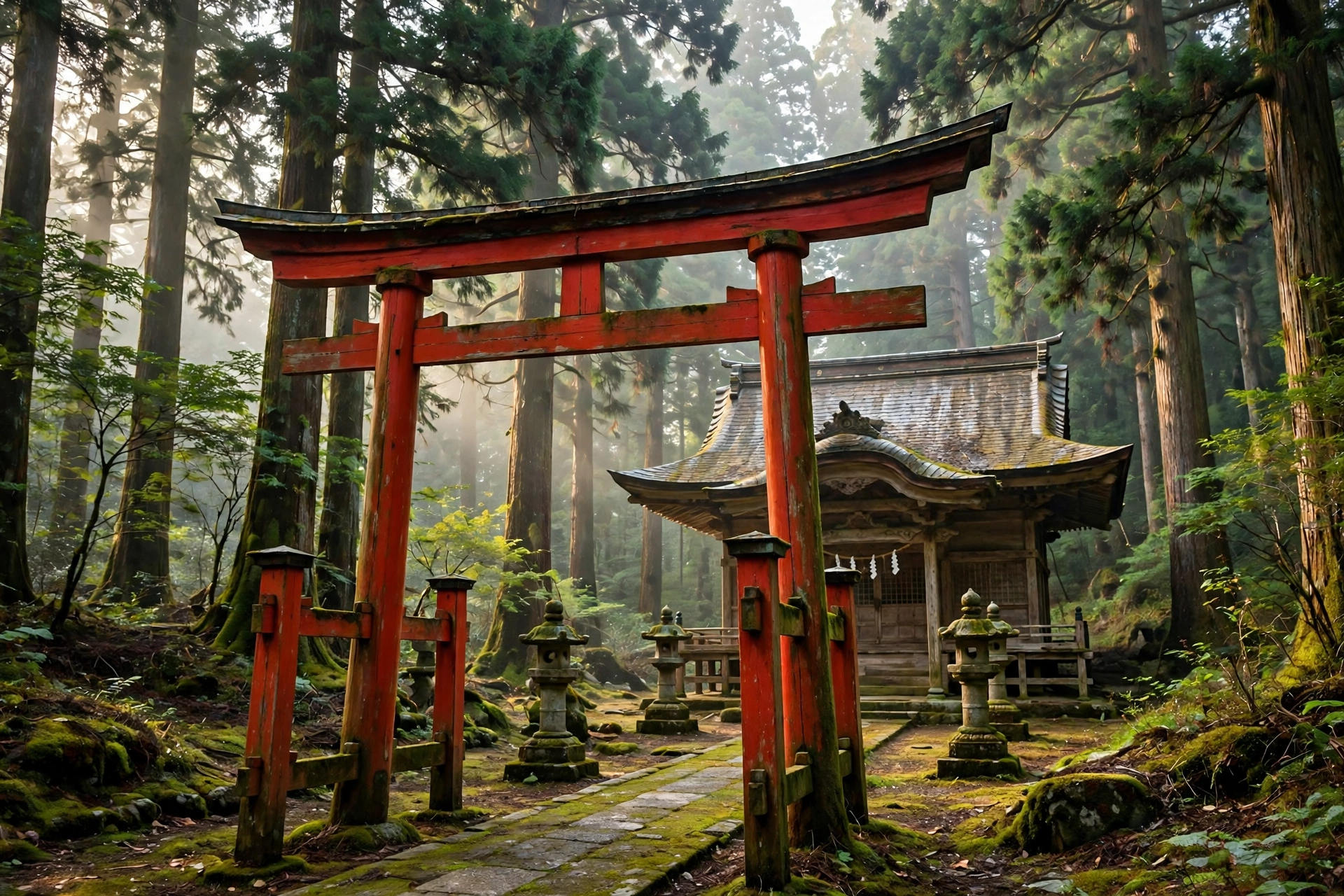
The point first: Fushimi Inari Taisha in Fushimi Ward, Kyoto, is the head shrine (sohongu) of the Inari shrines that the official site says number about 30,000 across Japan. Inari Okami was enshrined on Mount Inari on the first Day of the Horse in February of the year 711 (Wado 4), and the shrine marked the 1,300th anniversary of its enshrinement in 2011. Five deities are enshrined together in the main hall, which is an Important Cultural Property, as is the Romon gate said to have been donated by Toyotomi Hideyoshi. The whole of Mount Inari — 233 meters high, the southernmost of the Higashiyama Thirty-Six Peaks — forms the precinct, and the rows of vermilion torii known as the Senbon Torii line its paths. The shrine rank classification, direct confirmation of the postal code on the official access page, prayer reception hours and fees, goshuin hours, and the formal position of the annual festival could not be confirmed on the official pages opened this time.
Hello, I am Kurashiki Bouzu (kurashiki-bouzu). I was born in 1971, I am a former funeral professional, and I now live in an old house in Kurashiki, Okayama, working together with Moka, my AI butler.
This is one article in a series introducing shrines across Japan, one shrine at a time. This time it is Fushimi Inari Taisha in Fushimi Ward, Kyoto. This article is organized from official published sources such as the shrine’s official site; it is not an account of a visit I made myself, and I say so honestly at the outset.
Basic information
- Formal name: Fushimi Inari Taisha. Its familiar name is “O-Inari-san.” It is the head shrine of the Inari shrines of Japan, and the official site states that there are about 30,000 Inari shrines nationwide.
- Enshrined deity: Inari Okami. Five pillars are enshrined together in the main hall: Ukanomitama no Okami (Lower Shrine, central seat), Sadahiko no Okami (Middle Shrine, north seat), Omiyanome no Okami (Upper Shrine, south seat), Tanaka no Okami (Lower Shrine’s subordinate shrine, northernmost seat) and Shi no Okami (Middle Shrine’s subordinate shrine, southernmost seat), according to the official “Enshrined Deities” page.
- Shrine rank: No statement of classifications such as shikinaisha, one of the Twenty-Two Shrines, or beppyo shrine could be confirmed on the official pages opened this time. What is not known is not stated definitively here either.
- Address: 68 Fukakusa Yabunouchi-cho, Fushimi Ward, Kyoto 612-0882. The postal code could not be confirmed directly on the official access page; it follows the published notation of the shrine office.
History
According to the official site, on the first Day of the Horse in February of Wado 4 (711), Inari Okami was enshrined on Mount Inari. The shrine marked its 1,300th enshrinement anniversary in 2011.
The origin is handed down as tradition: the official “History” relates a story preserved in a fragment of the Yamashiro no Kuni Fudoki, in which a mochi rice cake shot by Irogu, said to be an ancestor of the Hata clan, turned into a white bird, flew away, and where it alighted on a peak, rice grew — hence the name “Inari” (from “ine-nari,” rice growing). That the name’s origin is tied to food and rice gives the beginning a fitting quality for a god of everyday life. The main hall was rebuilt in 1499 (Meio 8).
The Inari deity was originally connected with rice cultivation and the abundance of food. From there, the deity spread as one who receives wishes of everyday life in general, such as prosperity in business and safety of the household — a flow also visible in the number of about 30,000 shrines nationwide. Fushimi Inari Taisha, as their head shrine, stands at the starting point of that spread. From the enshrinement of 711, prayers have accumulated on a single mountain for more than 1,300 years, and that carries weight.
Highlights
- Main hall: An Important Cultural Property. The official site guides that its form, enshrining five shrines in a single building, is a distinctive feature.
- Romon gate: An Important Cultural Property, handed down as a donation by Toyotomi Hideyoshi (according to the official VR guide).
- Senbon Torii and Mount Inari: Known for the approach lined with vermilion torii. Mount Inari is 233 meters high, the southernmost of the Higashiyama Thirty-Six Peaks, and the whole mountain is the precinct. Walking to the top is itself an act of worship. Each torii carries the wishes of the people who offered it. Worship that walks the mountain is also, in itself, a time of advancing step by step with a wish.
- World Heritage: Fushimi Inari Taisha is not inscribed on UNESCO’s World Heritage List, and it is not a component of “Historic Monuments of Ancient Kyoto.”
Festivals
- Hatsuuma Grand Festival: From 8:00 on the first Day of the Horse in February. It falls on the anniversary of the enshrinement, and the official site relates that it has long been thronged with “Hatsuuma pilgrimages.”
- Inari Festival: The Shinko Festival is at 11:00 on the Sunday nearest April 20, and the Kanko Festival at 16:00 on May 3. The official site positions it as the most important festival of the year.
- Other festivals: The New Year festival (Saitan-sai) is at 6:00 on January 1; the Shinjo-sai, corresponding to the harvest festival, at 10:00 on November 23; and the Hitaki-sai at 13:00 on November 8.
Connection with life’s milestones
As a former funeral professional, I also checked whether the official site carries guidance on milestones in a person’s life. Within the official pages opened this time, no guidance on shinsosai (Shinto funerals) was found. No guidance on weddings was found on the official site either.
Omiyamairi, shichi-go-san and yakuyoke (warding off misfortune) are handled as individual prayer wishes, but a list of the wishes could not be confirmed on the official pages opened this time. If you are considering a prayer for a milestone, it is safest to check the reception hours and the offering fee (hatsuhoryo) in the “prayers” guide on the official site before you go.
Practical information for a visit
- Access: The shrine stands right beside Inari Station on the JR Nara Line. From Fushimi Inari Station on the Keihan Main Line it is a five-minute walk east. The torii are visible as soon as you leave the station — a location easy to visit by train.
- Parking: There is parking for worshippers, but the surrounding area becomes very crowded, and the official site recommends using public transport.
- Worship hours, goshuin and prayer reception hours: No statement could be confirmed on the official English pages opened this time. Checking the Japanese guide on the official site before a visit is recommended.
Finally, an honest summary of what could not be confirmed in this article. The official statement of the shrine rank classification, direct confirmation of the postal code on an official page, prayer reception hours and offering fees, goshuin hours, and the formal position of the annual festival could not be confirmed within the official pages opened this time. Separating what is known from what is not known is how this series proceeds.
Fushimi Inari Taisha, where prayers to the god of rice have spread across a whole mountain over more than 1,300 years since the enshrinement of 711. Following the sources, one sees the depth of prayer bound up with wishes for business and everyday life.
Sources
- Fushimi Inari Taisha official (English top) https://inari.jp/en/?ref=trip101com
- Fushimi Inari Taisha official, “History” https://inari.jp/en/history/
- Fushimi Inari Taisha official, “Enshrined Deities” https://inari.jp/en/saijin/
- Fushimi Inari Taisha official, “Festivals and Events” https://inari.jp/en/rite/
- Fushimi Inari Taisha official, “Access” https://inari.jp/en/access/
- Fushimi Inari Taisha official VR / cultural property guide https://inari.jp/vr_en/
- November 22, 2026 ― Published in English (translation of the Japanese article, ledger No. 2933)(6,526 characters)