
Yasukuni Shrine (Chiyoda, Tokyo) — Enshrining the Spirits of Those Who Died in Service to the Nation
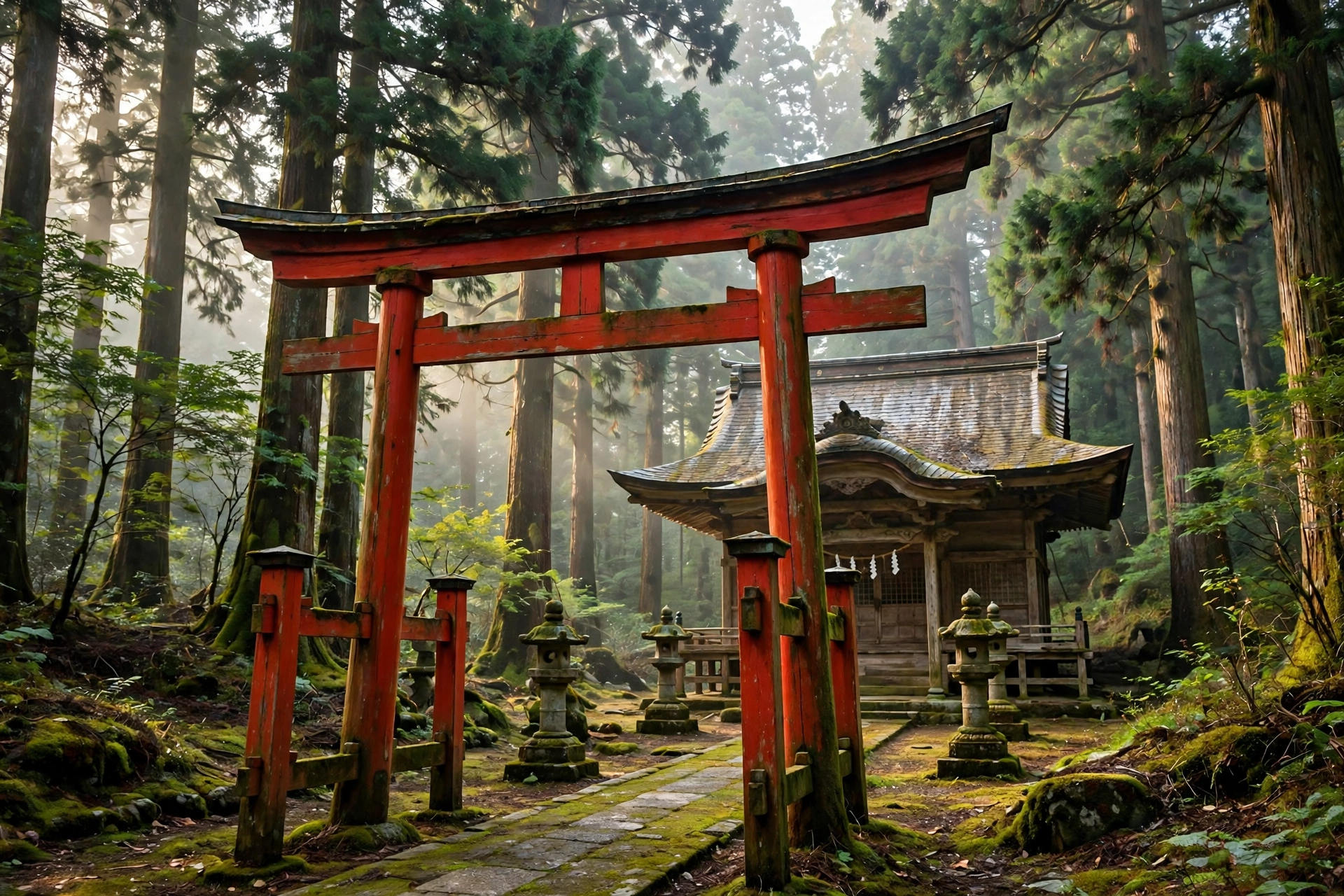
The point first: Yasukuni Shrine, in Kudankita, Chiyoda, Tokyo, enshrines more than 2,466,000 spirits (mitama) of people who died in service to the nation since 1853 (Kaei 6). It began in June 1869 (Meiji 2) as Tokyo Shokonsha, founded by the will of Emperor Meiji, and was renamed Yasukuni Shrine in June 1879. Within the precinct are the Honden and Haiden halls, the Shinmon gate with a chrysanthemum crest 1.5 metres across, a first torii 25 metres high, and the Yushukan museum, which opened in 1882. The Spring Grand Festival is held from April 21 to 23, and the Mitama Matsuri from July 13 to 16. The gates open at 6:00 a.m. all year, and formal worship costs a tamagushi offering of 5,000 yen or more per person as a guide. A Japanese statement of the shrine rank, the postwar history, and whether there is official guidance on weddings could not be confirmed on the official pages checked this time.
Hello, I am Kurashiki Bouzu (kurashiki-bouzu). I was born in 1971, I am a former funeral professional, and I now live in an old house in Kurashiki, Okayama, working together with Moka, my AI butler.
This is one article in a series introducing shrines across Japan, one shrine at a time. This time it is Yasukuni Shrine in Chiyoda, Tokyo. This article is organized from official published sources; it is not an account of a visit I made myself.
Basic information
- Shrine name: Yasukuni Shrine (Yasukuni Jinja). The official site writes the name in old-style characters as “靖國神社”.
- Enshrined deities: According to the official site, the shrine enshrines more than 2,466,000 spirits (mitama) of people who died in service to the nation since 1853 (Kaei 6). The official English version explains that people who gave their lives for the nation are enshrined equally, regardless of rank or status.
- Shrine rank: The official English version states that after the renaming, the shrine was raised to an “Imperial Shrine of Special Status” (an expression corresponding to Bekkaku Kanpeisha). However, a Japanese statement of that classification could not be confirmed on the official pages checked this time.
- Address: 3-1-1 Kudankita, Chiyoda-ku, Tokyo 102-8246
- Telephone: 03-3261-8326 (main number)
History
According to the official site, the shrine began in June 1869 (Meiji 2), when, by the will of Emperor Meiji, it was founded in Kudan, Tokyo, as a “Shokonsha (Tokyo Shokonsha)”. The official “History of Yasukuni Shrine” records that the enshrinement and the first joint enshrinement festival were held on June 29 of that year.
In June 1879 (Meiji 12), it was renamed “Yasukuni Shrine”. The name “Yasukuni” was bestowed by Emperor Meiji, and the official English version explains that it carries the meaning of “preserving peace for the entire nation”.
The Honden was built in 1872 (Meiji 5), and after a three-year restoration beginning in 1986 (Showa 61), it was completed in 1989 (Heisei 1). As for the course of its becoming a religious corporation after the war, no clear statement could be confirmed on the official pages checked this time, so nothing is stated definitively here.
Highlights
- Honden: The place where the spirits rest, built in 1872 (Meiji 5). Behind it stands the Reijibo Hoanden (built in 1972), which houses the Reijibo, the register of the names of the enshrined deities.
- Haiden: Built in 1901 (Meiji 34). Worship at the front of the shrine takes place in front of the Haiden.
- Shinmon: Built in 1934 (Showa 9). The central doors bear a chrysanthemum crest 1.5 metres in diameter.
- Torii: The first torii was rebuilt in 1974 (Showa 49) and is 25 metres high. The second torii was built in 1887 (Meiji 20), and the official site describes it as the largest bronze torii in Japan. The Chumon torii was rebuilt in 2006 (Heisei 18).
- Yushukan: A museum exhibiting historical materials that convey the deeds of the enshrined deities, including their last letters and personal effects; it opened in 1882 (Meiji 15). The present main building was completed in 1931 (Showa 6), and there are 22 exhibition rooms.
- Elsewhere in the precinct: There are also the Motomiya, the Chinreisha, a Noh theatre, the Shinchi Teien garden, a bronze statue of Omura Masujiro, and cherry trees in the precinct.
- National Treasures, Important Cultural Properties, and World Heritage: No statement of such designations could be confirmed on the official pages checked this time. The shrine is not inscribed on the World Heritage List.
Festivals
- Spring Grand Festival: From April 21 to 23.
- Autumn Grand Festival: The official English version gives October 17 to 19. As this may change by year, it is safest to check the official guidance for that year.
- Mitama Matsuri: From July 13 to 16. A summer festival in the Obon season, when more than 30,000 lanterns and paper lamps, large and small, are displayed.
- Founding Anniversary Festival: June 29. The Oharae purification rite is held on June 30 and December 31.
- Other annual festivals: There are festivals including the New Year Festival, Kinen-sai, Showa-sai, Meiji-sai and Niiname-sai, and monthly festivals are held on the 1st, 11th and 21st of each month. A dedicatory grand sumo event is also held in April.
Connection with life’s milestones
According to “Kudan Biyori”, an official related site, at the Honden one can apply not only for prayers such as family safety and warding off misfortune, but also for Hatsumiyamode (a baby’s first shrine visit) and Shichi-Go-San visits. The official New Year guidance states that prayer worship starts from 5,000 yen per request. The detailed fees and application methods for Shichi-Go-San visits could not be confirmed this time.
Dedicated guidance on weddings and guidance on Shinto funerals could not be confirmed within the official pages checked this time. For milestone rites, it is safest to check directly with the shrine office.
Practical information for a visit
- Gate opening and closing (inner garden): The gates open at 6:00 a.m. all year. Closing is 5:00 p.m. in January, February, November and December, and 6:00 p.m. from March to October.
- General worship: Worship in front of the Haiden is free during gate hours, and no reservation is needed. The manner is two bows, two claps, and one bow.
- Formal worship (Shoden Sanpai, worship inside the hall): Apply at the reception inside the Sanshuden. According to the official guidance, it runs from 9:00 a.m. to 4:00 p.m., with guidance every hour, and reception must be completed 15 minutes beforehand. It takes roughly 40 minutes, small groups need no reservation, and groups require advance application. The tamagushi offering is a guide of 5,000 yen or more per person. Note that the reception hours showed some variation in wording between official pages.
- Yushukan: From 9:00 a.m. to 4:30 p.m. (entry until 30 minutes before closing). It is open all year, but there are temporary closures at the end of June and the end of December. Admission is 1,000 yen for adults, 500 yen for university students, 300 yen for junior high and high school students, and free for elementary school children.
- Parking: There is the Gaien parking lot, at 300 yen per 30 minutes for ordinary cars; it is free for those who have made a formal worship visit.
- Access: About a 5-minute walk from Kudanshita Station (Exit 1) on the subway. About a 10-minute walk each from Iidabashi Station and Ichigaya Station on the JR and subway lines.
I will also honestly record the points that could not be confirmed. A Japanese statement of the shrine rank, the postwar course of events, whether there is official guidance on weddings, and the latest authoritative version of the formal worship reception hours could not be confirmed within the scope of this check. Separating what is known from what is not known is how this series proceeds.
Sources
- Yasukuni Shrine official site https://www.yasukuni.or.jp/
- Yasukuni Shrine official, “Formal Worship” https://www.yasukuni.or.jp/guide/
- Yasukuni Shrine official, “Access” https://www.yasukuni.or.jp/access.html
- Yasukuni Shrine official, “Guide to Worship” https://www.yasukuni.or.jp/precincts/
- Yasukuni Shrine official, “Precinct Map” https://www.yasukuni.or.jp/precincts/map.html
- Yasukuni Shrine official English version, “History” https://www.yasukuni.or.jp/english/about/history.html
- Yasukuni Shrine official English version, “Festivals” https://www.yasukuni.or.jp/english/festivals.html
- Yasukuni Shrine official, “History of Yasukuni Shrine” https://www.yasukuni.or.jp/history/history.html
- Yasukuni Shrine official English version, “Yushukan” https://www.yasukuni.or.jp/english/yushukan/
- Yasukuni Shrine official, “News List” https://www.yasukuni.or.jp/news.html
- “Kudan Biyori” https://kudan-biyori.yasukuni.or.jp/articles/yasukuni-kiso.html
- November 22, 2026 ― Published in English (translation of the Japanese article, ledger No. 3104)(7,337 characters)