
Kasuga Taisha, Organized — Four Enshrined Deities, Three Thousand Lanterns, and Kasugano in Nara
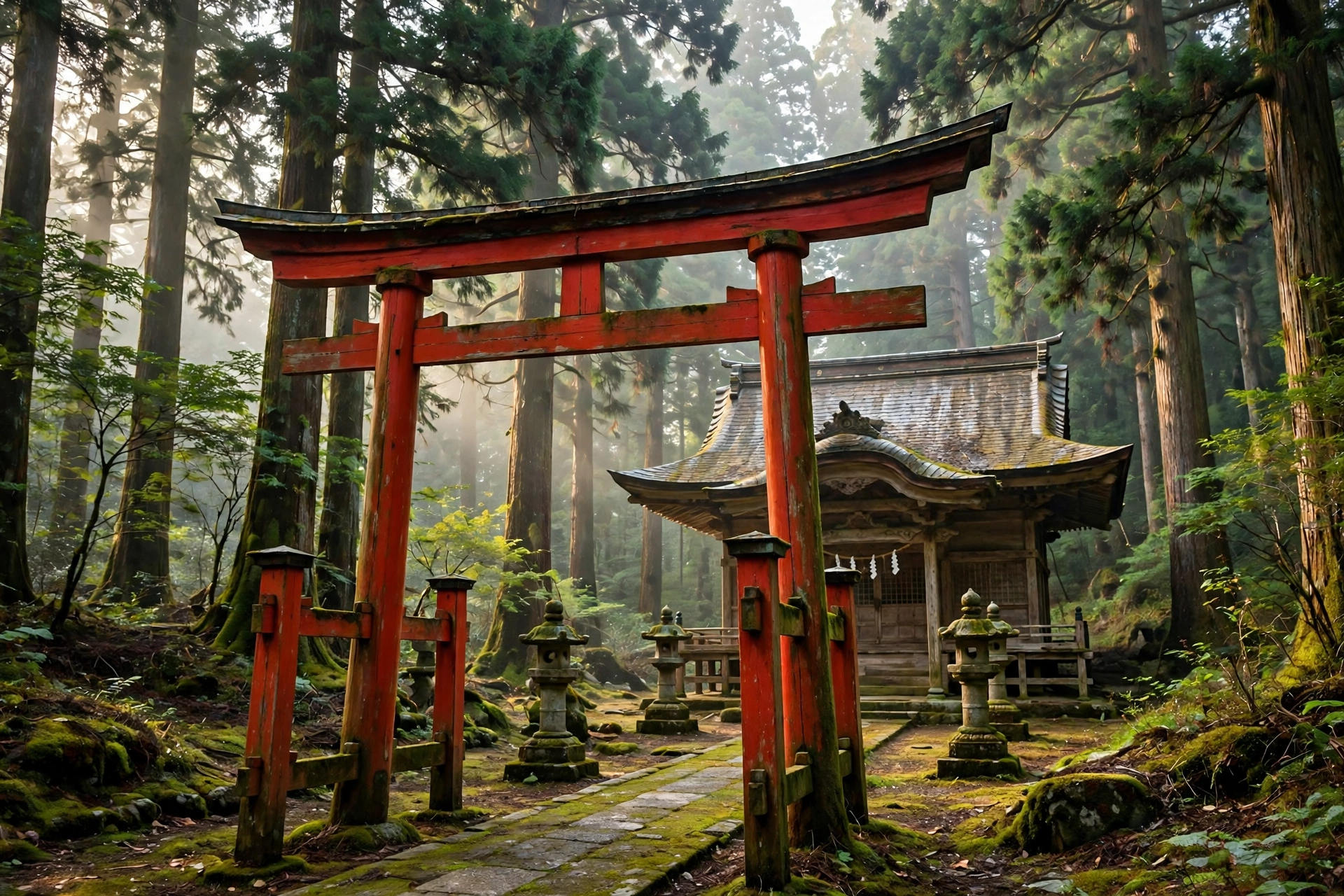
The point first: Kasuga Taisha in Nara stands at 160 Kasugano-cho, Nara (postal code 630-8212), and enshrines four deities — Takemikazuchi no Mikoto in the First Hall, Futsunushi no Mikoto in the Second, Amenokoyane no Mikoto in the Third, and Himegami in the Fourth. Its main halls, in the one-bay kasuga-zukuri style with hinoki-bark roofs, were designated National Treasures on June 28, 1956, and the present buildings date from a rebuilding in 1863 (Bunkyu 3). The precinct is known for its roughly 3,000 lanterns — about 2,000 stone lanterns and about 1,000 hanging lanterns. Special worship of the main hall costs ¥700, and parking is ¥1,500 for a standard car. No statement of shrine rank, and no direct confirmation on the official or prefectural pages opened this time of its registration as part of “Historic Monuments of Ancient Nara,” could be confirmed, so this article does not state them definitively.
Hello, I am Kurashiki Bouzu. I was born in 1971 and formerly ran a funeral business. I now live in a single-story old house in Kurashiki, Okayama, with my wife and our two cats, spending my days repairing the house ourselves. For research and article writing, I am helped by Moka, my AI butler.
This is one article in a series organizing the shrines of Japan, one shrine at a time. It is organized from official published sources, not from a visit I made myself. What is known and what is not known are written separately, so please read with that in mind. This time it is Kasuga Taisha in Nara, Nara Prefecture.
Basic information
Kasuga Taisha is at 160 Kasugano-cho, Nara City, Nara Prefecture. Its postal code is 630-8212.
Four deities are enshrined: Takemikazuchi no Mikoto in the First Hall, Futsunushi no Mikoto in the Second Hall, Amenokoyane no Mikoto in the Third Hall, and Himegami in the Fourth Hall. According to the official guide, Takemikazuchi no Mikoto was welcomed from Kashima Jingu and Futsunushi no Mikoto from Katori Jingu, while Amenokoyane no Mikoto and Himegami are recorded as coming from Hiraoka Shrine.
As for shrine rank, no statement of classifications such as shikinaisha, one of the Twenty-Two Shrines, former kanpei-taisha, chokusai-sha or beppyo shrine could be confirmed on the pages of the official site opened this time. However well-known a shrine may be, what has not been verified cannot be written as definite. This point is honestly left as “could not be confirmed.” As for World Heritage, no direct confirmation of a statement of registration as part of “Historic Monuments of Ancient Nara” could be found on the official site or Nara Prefecture pages opened this time either, so a definitive statement is avoided here.
History
The top of the official site records that, for the protection of the capital Heijo-kyo, Takemikazuchi no Mikoto was welcomed from Kashima to the summit of Mount Mikasa, at Ukigumo no Mine. Mount Mikasa is read “Mikasa-yama.”
Later, in Jingo Keiun 2, 768, in the time of Empress Shotoku, shrine buildings for the four deities were constructed at the present site by Fujiwara no Nagate and others, according to the official main hall guide. That guide also mentions what is regarded as the oldest surviving document, the Kosha-ki.
In other words, the official explanation reads as a flow in which a deity was first welcomed onto the mountain, and in time shrine buildings were prepared at the present place. The idea of welcoming a deity as guardian of the capital may feel a little distant to us today. Even so, I think the feeling of treasuring a shrine in wishing for the safety of the whole town continues today, in changed forms.
Highlights
The main hall consists of the First through Fourth Halls, in the one-bay kasuga-zukuri style with hinoki-bark roofs. In the cultural heritage database it is designated a National Treasure, with the designation date given as June 28, 1956. The buildings themselves are explained as dating from a rebuilding in Bunkyu 3, 1863. When we think of an old shrine, we tend to imagine its buildings surviving unchanged from long ago; that Kasuga Taisha’s main hall, rebuilt at the end of the Edo period, is treasured as a National Treasure is an interesting point.
Within the precinct is a museum, the Kasuga Taisha National Treasure Hall (Kokuhoden). It is open from 10:00 to 17:00, with last admission at 16:30. The Manyo Botanical Garden is another highlight: opened in 1932 (Showa 7), it is described on the official top page as a display garden planted with plants sung of in the Manyoshu. Its hours are 9:00 to 16:30, with last entry at 16:00.
The number of lanterns is also impressive. An official notice records about 2,000 stone lanterns and about 1,000 hanging lanterns, roughly 3,000 in total. At the Setsubun Mantoro, pure fire is lit in them. The sight of countless lanterns lined up in the daytime and the sight when the fires are lit must be quite different views.
Festivals
The official basic information page notes that, in line with the Kasuga Festival on March 13, special worship of the main hall is suspended from March 8 to 13. That worship in its usual form is not possible for a period as a festival day approaches is important practical information. However, official wording that the Kasuga Festival is the annual festival (reisai) could not be confirmed directly this time. This article therefore does not call it the annual festival definitively, and conveys only what is certain: that the Kasuga Festival is held on March 13, and the period of suspension of special worship.
For the Kasuga Wakamiya On-Matsuri held in December, no date could be confirmed on the official pages opened this time either. It is a large, well-known festival, but its date will not be written vaguely. If you are considering a visit, please check the latest guide on the official site before setting out.
Connection with life’s milestones
As a former funeral professional, what concerns me is how a shrine is involved at the milestones of life.
The official top page of Kasuga Taisha carries a “prayers” guide, clearly stating that New Year visits, shichi-go-san, yakuyoke (warding off misfortune) and various prayers are held. For those considering shichi-go-san or yakuyoke, the point that there is official guidance is easy to grasp. There is also a “weddings” guide, clearly stating that Shinto weddings following the ancient forms are held.
On the other hand, for omiyamairi, no individual name could be confirmed in the prayer items on the top page. It may be included in “various prayers,” but that cannot be stated definitively. As for shinsosai (Shinto funerals), no guidance was found on the official site within the top page and basic information page opened this time. Rather than assuming that a shrine naturally accepts Shinto funerals because it is a shrine, it is surest for those who need one to inquire directly with the shrine in advance. In rites especially, I have felt since my days at funeral sites that confirming before acting, rather than leaving the unknown as it is, is what matters.
Practical information for a visit
Worship at the main shrine (Honsha) runs from 6:30 to 17:30 from March to October, and from 7:00 to 17:00 from November to February. Special worship of the main hall is from 9:00 to 16:00, at a fee of ¥700. There are, however, suspended days: March 8 to 13, December 20 to January 7, Coming of Age Day and the like, and also the mornings of the 1st, 11th and 21st of each month. The Meoto Daikoku-sha is open from 9:00 to 16:30.
The car park holds 100 vehicles in total, standard cars and buses combined, usable from 7:30 to 17:00 from March to October and from 7:30 to 16:30 from November to February. Fees, according to the official English guide, are ¥1,500 for a standard car, ¥4,000 for a bus and ¥500 for a two-wheeled vehicle.
As for goshuin, an official notice on the top page confirming the offering of a special goshuin at an offering fee of ¥1,000 could be checked. The reception place and hours for regular goshuin could not be confirmed this time, so they are not written here.
For access, take a Nara Kotsu bus from JR Nara Station or Kintetsu Nara Station and get off at “Kasuga Taisha Honden,” right by the shrine. By city loop bus, getting off at “Kasuga Taisha Omotesando” leaves about a 10-minute walk, according to the official guide. Checking the day’s guidance on the official site before setting out is recommended.
Sources
- Kasuga Taisha official site
- Kasuga Taisha official site, English basic information
- Kasuga Taisha official site, English guide
- Nara Prefecture, Kasuga Taisha related page
- Cultural Heritage Database, Kasuga Taisha main hall
- Nara Prefecture, cultural resources page
- November 22, 2026 ― Published in English (translation of the Japanese article, ledger No. 2960)(7,190 characters)