
Kamo Wakeikazuchi Jinja (Kamigamo Jinja) (Kyoto City, Kyoto) — An Ancient Kyoto Shrine Facing Mount Kamiyama, Known for the Aoi Festival
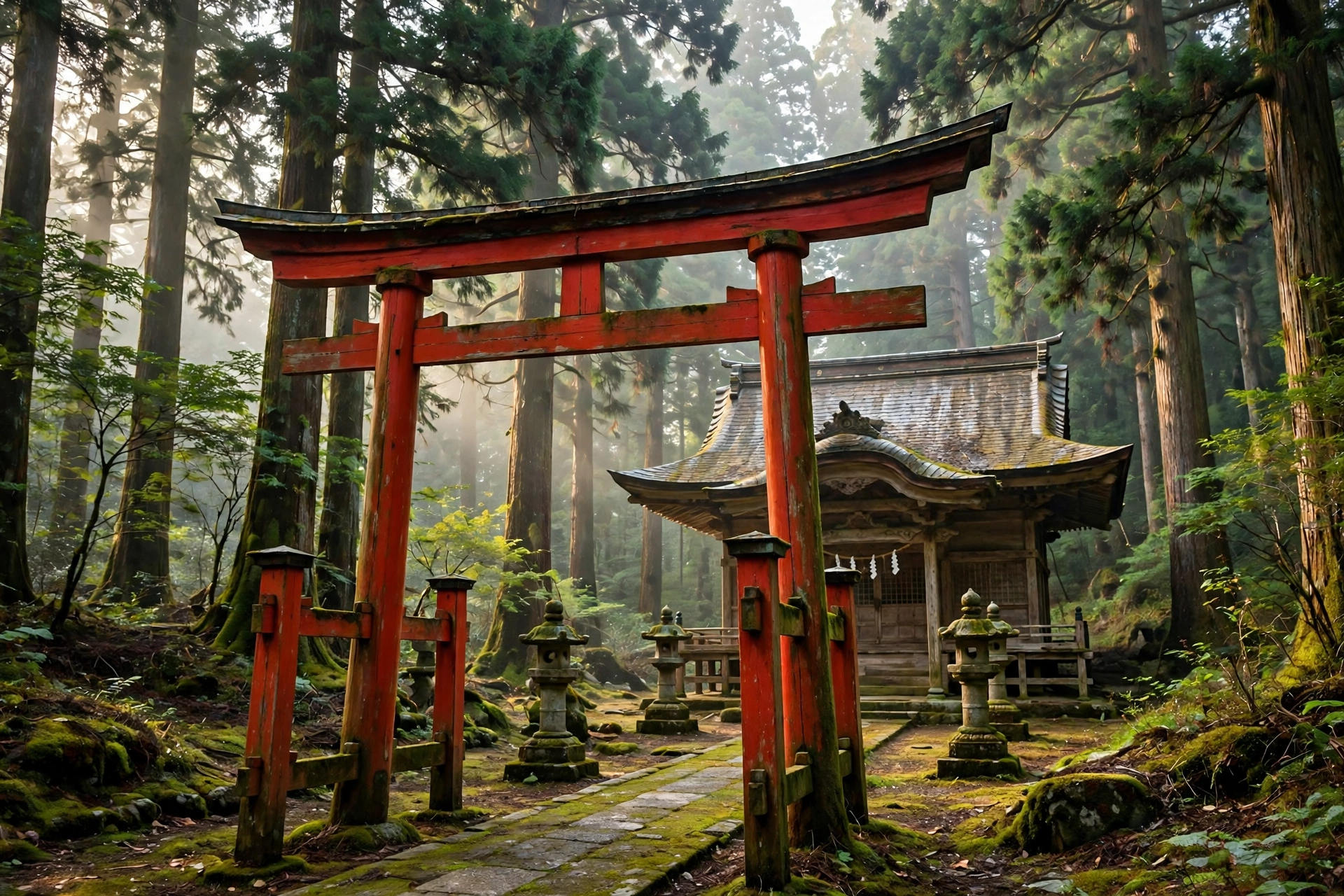
The point first: Kamo Wakeikazuchi Jinja (Kamigamo Jinja) in Kita Ward, Kyoto City, Kyoto Prefecture, enshrines Kamo Wakeikazuchi no Okami and is a World Heritage shrine known as the Ichinomiya of Yamashiro Province. According to official sources, the deity is said to have descended in mythical times onto Mount Kamiyama (301.5 meters), about 2 kilometers north-northwest of the main hall, and Kyoto City’s official sightseeing guide says Kamo Jingu was built on the present site in 677 (Tenmu 6). Its highlights include the Honden and Gonden (National Treasures), rebuilt in 1863 in the nagare-zukuri style, and the pair of Tatezuna sand cones modeled on Mount Kamiyama. Its most important annual rite is the Kamo Festival (Aoi Festival) on May 15, one of Kyoto’s three great festivals, and the Kurabeuma horse ritual is held on May 5. For the special visit to the National Treasure Honden, reception is from 10:00 to 16:00 and the offering is 500 yen for adults. Other shrine-rank classifications beyond Ichinomiya of Yamashiro Province, the reason for the discrepancy in the number of Important Cultural Property buildings, parking fees, and the details of goshuin reception could not be confirmed.
Hello, I am Kurashiki Bouzu (kurashiki-bouzu). I was born in 1971, I am a former funeral professional, and I now live in an old house in Kurashiki, Okayama.
This is one article in a series introducing shrines across Japan, one shrine at a time. This time it is Kamo Wakeikazuchi Jinja in Kita Ward, Kyoto City, Kyoto Prefecture, commonly known as Kamigamo Jinja. This article is organized from official published sources such as the shrine’s official site; it is not an account of a visit I made myself, and I say so honestly at the outset.
Basic information
- Formal name: Kamo Wakeikazuchi Jinja (Kamo Wake Ikazuchi Jinja). It is commonly called Kamigamo Jinja (Kamigamo Jinja) and is also called the “Upper Shrine.”
- Enshrined deity: Kamo Wakeikazuchi no Okami.
- Divine blessings: warding off misfortune, warding off calamity by direction, good fortune, protection in all directions, protection from lightning, protection from disaster, victory, and protection of the electrical industry.
- Shrine rank: Kyoto Prefecture materials confirm that, together with Kamo Mioya Jinja (Shimogamo Jinja), it became the “Ichinomiya of Yamashiro Province” from the Heian period onward. Other classifications could not be confirmed directly on the official and public pages opened this time, so nothing is stated definitively here.
- Address: 339 Kamigamo Motoyama, Kita Ward, Kyoto City, Kyoto Prefecture 603-8047. Telephone: 075-781-0011 (shrine office).
- World Heritage: It is one of the component assets of the UNESCO World Cultural Heritage site “Historic Monuments of Ancient Kyoto,” inscribed in 1994 (Heisei 6). The official site says the entire precinct of about 230,000 tsubo is inscribed.
History
According to official sources, the enshrined deity is said to have descended in mythical times onto Mount Kamiyama (Koyama, elevation 301.5 meters), about 2 kilometers north-northwest of the main hall. The largest rock at the summit is the iwakura regarded as the stone of descent.
Kyoto City’s official sightseeing guide (Kyoto City Official Travel Guide) says that in 677 (Tenmu 6), Kamo Jingu was built on the present site. Kyoto City records that by the end of the 7th century it had already become an influential shrine, and that after the founding of the Heian capital it attracted veneration as a shrine protecting the state. Kyoto Prefecture also describes it as the clan shrine of the Kamo clan.
The Kamo myth is also handed down as part of its origins: Kamo Tamayori Hime no Mikoto picked up a vermilion-painted arrow in a river, the divine child born through it once ascended to heaven, and then descended onto Mount Kamiyama through a festival welcoming the deity.
Highlights
- Honden and Gonden (National Treasures): The Honden, which enshrines the deity, and the Gonden, a permanent temporary hall, stand side by side to the east and west. Both were rebuilt in 1863 (Bunkyu 3), in the three-bay nagare-zukuri style with cypress-bark roofing, and are designated National Treasures as typical examples of nagare-zukuri. Both halls stand in the inner garden, which is not normally open to entry.
- Other shrine buildings: Most were rebuilt in 1628 (Kan’ei 5), and the official site says they preserve the appearance of the Heian period. The exhibition in the Takakura-den can be viewed by those on the special visit. As for the number of Important Cultural Property buildings, the official site gives 41 buildings while Kyoto Prefecture and Kyoto City give 34 buildings; because these figures differ, nothing is stated definitively here.
- Tatezuna: A pair of conical sand mounds in front of the Hosodono, directly ahead after passing through the second torii gate. They are modeled on Mount Kamiyama, pine needles stand at their tops, and they form a pair of yang and yin.
- Katayama Miko Jinja (Kataoka-sha): The first auxiliary shrine among the auxiliary and subordinate shrines. The enshrined deity is the mother deity Kamo Tamayori Hime no Mikoto, said to grant blessings for good matches, children, and safe childbirth. The official site also records its connection with Murasaki Shikibu, who visited and composed a poem of love.
- Shingu Jinja: Enshrined in the inner part of the precinct, it venerates Takaokami, the dragon deity who governs water. Normally worship is from in front of the gate, but on the second and fourth Sundays of each month the gate opens and a sacred prayer is held at which the kagura dance “Kamo no Mai” is performed.
Festivals
- Kamo Festival (Aoi Festival): The annual festival on May 15, the most important rite among the year’s festivals. The official site says its origins go back to the reign of Emperor Kinmei. It is also called the “Aoi Festival” because hollyhock (aoi) is used to decorate the shrine buildings and those serving wear it on their persons. The procession departs from the Kyoto Imperial Palace, passes through Kamo Mioya Jinja, and arrives at this shrine. It is one of Kyoto’s three great festivals, alongside the Gion Festival and the Jidai Festival.
- Kamo Kurabeuma: On May 5, it is held as a ritual praying for abundant harvests of the five grains on the lawn between the first and second torii gates. It began in 1093 (Kanji 7), when an imperial court horse-racing event was dedicated to the shrine.
Connection with life’s milestones
From the perspective of a former funeral professional, I also checked the guidance connected with life’s milestones. For weddings, the official site carries guidance on Shinto wedding ceremonies, and a dedicated wedding site describes weddings in the Honden, weddings in the Hosodono, and the “Yoi no Musubi” held after the gates close. Because a notice of revision of the offering (hatsuhoryo) has also been issued, no amount is stated definitively here.
The official site also carries guidance on omiyamairi (a baby’s first shrine visit) and shichi-go-san visits. The official site states clearly that prayers for shichi-go-san visits are offered throughout the year. Prayer reception is from 9:00 to 16:00, held as visitors arrive, with no reservation required.
By contrast, as for shinsosai (Shinto funerals), no individual guidance was found within the scope of the official site checked this time. Not finding something is different from stating definitively that it does not exist. Anyone considering it can be certain by asking the shrine office directly.
Practical information for a visit
- Visiting hours: The second torii gate opens at 5:30 and closes at 17:00. The Romon gate and the conferral office open at 8:00 and close at 16:45. Hours change during the New Year period.
- Special visit to the National Treasure Honden: A visit guided by a Shinto priest, proceeding through sacred grounds not normally open, to stand before the Honden and Gonden. Reception is from 10:00 to 16:00, and the offering is 500 yen for adults (free when accompanying family members are junior high school age or younger). At the Chokai-den visitors receive purification and an explanation of the Kamo myth, and can also view the exhibition in the Takakura-den. Photography and eating or drinking are not permitted. Because the visit may be suspended or changed on festival days and the like, advance inquiry is recommended in the guidance.
- Parking: There is a parking lot for visitors, and the official site says it is normally open from 6:00 to 22:00 (exit possible 24 hours). The fees could not be confirmed in this check, so they are not written here.
- Access: By Kyoto City Bus, take route 4 from JR Kyoto Station and get off at “Kamigamo Jinja-mae,” immediately nearby. By car, the official site says it is about 30 minutes from JR Kyoto Station.
Finally, an honest summary of the points that could not be confirmed. A clear statement of shrine-rank classifications other than Ichinomiya of Yamashiro Province, the reason for the discrepancy in the number of Important Cultural Property buildings, parking fees, and the details of goshuin reception could not be confirmed. Separating these out in writing is how this series proceeds.
Sources
- Official, “About Kamigamo Jinja” https://www.kamigamojinja.jp/about/
- Official, “Precinct guide” https://www.kamigamojinja.jp/sanpai/keidai/
- Official, “Guide to worship and prayers” https://www.kamigamojinja.jp/sanpai/
- Official, “Special visit to the National Treasure Honden” https://www.kamigamojinja.jp/sanpai/tokubetsu/
- Official, “Kamo Festival” https://www.kamigamojinja.jp/hitotose/kamosai/
- Official, “Access” https://www.kamigamojinja.jp/access/
- Kyoto Prefecture, “World Heritage: Kamo Wakeikazuchi Jinja” https://www.pref.kyoto.jp/isan/kamomuke.html
- Kyoto City, “Kamo Wakeikazuchi Jinja” https://www.city.kyoto.lg.jp/bunshi/page/0000005602.html
- Kyoto City Official Travel Guide, “Kamo Wakeikazuchi Jinja” https://ja.kyoto.travel/tourism/single01.php?category_id=7&tourism_id=253
- November 22, 2026 ― Published in English (translation of the Japanese article, ledger No. 3122)(8,435 characters)