
Kamo Mioya Shrine (Shimogamo Shrine) (Kyoto City, Kyoto) — Shrine of the Kamo Ancestral Deities, Guarded by Tadasu no Mori and Home to the Aoi Matsuri
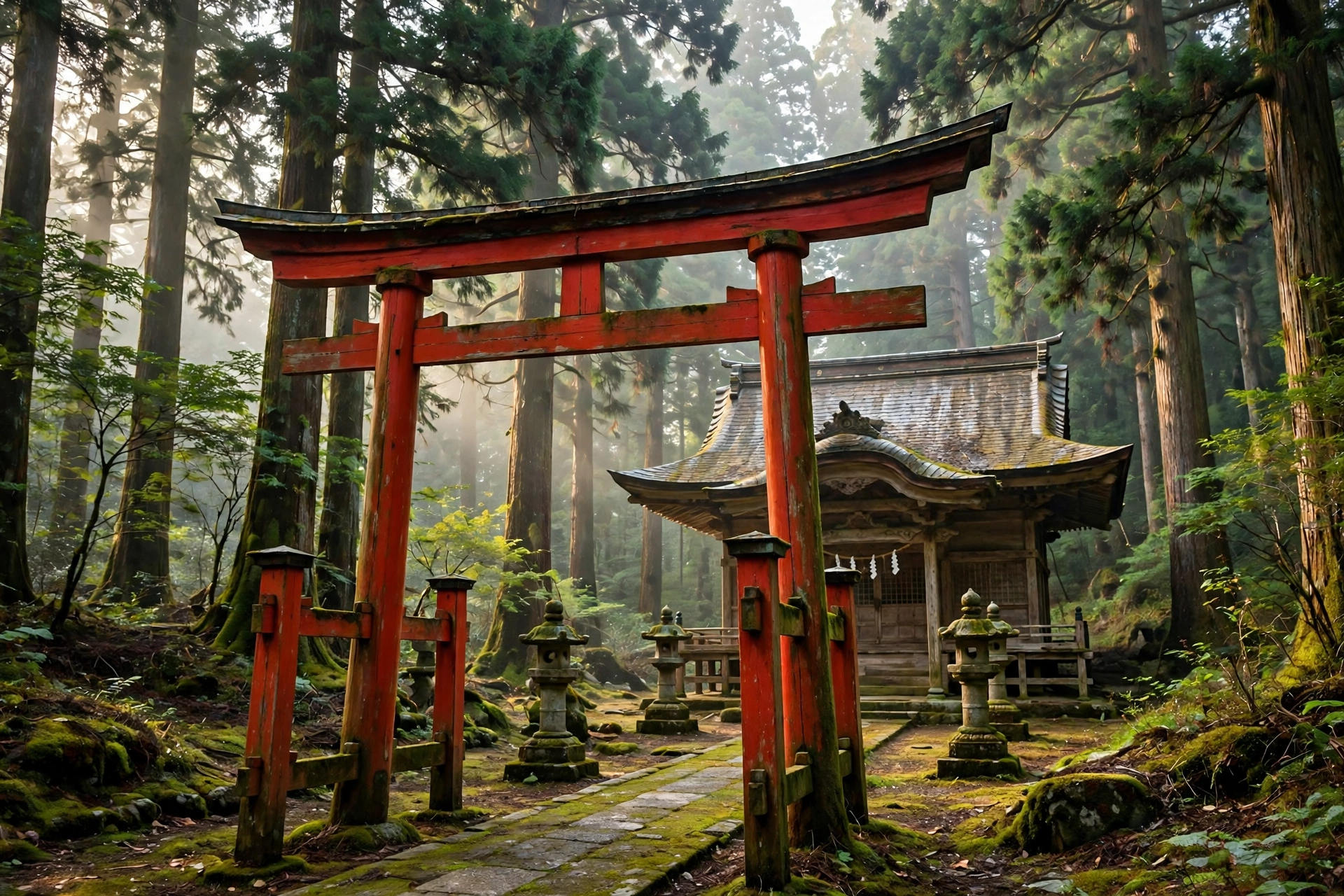
The point first: Kamo Mioya Shrine, commonly called Shimogamo Shrine, stands in Sakyo Ward, Kyoto City, at the confluence of the Kamo and Takano Rivers. It enshrines Kamo Taketsunumi no Mikoto in the West Hall and Tamayorihime no Mikoto in the East Hall, and is surrounded by the Tadasu no Mori forest of about 120,000 square meters. It is a component of the World Heritage site “Historic Monuments of Ancient Kyoto,” registered in 1994, and together with Kamigamo Shrine holds the Aoi Matsuri (Kamo Festival) on May 15 each year, an imperial festival counted among Kyoto’s three great festivals. Its two main halls are National Treasures. Some points — such as classifications like shikinaisha, Nijunisha and beppyo shrine, the exact count of Important Cultural Property buildings (given as 53 in some guides and 31 in others), and the details of goshuin hours — could not be confirmed in the sources checked this time, so they are not stated definitively.
Hello, I am Kurashiki Bouzu (kurashiki-bouzu). I was born in 1971, I am a former funeral professional, and I now live in an old house in Kurashiki, Okayama, working together with Moka, my AI butler.
This is one article in a series introducing shrines across Japan, one shrine at a time. This time it is Kamo Mioya Shrine in Sakyo Ward, Kyoto City, Kyoto, commonly known as Shimogamo Shrine. This article is organized from official published sources; it is not an account of a visit I made myself.
Basic information
- Formal name: Kamo Mioya Shrine (Kamo Mioya Jinja). It is called by this name because it enshrines the ancestral deities of the Kamo clan, and because it lies downstream on the Kamo River it is also commonly called “Shimogamo Shrine” (Shimogamo Jinja).
- Enshrined deities: Kamo Taketsunumi no Mikoto is enshrined in the West Hall, and Tamayorihime no Mikoto in the East Hall. Tamayorihime no Mikoto is a child deity of Kamo Taketsunumi no Mikoto, and the mother of Kamo Wakeikazuchi no Okami, the deity of Kamigamo Shrine.
- Divine blessings: Kamo Taketsunumi no Mikoto is the deity who opened up ancient Kyoto, and the official site describes him as a deity who protects daily life, including protection from misfortune, matchmaking, childbearing, safe childbirth, child-rearing and traffic safety.
- Shrine rank: What could be confirmed directly from official sources was “Ichinomiya of Yamashiro Province,” the explanation that after the Meiji period it was placed as the foremost of the Kanpei Taisha (imperial shrines, first rank), and that the Aoi Matsuri is an “imperial festival” (chokusai). Classifications such as shikinaisha, Nijunisha and beppyo shrine could not be confirmed as explicitly stated within the scope checked this time, so they are not stated definitively.
- Address: 59 Shimogamo Izumigawa-cho, Sakyo Ward, Kyoto City, Kyoto 606-0807. Telephone: 075-781-0010.
History
Shimogamo Shrine stands where the Kamo River and the Takano River meet. Its founding is unknown, but the official site explains that, because there is a record of repairs to the sacred fence in the 7th year of Emperor Sujin (90 BC), it is thought to have been enshrined before that time.
The official site states that an entry in the Shoku Nihongi for the 2nd year of Emperor Monmu (698) ordered guards because many spectators gathered for the Aoi Matsuri, showing that a grand festival was already held before the Nara period. After the capital moved to Heian in 794, it became the Ichinomiya of Yamashiro Province and received the reverence of the Imperial Court.
According to tradition, when Tamayorihime no Mikoto was purifying herself in the Kamo River, she picked up a vermilion-lacquered arrow that had floated down from upstream, whereupon she conceived and gave birth to Kamo Wakeikazuchi no Okami (introduced by the official site as a story handed down in works such as the Yamashiro no Kuni Fudoki).
The Shikinen Sengu rebuilding has been held, in principle every 21 years, with the first in Chogen 9 (1036). The official site explains that, because the main halls and other buildings are now designated cultural properties, the present form is based on repairs.
Highlights
- Main halls (East Main Hall and West Main Hall): Two buildings designated as National Treasures. The existing buildings date from a rebuilding in Bun’kyu 3 (1863) and are regarded as typical examples of nagare-zukuri main halls. The number of other shrine buildings designated Important Cultural Properties differs between guides, given as 53 buildings in some and 31 in others, so it is not stated definitively.
- Tadasu no Mori: The shrine forest spreading over the delta where the two rivers meet. Covering about 120,000 square meters (about 36,000 tsubo), it is designated a national historic site as a forest preserving vegetation from ancient times.
- Mitarashi Shrine (Inoue Shrine): A subordinate shrine within the precinct, enshrining Seoritsuhime no Mikoto. The Mitarashi Pond in front of it is also the site of the foot-soaking rite and of the purification of the Saio-dai, and it is said to be the birthplace of mitarashi dango, dumplings modeled on the bubbles rising in the pond.
- Kawai Shrine: A sessha (auxiliary shrine) enshrining Tamayorihime no Mikoto, which draws faith as a guardian of women.
- World Heritage: In 1994 (Heisei 6), it was registered as a World Cultural Heritage site as one of the component assets of the “Historic Monuments of Ancient Kyoto.”
Festivals
- Kamo Festival (Aoi Matsuri): The annual festival of both Shimogamo and Kamigamo Shrines, held every year on May 15. It is an imperial festival (chokusai) served by an imperial messenger, and is counted as one of Kyoto’s three great festivals. The official site says its origin lies in a festival held in the 5th year of Emperor Kinmei (544) at a time of poor harvests, famine and epidemics. The procession proceeds from the Kyoto Imperial Palace via Shimogamo Shrine to Kamigamo Shrine, and at Shimogamo Shrine the “Shato no Gi” rite is performed.
- Yabusame Shinji: On May 3, at the riding ground in Tadasu no Mori, from around 13:00 to around 15:00. It is the “Soma no Gi,” in which archers shoot targets while galloping along a riding ground of about 300 meters.
- Mikage Matsuri: On May 12. A rite welcoming to the main shrine the newly born sacred spirit from Mikage Shrine, and said to preserve Japan’s oldest sacred procession.
- Other festivals: The official annual festival list also includes the Mitarashi Festival (foot-soaking rite, for 10 days around the Day of the Ox in midsummer) and the Natsukoshi Shinji (arrow-taking rite, on the eve of the first day of autumn).
Connection with life’s milestones
From the viewpoint of a former funeral professional, I also checked guidance connected with milestones. For prayers (gokito), the official site states that reception is from 9:00 a.m. to 4:30 p.m., no reservation is needed and applications are accepted only on the day, the prayer takes 20 to 30 minutes, and the prayer fee starts from 10,000 yen. The wishes listed include safety of the household, protection from misfortune, prayers for safe childbirth, traffic safety, first shrine visits, Shichi-Go-San, and also off-site festivals such as ground-breaking ceremonies and purification rites.
For a baby’s first shrine visit (omiyamairi), the official site generally gives the 31st day for boys and the 33rd day for girls. There is also dedicated guidance for Shichi-Go-San. For weddings, a Shinto ceremony is held in the Aoi-no-den (ceremony hall), an Important Cultural Property, and the official site lists the wedding fee (hatsuhoryo) as 150,000 yen.
On the other hand, regarding shinsosai (Shinto funerals), no entry could be confirmed within the scope of the official prayer, festival and off-site festival guidance checked this time. Whether or not they are conducted cannot be determined without an inquiry, so that point is noted here.
Practical information for a visit
- Visiting hours: The area inside the tower gate opens at 6:30 a.m. and closes at 5:00 p.m.; Kawai Shrine opens at 6:30 a.m. and closes at 4:30 p.m. No worship fee is required.
- Prayers and amulet office: Reception for prayers and the amulet office open from 9:00 a.m. The details of goshuin distribution hours could not be confirmed as explicitly stated within the scope checked this time.
- Special viewing: Special viewing of the Oidono and other sites is from 10:00 a.m. to 4:00 p.m.
- Parking: There is a West Parking Lot on the west side of the shrine. According to an official notice, from April 1, 2025 (Reiwa 7) the fee is “500 yen for the first hour, and 300 yen for each additional 30 minutes.”
- Access: The nearest station is Demachiyanagi Station on the Keihan Railway and Eizan Electric Railway. By city bus, it is about a 5-minute walk from the “Shimogamo Jinja-mae” stop, or you can get off at “Tadasu no Mori-mae.” Walking times from Demachiyanagi Station differ between sources, so no single figure is adopted here.
Sources
- Kamo Mioya Shrine official, “Enshrined Deities, History and Myth” https://www.shimogamo-jinja.or.jp/about/gosaisin
- Kamo Mioya Shrine official top page https://www.shimogamo-jinja.or.jp/
- Kamo Mioya Shrine official, “Access and Precinct Map” https://www.shimogamo-jinja.or.jp/access
- Kamo Mioya Shrine official, “Guide to the Kamo Festival (Aoi Matsuri)” https://www.shimogamo-jinja.or.jp/saiji/aoimatsuri
- Kamo Mioya Shrine official, “Prayers” https://www.shimogamo-jinja.or.jp/prayers
- Kyoto City official “Kyoto Travel Navi,” Kamo Mioya Shrine https://ja.kyoto.travel/tourism/single02.php?category_id=9&tourism_id=111
- Kyoto Prefecture, “World Heritage: Kamo Mioya Shrine (Shimogamo Shrine)” https://www.pref.kyoto.jp/isan/kamomio.html
- November 22, 2026 ― Published in English (translation of the Japanese article, ledger No. 3149)(8,125 characters)