
Kofukuji — The Fujiwara Clan Temple in Nara, Home of the Ashura Statue and the Five-Story Pagoda
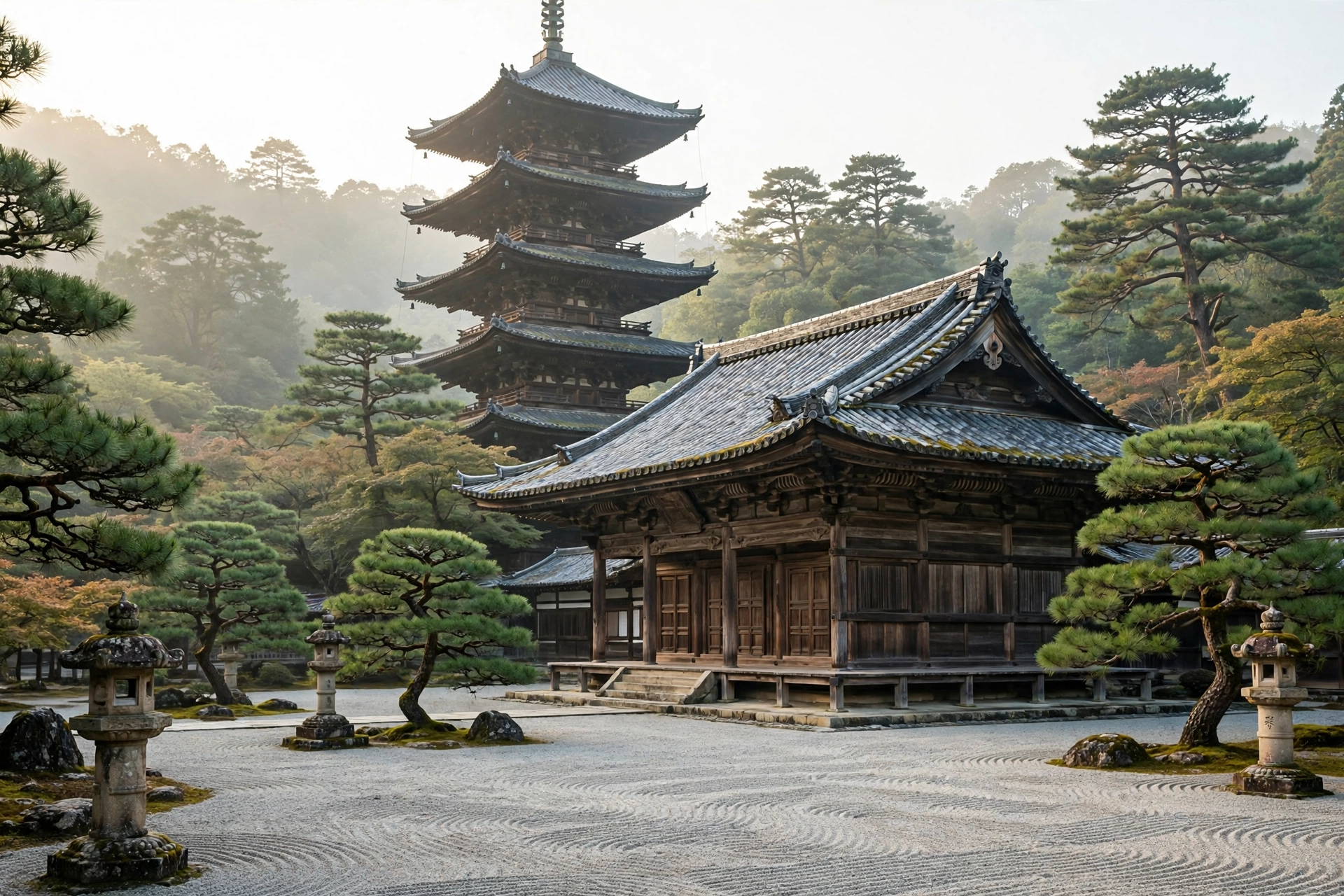
The point first: Kofukuji in Nara is the clan temple of the Fujiwara and the head temple (Daihonzan) of the Hosso School, registered in 1998 as a UNESCO World Heritage site as part of the “Historic Monuments of Ancient Nara.” Its Central Golden Hall was rebuilt and celebrated its completion in October 2018, its Eastern Golden Hall (National Treasure) enshrines Yakushi Nyorai, and its National Treasure Hall houses the famous Ashura statue. The Five-Story Pagoda (National Treasure), rebuilt around 1426, is currently under preservation repair work, so there are periods when its exterior cannot be seen. No general guide to funerals, memorial services, perpetual memorials, interment or tree burials was found on its official site, and this article says so plainly.
I am Kurashiki Bouzu (kurashiki-bouzu), born in 1971, a former funeral professional now living in an old house in Kurashiki, Okayama, working with Moka, my AI butler.
This is one article in a series introducing temples across Japan, one temple at a time. This time it is Kofukuji in Nara City. This is not a record of a visit I made myself; it is an article organizing only confirmed facts from Kofukuji’s official site and published sources of the Ministry of Land, Infrastructure, Transport and Tourism and Nara Prefecture. Please read it as preparation before a visit.
Basic information
- Temple name: Kofukuji. Known as the clan temple of the Fujiwara. The official site’s title is “Head Temple of the Hosso School, Kofukuji”
- School: head temple (Daihonzan) of the Hosso School
- Address: 48 Noborioji-cho, Nara City, Nara Prefecture
- Principal image: Shaka Nyorai (Shakyamuni) of the Central Golden Hall is the central principal image of the temple complex. The Eastern Golden Hall has Yakushi Nyorai as its principal image, so the principal image differs by hall. An official single-sentence statement of the principal image could not be confirmed on the official top page checked this time, so this is based on public tourism materials and similar sources
In 1998, Kofukuji was registered as a UNESCO World Heritage site as one of the “Historic Monuments of Ancient Nara.”
History
In 669, Kagami no Okimi (Princess Kagami) is said to have founded Yamashina-dera in what is now Yamashina, Kyoto City, praying for the recovery of her husband, Fujiwara no Kamatari, from illness.
In 673 the temple moved to Umayasaka and was renamed Umayasaka-dera, and at the transfer of the capital to Heijo-kyo in 710 it was moved to the present site. With the support of Fujiwara no Fuhito, it was renamed Kofukuji after a passage in the Vimalakirti Sutra, according to the Ministry’s multilingual commentary materials.
In the first half of the 8th century it rose as a head temple of the Hosso School, and in 735 the teachings of Hosso are said to have been transmitted by Genbo. The Eastern Golden Hall was built in 726 (Jinki 3) by Emperor Shomu, and the official site marks 2026 as “1300 years since the founding of the Eastern Golden Hall / 600 years since the rebuilding of the Five-Story Pagoda.”
Highlights
The Central Golden Hall is the center of the temple complex and celebrated its rebuilding completion in October 2018. The Eastern Golden Hall (National Treasure) enshrines a seated Yakushi Nyorai, the Nikko and Gekko Bosatsu, Monju Bosatsu, Yuima Koji, the Twelve Heavenly Generals, the Four Heavenly Kings and others.
The National Treasure Hall houses the dry-lacquer Eight Classes of Divine Beings including the Ashura statue, the dry-lacquer Ten Great Disciples, a standing Senju Kannon Bosatsu, a bronze Buddha head, and the Tento-ki and Ryuto-ki statues. Many readers will picture the expression of the Ashura statue.
The Five-Story Pagoda (National Treasure) standing today was rebuilt around 1426. It is currently under preservation repair work, and there are periods when the exterior cannot be seen, so please check the situation on the official site before going. There are also the Three-Story Pagoda and the Northern Round Hall (Hokuendo, both National Treasures), and the Southern Round Hall (Nan’endo, Important Cultural Property, stop No. 9 of the Saigoku 33 Kannon pilgrimage).
To add a little more: the Central Golden Hall, Eastern Golden Hall and National Treasure Hall each play a different role. The Central Golden Hall is the building rebuilt as the center of the complex; the Eastern Golden Hall enshrines Yakushi Nyorai and many other Buddhist statues; the National Treasure Hall stores and displays treasures, beginning with the Ashura statue, that the halls alone cannot convey. Seeing the three in succession, the history of the buildings and the history of the statues come to overlap. That the Nan’endo is stop No. 9 of the Saigoku 33 pilgrimage is also, I think, one reason many pilgrims visit.
As for the Five-Story Pagoda, while the official site marks the milestone of 600 years since its rebuilding, it is also a period when preservation repair work continues. It is a pity that there are times when it cannot be seen, but when you think of the work as passing a 600-year-old building to the next generation, the waiting time has meaning too. When visiting, I recommend confirming in advance on the official site whether the exterior can be seen.
Events
- Tsuina-e / Oni-oi-shiki (demon-expelling ceremony): February 3 (Setsubun), Eastern Golden Hall. After the Yakushi Keka service, the demon expulsion is held. For 2026 there was a notice that details were undecided because of the Five-Story Pagoda repairs
- Nan’endo, recitation of the Great Prajna Sutra: October 17. The opening day of the Nan’endo
- Special opening of the Hokuendo: spring and autumn. For autumn 2026, a guide for October 24 to November 8 was confirmed
- Special opening of the Eastern Golden Hall’s rear hall: November 1 to 30, 2026. For the 1300th anniversary of its founding, confirmed on the official site and Nara Prefecture’s official tourism site
A complete list of annual events could not be fully verified on the official page, so this article lists only the main ones. Please confirm that year’s dates in the official guide.
Funerals and memorial services
As a former funeral professional, what draws my attention is guidance on funerals and memorials. In the range of Kofukuji’s official site checked this time, no general guide to funerals, memorial services, perpetual memorials, interment or tree burials was found. To be honest, no such guide appeared on the official site.
That Kofukuji began as a prayer for Fujiwara no Kamatari’s recovery from illness stays with me as an example of how the wish for someone’s safety became the starting point of a temple. But this article does not connect that to modern funeral or memorial guidance. Not writing what is not known is the rule of this series.
Practical information for a visit
From the basic information on the official site, the confirmed contents:
- Visiting hours: the Central Golden Hall, Eastern Golden Hall and National Treasure Hall are open 9:00–17:00 (reception until 16:45), open every day of the year
- Admission (individual): Central Golden Hall ¥500, Eastern Golden Hall ¥500, National Treasure Hall ¥900 (adults and university students). For high school and junior high school students, the Central and Eastern Golden Halls are ¥300 each and the National Treasure Hall ¥800. For elementary school students, the Central and Eastern Golden Halls are ¥200 each and the National Treasure Hall ¥500
- The price of combined tickets changes by period. During special openings there are also guides such as ¥1,000 for adults for the Eastern Golden Hall and rear hall, so please reconfirm combined tickets on the official site
Fees and hours may change. Please check the latest guide on the official site before going.
Finally, I will leave what this article could not cover. The end date of the Five-Story Pagoda repairs varies by source, so this article does not state it. Annual events are also introduced only within the range verified on the official page. Kofukuji, which prospered as the Fujiwara clan temple and transmitted the teachings as the head temple of the Hosso School, is a temple that overlaps with the history of Nara itself. Even if you visit simply wanting to meet the gentle expression of the Ashura statue, by the time you leave you may feel you have touched the long flow of time since Heijo-kyo. If you have a chance to go to Nara, visiting it together with Todaiji should also show you differences in the forms of prayer in the Nara period.
Sources
- Kofukuji official site
- Kofukuji official, news
- Ministry of Land, Infrastructure, Transport and Tourism, multilingual commentary materials, “Kofukuji”
- Nara Prefecture official tourism site, Kofukuji
- November 22, 2026 ― Published in English (translation of the Japanese article, ledger No. 2825)(7,261 characters)