
Sogenji (Okayama City) — Family Temple of the Ikeda Lords and an International Zen Training Monastery
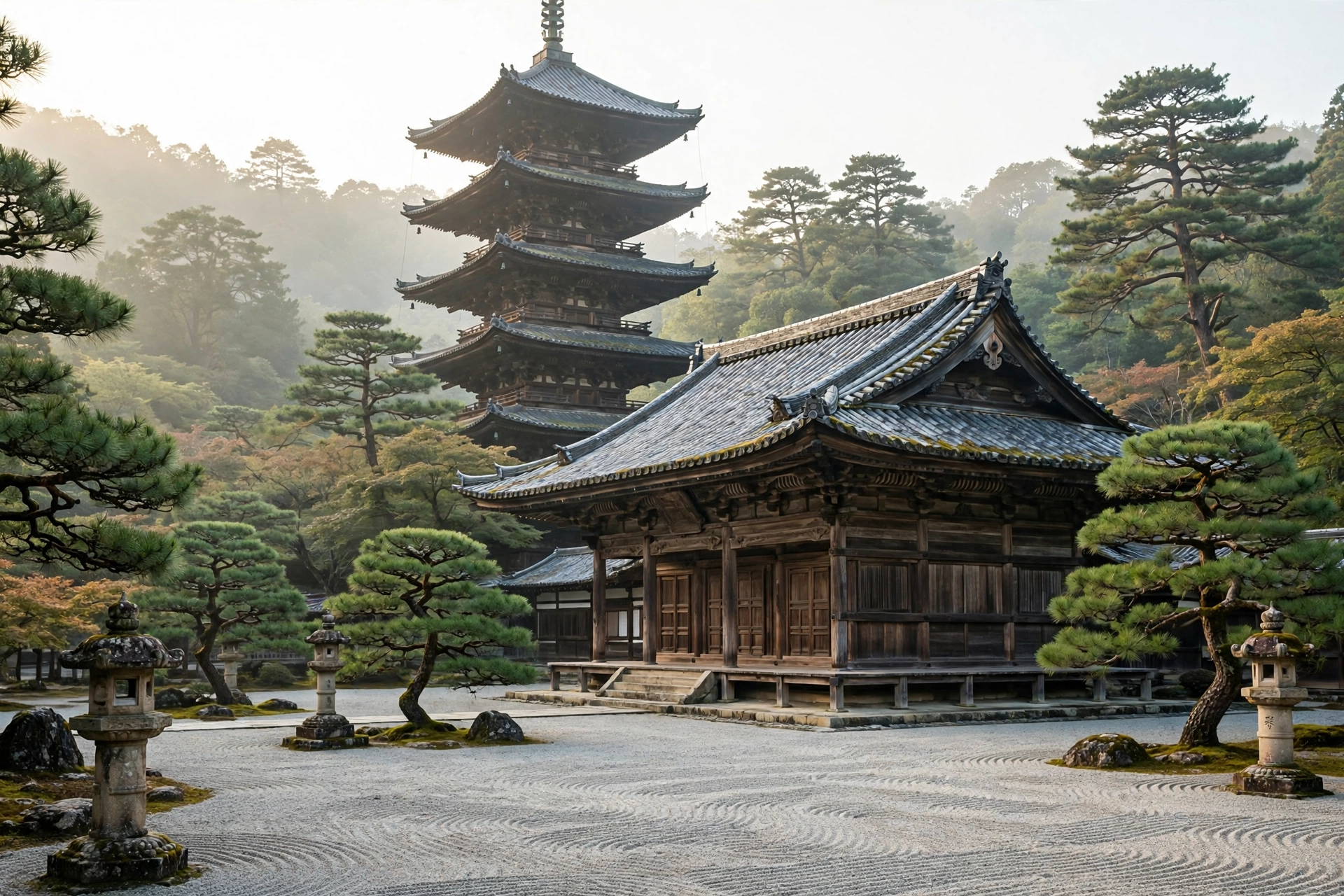
The point first: Sogenji is the family temple (bodaiji) of the Ikeda lords of Okayama, described as the foremost Zen temple of Bizen, and it still operates today as an international Zen training monastery. It belongs to the Rinzai School, Myoshinji branch — not the Soto School. Behind its main hall lie the Ikeda family graves, part of a nationally designated Historic Site. No guide to perpetual memorials or a public cemetery or ossuary at this temple could be confirmed in official sources this time, so this article stays within what was confirmed.
I am Kurashiki Bouzu (kurashiki-bouzu), born in 1971, a former funeral professional now living in an old house in Kurashiki, Okayama, working with Moka, my AI butler.
This is one article in a series introducing temples across Japan, one temple at a time. This time it is Sogenji in Naka Ward, Okayama City. This article was organized from official sources published by the temple and by public bodies; it is not a record of a visit I made myself, and I state that honestly while carefully summarizing the published facts.
Basic information
- School: Rinzai School, Myoshinji branch
- Address: 1069 Maruyama, Naka Ward, Okayama City, Okayama Prefecture 703-8271
- Principal image: Juichimen Kannon (Eleven-Headed Kanzeon Bosatsu)
- Mountain name: Gokoku-san
The school is the Rinzai School, Myoshinji branch — not Soto — and I note that here to avoid any mix-up. The temple’s own official site also presents it as a training monastery in the line of international Japanese Rinzai Zen.
History
Sogenji was built in Genroku 11 (1698) by Ikeda Tsunamasa, lord of Okayama, as the Ikeda family temple. According to Okayama City’s official tourism guide, Tsunamasa built it to mourn his great-grandfather Nobuteru and his father Mitsumasa, and to pray for his own repose after death. The founding priest was Zetsugai Osho (Zetsugai Sojun), and construction was ordered to his retainer Uesaka Geki.
Behind the main hall are the Ikeda family graves, where successive lords and close relatives are buried. The graves in the Sogenji precinct, also called the Shokaku-dani graves, are designated a national Historic Site as part of the “Okayama Domain Ikeda Family Graves, with the grave of Tsuda Nagatada,” together with the Wai-dani graves in Bizen City. The designation was made on April 8, Heisei 10 (1998).
Today, training continues throughout the year as a monastery under Harada Shodo Roshi. The official site puts the sangha at about 15 to 25 people.
Highlights
Its grand halls, set on spacious grounds backed by a mountain, are described as representative of Zen temple architecture. Along both sides of the approach, a row of pines said to have been planted around the founding still stands; Okayama Prefecture’s guide puts the number at more than 100 trees today.
Behind the abbot’s quarters spreads a pond strolling garden, another highlight. It was built jointly by Zetsugai Osho and Tsuda Nagatada and is regarded as a fine Zen garden of the mid-Edo period. The place is also known for weeping cherry blossoms in spring and autumn leaves.
Among its cultural properties, besides the Ikeda family graves (national Historic Site), the “Portraits of successive Ikeda lords and their shrines” — wooden images and shrines of six lords from Tsunamasa onward and their close relatives — are designated cultural properties of Okayama City. They were originally enshrined in the spirit house in front of the graves and are now, the city guide says, kept in the main hall rebuilt in Bunsei 7 (1824).
Another feature is that, apart from the head priest, many of the monks are from overseas; Okayama Prefecture’s official tourism guide introduces the temple as accepting Zen monks from around the world.
Events
The official site describes a week of osesshin (an intensive training period) every month, with training continuing throughout the year.
Okayama Prefecture’s official tourism guide also says anyone can experience zazen on Sundays from 8:00 to 9:00. However, in this check, no page on the temple’s official site stating the Sunday zazen time in Japanese was found. If you are considering taking part, confirming directly with the temple beforehand is the safe course.
Funerals and memorial services
Sogenji’s connection with memorials lies in its very founding: a family temple built to mourn a great-grandfather and a father and to pray for the founder’s own repose, where the graves behind the main hall have long been the place where successive lords and relatives are mourned. The portrait images and shrines of successive lords kept in the main hall have also been preserved as objects of memorial.
Seen through the eyes of a former funeral professional, the form of a lordly family’s temple expresses well the role temples have carried as “places that go on mourning the dead for a long time.”
No guide by this temple itself to perpetual memorials, or to a public cemetery or ossuary, could be confirmed this time on its official site or in public guides. This article writes only within the confirmed range. For specific memorial consultations, please ask the temple directly.
The official site of its head temple, Myoshinji, also notes that goeika (Hanazono-ryu) hymns serve as memorials to the Buddhas and to ancestors.
Practical information for a visit
- Opening hours: 7:00–17:00, no regular closing day (according to Okayama City and Okayama Prefecture official tourism guides)
- Ikeda family graves: open 8:00–17:00, no holidays. The garden and Ikeda graves are paid, while viewing Sogenji’s exterior is free, according to Okayama Prefecture’s cultural property commentary. Specific fees could not be confirmed within the public guides
- Public transport: from JR Okayama Station, take the Ryobi bus toward Saidaiji via Higashiyama for about 20 minutes, get off at “Sogenji,” then walk about 5–10 minutes
- By car: about 30 minutes from Okayama Interchange on the Sanyo Expressway. Sources differ on the number of parking spaces, so this article does not state a figure
- Seasonal guide: autumn leaves in early November, weeping cherries from late March to early April (according to Okayama Prefecture’s official tourism guide)
The telephone number is 086-277-8226. For the latest information, including admission fees, please check with the temple or official guides before your visit.
Sources
- Sogenji official site https://sogenji.com/
- Okayama City official tourism site, “Sogenji” https://okayama-kanko.net/sightseeing/spot/536/
- Okayama Prefecture official tourism web, “Sogenji” https://www.okayama-kanko.jp/spot/detail_10138.html
- Okayama Prefecture official tourism guide, “Sogenji” https://www.okayama-japan.jp/tw/spot/10619
- Okayama City official site, “Okayama Domain Ikeda Family Graves” https://www.city.okayama.jp/life/0000041598.html
- Okayama City official site, “Portraits of successive Ikeda lords and their shrines” https://www.city.okayama.jp/life/0000041818.html
- Okayama Prefecture official site, “The pine avenue of Sogenji” https://www.pref.okayama.lg.jp/page/573601.html
- Okayama Prefecture cultural property commentary PDF, “Okayama Domain Ikeda Family Graves (Shokaku-dani graves)” https://www.pref.okayama.lg.jp/uploaded/attachment/260856.pdf
- Rinzai School head temple Myoshinji official site https://www.myoshinji.or.jp/
- November 22, 2026 ― Published in English (translation of the Japanese article, ledger No. 2654)(6,171 characters)