
Bodies with No One to Claim Them, 42,000 a Year — What Is Inside That Figure, and What I Saw on the Floor
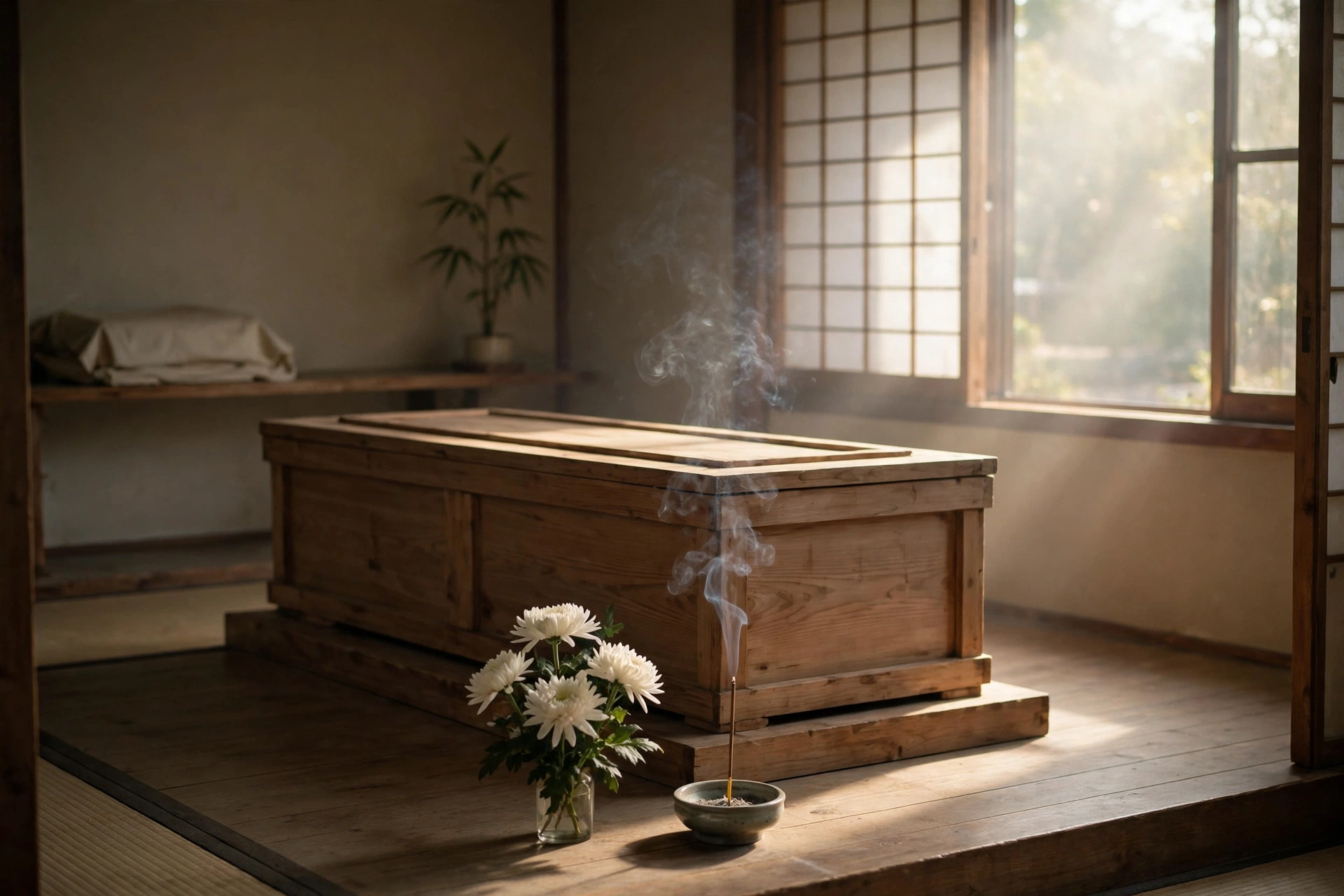
The result first: in fiscal 2023, an estimated 41,969 people — about 42,000 — died with no one to claim their bodies, according to the first count by the Ministry of Health, Labour and Welfare (report, March 2025). That is 2.7% of everyone who died that year. The center of the figure is not unidentified people: 32,066 of them, about three-quarters, were send-offs connected to public assistance, people whose names and circumstances are known but who had no one to see them off, or no one who could. On the floor, this was daily life — at one company, I handled about five such send-offs a month, about 60 a year. And only 11.3% of municipalities answered that they have a manual or internal rules for handling such bodies and ashes.
I am Kurashiki Bouzu.
I am a former funeral company owner. Today I will write a story without laughter.
Have you heard the phrase “bodies with no one to claim them”?
After death, there is no one to see them off. Or there is, but they cannot claim them. Who, in the end, sends such bodies, and how?
This time, the country investigated that number for the first time. The figure in the report compiled as a research project of the Ministry of Health, Labour and Welfare (March 2025) is an estimated 41,969 people in fiscal 2023. That is 2.7% of all people who died that year.
About 42,000 people. I would like to read this figure with the eyes of a person who was on the floor.
First, What This Figure Really Is
First, let me write an important reservation.
41,969 is not an actual count of cases one by one across Japan. It is what the report calls a “rough estimate,” derived from questionnaire responses from municipalities.
And one more thing. Hearing “no one to claim them,” you may imagine only people with no relatives at all, or unidentified people. Looking at the breakdown, however, the story is a little different.
| System that formed the basis | People |
|---|---|
| Public Assistance Act (people who had been receiving public assistance, etc.) | 26,138 |
| Public Assistance Act (cases where someone other than a person obliged to support held the send-off, etc.) | 5,928 |
| Graveyard and Burial Act, Article 9 | 8,694 |
| Unidentified / died while traveling (people whose identity is unknown, people who died away from home, etc.) | 1,209 |
| Total | 41,969 |
Send-offs connected to public assistance total 32,066. They account for about three-quarters of the whole.
In other words, the center of this figure is not “people no one knows.” Their names and the circumstances they lived in are known. But there is no one to see them off. Or there is, but they cannot. Those are the people.
On the Floor, It Was Daily Life
When I was doing funeral work, send-offs for people with no relatives were about five a month.
At one company, five a month. In a year, 60. It was by no means a rare event.
Thinking back, my first day entering this work was also like that. I went with a senior to the police to receive, and in the morgue I faced a deceased person with no one to see them off. They had died at home, and several weeks had passed (I wrote about that day in the story of choosing the funeral business).
“There are endings in this world with no one to see them off.”
Now I understand that the shock I received that day was not because I had seen a special exception. That was the daily life of the floor.
In the End, Who Sends Them?
Then, what happens in the end to a body no one claims? The system runs mainly on three laws.
- Graveyard and Burial Act (Article 9) — When there is no one to perform burial or cremation, or it is not known, the mayor of the municipality where the death occurred must perform it, it is decided.
- Act on Handling of Sick Travelers and Travelers Who Die While Traveling — For people whose identity is unknown or who died while traveling, the municipality of the location performs cremation and so on.
- Public Assistance Act, Article 18 (Funeral Assistance) — For send-offs of people who had been receiving public assistance, the costs necessary for examination, transport of the body, cremation or burial, and interment of ashes are paid as actual costs within a limit. The standard amount varies by region and fiscal year, and from April 2026, for an adult it is within 222,000 yen (Grade 1 and Grade 2 areas), and so on.
However, the municipal office does not do everything itself. The actual work — receiving the body, placing it, carrying it to the crematorium — is generally borne by a local funeral home called by the municipality. I was on the side receiving that phone call.
A minimal send-off, with no sutra reading and no altar. Even so, to receive the body carefully, place it in a coffin, call their name, and carry them to the crematorium — that arrangement itself was no different from any other send-off.
Too Much Is Not Decided
In this report, there is another figure I received heavily.
Only 11.3% of municipalities answered that they “have” a manual or internal rules for handling bodies and ashes with no one to claim them.
How long to keep ashes after cremation. If relatives appear, how to hand them over. In the end, where to inter them together (goshi: placing the ashes of multiple people together). On points like these, there are still no nationally unified rules. They differ by municipality, and if the person in charge changes, even the basis for judgment disappears. That is the nature of this work.
The country has begun to move. Guides summarizing the handling of money and belongings left by people with no relatives who die have been revised repeatedly, and investigations continue. But in the feeling of the floor, the speed at which such send-offs increase is far faster than the speed at which the system catches up, I think.
Beyond the Figure, There Is Each Person
The figure of 41,969 inevitably looks like a lump of “42,000.”
But on the floor, each one of them had a name and a time they had lived. There were couples who had been receiving public assistance, and people who had lived alone for a long time. There are people who, having become ashes, remain kept at a municipal office for a while.
Having no one to see them off does not in any way mean that person’s life was light. On their final day, there simply was no one beside them. That is all.
That is why, precisely for such send-offs, I valued calling them “the deceased person” and putting my hands together. Even if the form is minimal, there is no need to make the handling minimal too. That is what I think.
This figure will continue to increase. When that happens, what is asked is not whether to cremate. The rules already exist. What is asked is whether the warmth of human hands can be left in the final way of sending.
I leave this article in the hope that the feelings of those who need it, and those who are troubled, may become even a little lighter.
This article was written based on the real experience of a former funeral company owner and the report of a research project of the Ministry of Health, Labour and Welfare (March 2025). The figure of 41,969 people is an estimated value from that report, derived from questionnaire responses from municipalities. The standard amount for funeral assistance varies by region (grade area) and fiscal year, and actual payment is by decision of the welfare office. For specific consultations, please check with your municipality or a specialist. This article was written with the help of the AI “Muse.”
- Ministry of Health, Labour and Welfare / Japan Research Institute “Report on Research into the Handling of Ashes and Bodies in Cases Where Cremation and Related Procedures Were Performed” (March 2025) https://www.mhlw.go.jp/content/12200000/001605306.pdf
- Page on Graveyards, Burials, etc. (Ministry of Health, Labour and Welfare) https://www.mhlw.go.jp/stf/seisakunitsuite/bunya/0000123872.html
- Graveyard and Burial Act (e-Gov Law Search) https://laws.e-gov.go.jp/law/323AC0000000048
Record of This Article
- Publication date: November 15, 2026
- Character count: About 2,960 characters (Moka counted)
- November 18, 2026 ― English draft created (results-first rewrite of the Japanese article, ledger No. 20). Not published; publication is a separate step.(6,613 characters)