
Kitano Tenmangu (Kyoto City, Kyoto) — Sugawara no Michizane, God of Learning, and the National Treasure Main Sanctuary
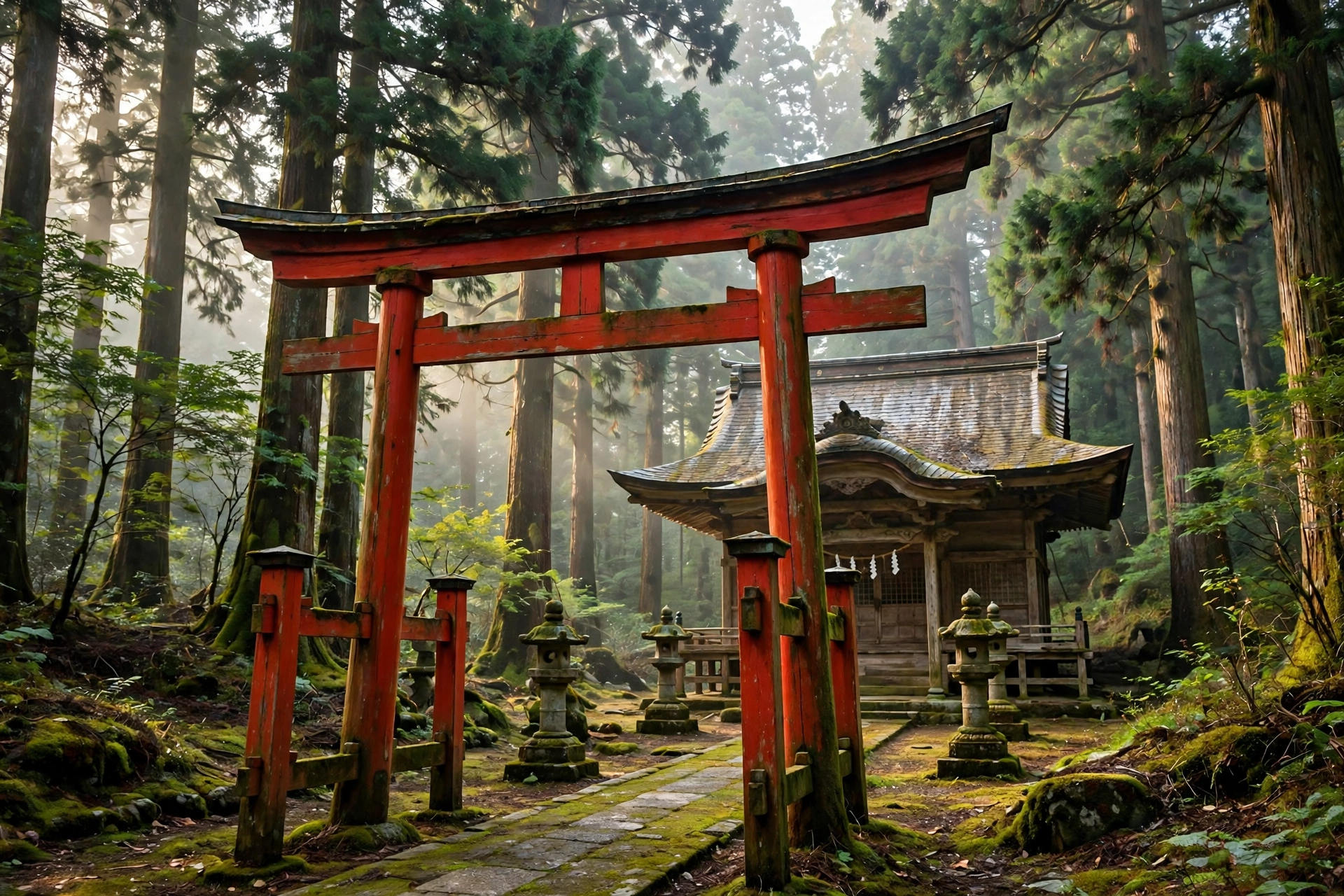
The point first: Kitano Tenmangu in Kamigyo Ward, Kyoto City, is the head shrine of the roughly 12,000 Tenmangu and Tenjin shrines across Japan that enshrine Sugawara no Michizane (Sugawara no Michizane, known as Kan-ko). Founded in 947 by divine oracle, its present main sanctuary, built in 1607, is a National Treasure and a representative Momoyama-period structure that became the prototype of the gongen-zukuri style. About 1,500 plum trees of some 50 varieties bloom in its plum garden, open from early February to late March, and a market is held on the 25th of each month. Prayer fees, opening hours and other practical details are given below, including points that could not be confirmed, such as the shrine’s formal rank classification and whether it officially offers Shinto funeral rites.
Hello, I am Kurashiki Bouzu (kurashiki-bouzu). I was born in 1971, I am a former funeral professional, and I now live in an old house in Kurashiki, Okayama, working together with Moka, my AI butler.
This is one article in a series introducing shrines across Japan, one shrine at a time. This time it is Kitano Tenmangu in Kamigyo Ward, Kyoto City, Kyoto. This article is organized from official published sources such as the shrine’s official site; it is not an account of a visit I made myself, and I say so honestly at the outset.
Basic information
- Formal name: Kitano Tenmangu (Kitano Tenman-gu). The official site says it has long been affectionately known as “Kitano no Tenjin-sama.”
- Enshrined deity: Sugawara no Michizane (Kan-ko), with the posthumous rank of Senior First Rank and title of Grand Minister of State. In the side sanctuaries, Chujo-den (a son of Kan-ko) sits to the east and Kissho-nyo (Kan-ko’s wife) to the west.
- Position: The official site describes it as the head shrine of the roughly 12,000 Tenmangu and Tenjin shrines across Japan that enshrine Kan-ko.
- Divine blessings: The official site lists success in entrance examinations, academic achievement, culture and the performing arts, and protection from calamity and misfortune, among others.
- On shrine rank: Within the official and public sources checked this time, no explicit mention was found of classifications such as former shrine rank, the Twenty-Two Shrines, or Beppyo shrines. What I do not know, I leave as unknown.
- Address: Kitano Tenmangu Shrine Office, Bakuro-cho, Kamigyo Ward, Kyoto City, Kyoto 602-8386. Telephone: 075-461-0005.
History
According to the official site, Kitano Tenmangu is the shrine where Tenjin worship originated. In 947, the first year of Tenryaku under Emperor Murakami, Kan-ko was enshrined and the shrine founded at Kitano, which corresponds to the Heaven’s Gate (northwest) of the Heian capital, following a divine oracle. In 987, the first year of Eien, an imperial messenger was dispatched by Emperor Ichijo to pray for the peace of the nation, and the shrine received the divine title “Kitano Tenman Daijizai Tenjin.” The official site says the shrine received the reverence of the Imperial Household over successive generations, beginning with the imperial visit of Emperor Ichijo in 1004, the first year of Kanko.
Kan-ko was appointed Minister of the Right in 899, the second year of Shotai, but in 901, the fourth year of Shotai, he was demoted and sent to Kyushu as provisional governor-general of Dazaifu, and died two years later at his place of exile in Dazaifu. The present main sanctuary was built in 1607, the 12th year of Keicho, by Toyotomi Hideyori, and is designated a National Treasure.
Highlights
- Main sanctuary (National Treasure): The main hall and worship hall are connected by a stone-paved corridor called the Ishi-no-ma (“stone chamber”), in a structure called “hachito-zukuri” or “gongen-zukuri.” The official site explains it as a representative surviving example of Momoyama architecture that became the prototype of gongen-zukuri.
- Sankomon gate: The middle gate between the tower gate and the main sanctuary, displaying an imperial plaque reading “Tenmangu” in the calligraphy of Emperor Gosai.
- Plum garden “Hana no Niwa” (Garden of Flowers): Some 1,500 plum trees of about 50 varieties associated with Kan-ko bloom here, open each year from early February to late March.
- Treasure hall: It houses and displays tens of thousands of treasures offered to the shrine, including the National Treasure “Kitano Tenjin Engi Emaki, Jokyu-bon” (illustrated handscroll of the legends of Kitano Tenjin, Jokyu version), in color on paper. It opens on the 25th of each month and for limited periods.
- Maple garden at the historic Odoi: A garden of autumn leaves at the historic site of the Odoi earthworks built by Toyotomi Hideyoshi.
- Tenjin-ichi market (fair-day market): Held throughout the precincts on the 25th of each month, lined with stalls.
Festivals
- Annual festival (Kitano Festival): The shrine’s most important festival, held on September 4 each year and formerly an imperial festival. Today only the religious rites are held as the annual festival.
- Plum Blossom Festival: A festival held on February 25, the anniversary of Kan-ko’s death, with a history of more than 900 years. Special sacred offerings called “Ohii,” “Kohii” and “Kamitate” are presented, and an outdoor tea ceremony is set up in the plum garden.
- Fair day and Tenjin-ichi market: The 25th of each month, deriving from Kan-ko’s birthday (June 25) and the day of his death (February 25).
- Zuiki Festival: An autumn festival giving thanks for the harvest of farm produce, which the official site explains symbolizes Tenjin worship as a god of agriculture. Its specific dates could not be determined within the range checked this time.
- Others: The official site also introduces the Meisai (April 20) and Yokosai (October 29), among others.
Connection with life’s milestones
From the perspective of a former funeral professional, I also checked information relating to milestones in people’s lives. The official “Prayers” page says the shrine accepts various prayers throughout the year, including rites of passage, annual events and protection from misfortune, with no reservation required and reception from 9:00 a.m. to 4:00 p.m.
Prayers for examination success are officially offered. Once you apply, a priest prays every morning until March 31. The listed prayer fees are 5,000 yen, 8,000 yen and 10,000 yen.
First shrine visits for babies (hatsumiyamode) are also officially offered. Around the 30th day after birth, the baby is taken up into the sanctuary to pray for healthy growth. Shichi-Go-San visits are also offered, with listed prayer fees of 5,000 yen for one child, 8,000 yen for two and 12,000 yen for three. There is also information on prayers for safe childbirth, the thirteenth-year visit, good matches, coming-of-age ceremonies and longevity celebrations, among others.
For Shinto-style weddings, the official FAQ states that the shrine does hold them. There is no reception venue, so one must be arranged separately.
Regarding Shinto funerals (shinsosai), within the official pages checked this time, no information about them as such could be confirmed. The official FAQ does mention the idea of treating the period up to the fiftieth-day festival as a period of mourning (“ki”), but that cannot be called information about accepting Shinto funerals. Do not take this as meaning the shrine officially offers them; the surest course is to check directly with the shrine office before acting.
Practical information for a visit
- Visiting hours: The official “Visiting Hours and Access” page shows the gates opening from 7:00 a.m. to 8:00 p.m., while the official FAQ retains a different notation of 7:00 a.m. to 5:00 p.m. Because the notations differ, I will not state one definitively; please check the latest official information before you go.
- Shrine office and award office: 9:00 a.m. to 7:30 p.m. Prayer reception is from 9:00 a.m. to 4:00 p.m. at the award office reception in front of the main sanctuary. Viewing the precincts is free.
- Parking: There is a parking lot for worshippers. On the 25th of each month it cannot be used because of the fair. The capacity and fees were not known.
- Access: By Kyoto City Bus, it is immediately by the “Kitano Tenmangu-mae” stop. The official site gives routes such as about 35 minutes from JR Kyoto Station on route 50, and about 15 minutes from JR Nijo Station on route 55.
The official notation of the shrine rank classification and whether there is official information on Shinto funerals, among other points, could not be settled. Writing what is known and what is not known, separately, is how this series proceeds.
Sources
- Kitano Tenmangu official, “About Kitano Tenmangu” https://kitanotenmangu.or.jp/about/
- Kitano Tenmangu official, “Visiting Hours and Access” https://kitanotenmangu.or.jp/access/
- Kitano Tenmangu official, “National Treasure Main Sanctuary” https://kitanotenmangu.or.jp/guidance/gohonden/
- Kitano Tenmangu official, “Plum Garden ‘Hana no Niwa’” https://kitanotenmangu.or.jp/guidance/baien/
- Kitano Tenmangu official, “Revival of the Kitano Festival” https://kitanotenmangu.or.jp/event/kitanosai/
- Kitano Tenmangu official, “Prayers” https://kitanotenmangu.or.jp/sanpai-gokito/gokito/
- Kitano Tenmangu official FAQ https://kitanotenmangu.or.jp/faq/
- Kyoto City official, “Kyoto Travel Guide” https://ja.kyoto.travel/tourism/single01.php?category_id=7&tourism_id=2497
- November 22, 2026 ― Published in English (translation of the Japanese article, ledger No. 3167)(7,877 characters)