
There Are Not Enough People to Investigate Causes of Death — Medical Examiners Exist in Only 5 Regions Nationwide
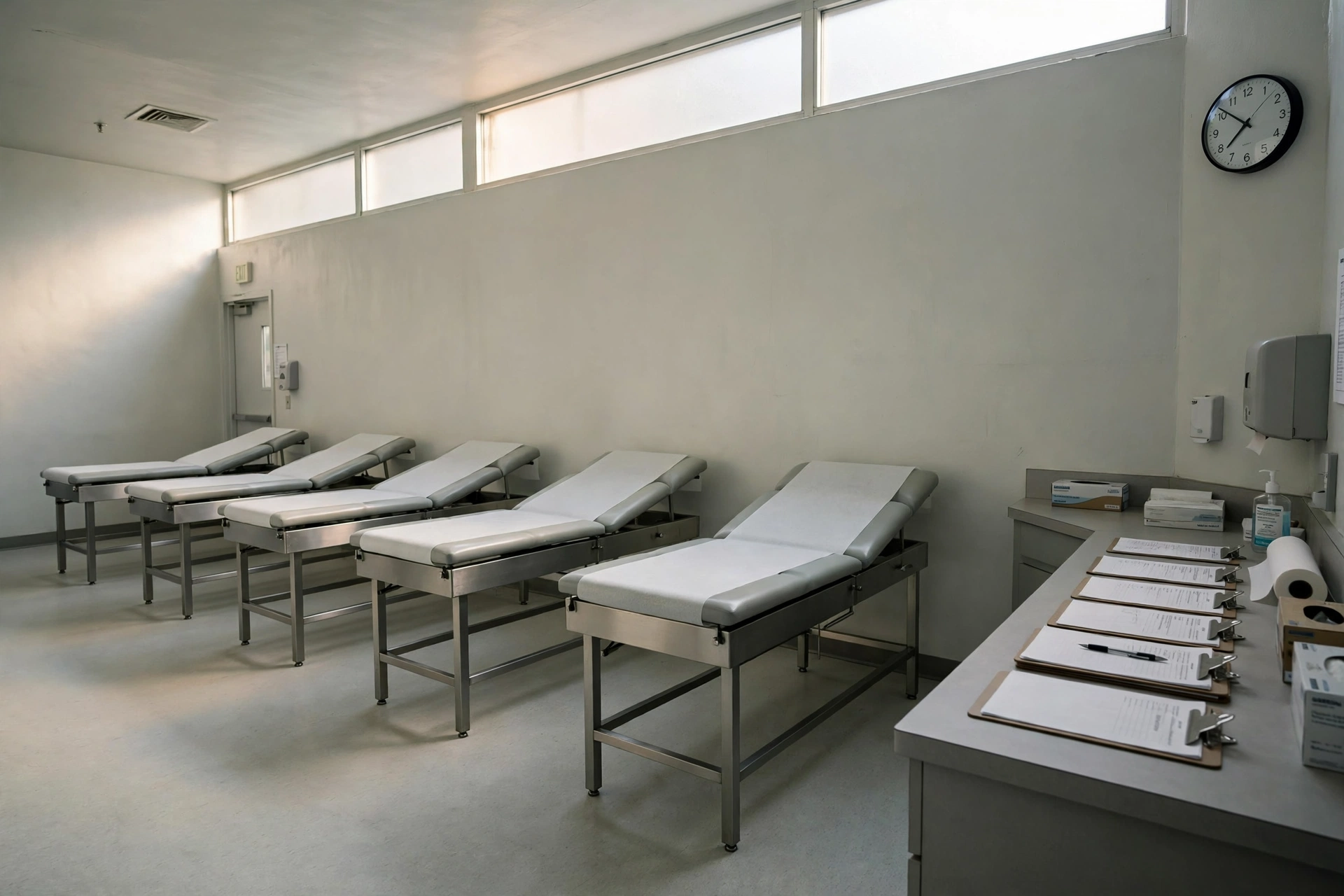
The result first: there are not enough people to investigate causes of death. A death certificate is a document where the doctor in charge writes the cause of death. When the cause is unknown, the specialist system — medical examiners who examine and, if necessary, dissect — exists by ordinance in only 5 regions nationwide. Even there, work is basically daytime only, with bodies waiting on stainless tables until morning, and in most other regions a local doctor as police doctor / examination doctor covers the entrance and a university forensic classroom covers autopsies. The bearers need knowledge of forensic medicine, pathology, drugs and poisons, and image reading, plus physical strength to face damaged bodies, yet their wages are pointed out as not matching the burden. No matter how far digitization of the document advances, in the end a person’s eyes and hands must confirm the cause.
I am Kurashiki Bouzu (kurashiki-bouzu), born in 1971, a former funeral worker and former funeral home owner. I now live in an old folk house in Kurashiki, Okayama Prefecture, and work with Moka, my AI butler.
Today I will write about “people who investigate causes of death.”
Originally, this is a story that swelled while I was writing an article on digitization of death certificates. A death certificate is a document where the doctor in charge writes the cause of death. Then, when the cause of death is unknown, who investigates it, and how?
Being on the funeral floor, you also see the figure of the “investigating side” up close. Attend a police examination, pick up a body, visit a medical examiner’s office. I will write, in order, what I saw there.
Even Face to Face, Oversights Have Happened
To write honestly, even face to face, oversights have happened. Even at examination scenes Kurashiki Bouzu saw on the floor, among bodies judged “no criminality,” there were not a few ways of dying that, looking back later, make you tilt your head. The problem is not remote or face to face, but whether, within limited time, there are eyes and arrangements to properly see what should be seen. It is not a simple story that remote is dangerous and face to face is safe.
Medical Examiners Exist in Only 5 Regions Nationwide
In the background is also the thinness of Japan’s own system to investigate causes of death. The “medical examiner” system, which specializes in examining bodies whose cause of death is unknown and, if necessary, performs autopsy, is fixed by government ordinance in only 5 regions: Tokyo’s 23 wards, Yokohama City, Nagoya City, Osaka City, and Kobe City. In Osaka City there is the Osaka Prefectural Medical Examiner’s Office, which examines bodies whose cause is not clear and performs administrative autopsies, but even counting that, it is only a very small part of the country. Moreover, for Yokohama City, Kanagawa Prefecture abolished the medical examiner system at the end of FY2014. Nagoya City, too, is pointed out as handling very few cases. Okayama Prefecture, where Kurashiki is, is not in these 5 regions either. In many regions, a large part is left to police examination and the judgment of police doctors / examination doctors, who are also doctors standing in clinical practice normally. In terms of floor bearers, the side attending examinations and doing examinations is often borne by local private practice doctors as police doctors / examination doctors, and depending on the region it is turned by duty or rotation. On the other hand, judicial autopsies that require dissection, and autopsies for cause-of-death investigation corresponding to administrative autopsies, are taken on by the specialist side such as university forensic classrooms. The daily entrance is a town doctor, difficult autopsies are a university — it turns by that division. Oversight is not only a problem of an individual doctor’s eyes, but also that people and places who specialize in seeing causes of death are not enough nationwide.
A Day at the Medical Examiner’s Office
Even in a place with medical examiners, the wall of time remains. Medical examiner work basically turns in daytime regular hours. Inside a medical examiner’s office Kurashiki Bouzu saw, five large stainless steel tables lined up, and bodies lined up on them in a row. The time of death does not match the office clock. It was not rare to see a scene where a body delivered during the night waits for the next morning’s examination on that table. Even in a region with a specialist system, it is like this.
Bearer Conditions Are Not Light
The conditions on the bearing side are by no means light either. A medical examiner is required to have wide knowledge, in addition to forensic medicine and pathology, up to drugs and poisons and how to read images. Work to move a body, examine it, and dissect it also uses physical strength. Moreover, a person who was watched over by the doctor in charge at a hospital and died quietly of a disease they were seen for almost never arrives at a medical examiner. Because the doctor in charge writes the death certificate. What rises onto a medical examiner’s table is people who died in ways that are not that. People who died of external causes such as traffic accidents, falls, drowning, and burning all enter as examination targets. There are also not a few bodies of people who died alone, were discovered late, and damage had advanced. Facing bodies with marked damage and change is this work’s daily life. It is by no means work dealing only with clean bodies. However, in Science Council of Japan materials, it is pointed out that a forensic doctor’s wages cannot be said to match the physical and mental burden in autopsy and the enormous labor accompanying appraisal. In Osaka Prefecture’s medical examiner office doctor recruitment, too, annual income was a calculation of about 9.97 million yen. Compared to the weight of responsibility of a doctor’s work, it cannot be said to be blessed conditions by any means. From a young doctor’s eyes, a clinical path seeing living patients, such as internal medicine or orthopedics, being easier to choose in terms of income and future outlook is natural. If people do not gather for work requiring knowledge and physical strength, the system will not spread. Here, too, is one reason the system to investigate causes of death does not spread nationwide.
Finally
No matter how far digitization of death certificates advances, in the end it is a person’s eyes and a person’s hands that confirm the cause of death.
The form of a document will lose its seal, become computer entry, and eventually arrive as data. But before one case whose cause of death is unknown, a “person to investigate” is always needed. That that person exists in only a very small part of the country, time is limited to daytime only, and bearer conditions remain strict. This reality, separately from digitization of documents, is a story that must not be left aside, I think.
Who confirms a deceased person’s final record, and how? It is a plain story, but it is also a story standing at the entrance of cremation. As a side that saw the floor, I will leave it written.
Sources
- Osaka Prefecture “Medical Examiner System” — that for a body whose cause of death is not clear a medical examiner examines it, and if the cause still does not become clear by examination performs autopsy, and that regions where a medical examiner should be placed are within Tokyo’s 23 wards, Yokohama City, Nagoya City, Osaka City, and Kobe City https://www.pref.osaka.lg.jp/o100210/kansatsui/gyoumunagare/index.html
- Tokyo Metropolitan Bureau of Public Health and Medical Affairs “Promotion of a Sustainable Cause of Death Investigation System in Tokyo” — that the medical examiner system has not spread nationwide, and Kanagawa Prefecture abolished the medical examiner system in Yokohama City at the end of FY2014 https://www.hokeniryo.metro.tokyo.lg.jp/documents/d/hokeniryo/siinkyumeitaiseinosuisin
- Tokyo Medical Examiner’s Office “What is the Tokyo Medical Examiner’s Office” — examination targets (cases where a person died without receiving a doctor’s medical care, cases where a person died with cause of death unknown, all external deaths and deaths from their aftereffects, etc.) https://www.hokeniryo.metro.tokyo.lg.jp/shisetsu/jigyosyo/kansatsu/toukyoutokansatsuimu/a_kansatsu
- Ministry of Health, Labour and Welfare “White Paper on Promotion of Cause of Death Investigation, etc.” — that in regions without a medical examiner system, generally an examination doctor specializing in clinical medicine performs postmortem examination, and attends examinations based on police requests, etc. https://www.mhlw.go.jp/wp/hakusyo/shiinkyuumei/24/dl/24-1f.pdf
- National Police Agency “About a Cause of Death Investigation System Contributing to Prevention of Overlooking Criminal Deaths” — that in cases where criminality is recognized, etc., appraisal is entrusted to a professor, etc. of a university forensic classroom and a judicial autopsy is performed, and consent autopsies in cases without criminality are also implemented by a professor, etc. of a university forensic classroom https://www.npa.go.jp/bureau/criminal/souichi/gijiyoushi.pdf
- Science Council of Japan “Toward Securing and Training Doctors Majoring in Forensic Medicine (Forensic Doctors)” — that considering physical and mental burden in autopsy and enormous labor and mental burden accompanying appraisal, a forensic doctor’s wages cannot be said to be commensurate, and most funds paid from police, etc. are costs of autopsy and examination and personal remuneration is not much https://www.scj.go.jp/ja/info/kohyo/pdf/kohyo-25-h230922-4.pdf
- Osaka Prefecture “FY2026 Osaka Prefecture General Fixed-Term Staff Recruitment Selection Guide (Doctor Position, Medical Examiner’s Office)” — that salary is shown as annual income of about 9.97 million yen (calculated at Medical Position Salary Table (1) Grade 1, Step 13) https://www.pref.osaka.lg.jp/o040030/jinji/senkou/r8_ninki_kansatui.html
The system explanations in this article were confirmed with official materials as of November 7, 2026. Regions where medical examiners are placed and how examinations proceed may be handled differently depending on the region.
- November 18, 2026 ― English draft created (results-first rewrite of the Japanese article, ledger No. 38). Not published; publication is a separate step.(8,625 characters)