
Eiheiji — The Great Head Temple of the Soto School, Founded by Dogen, Where Training Continues Today
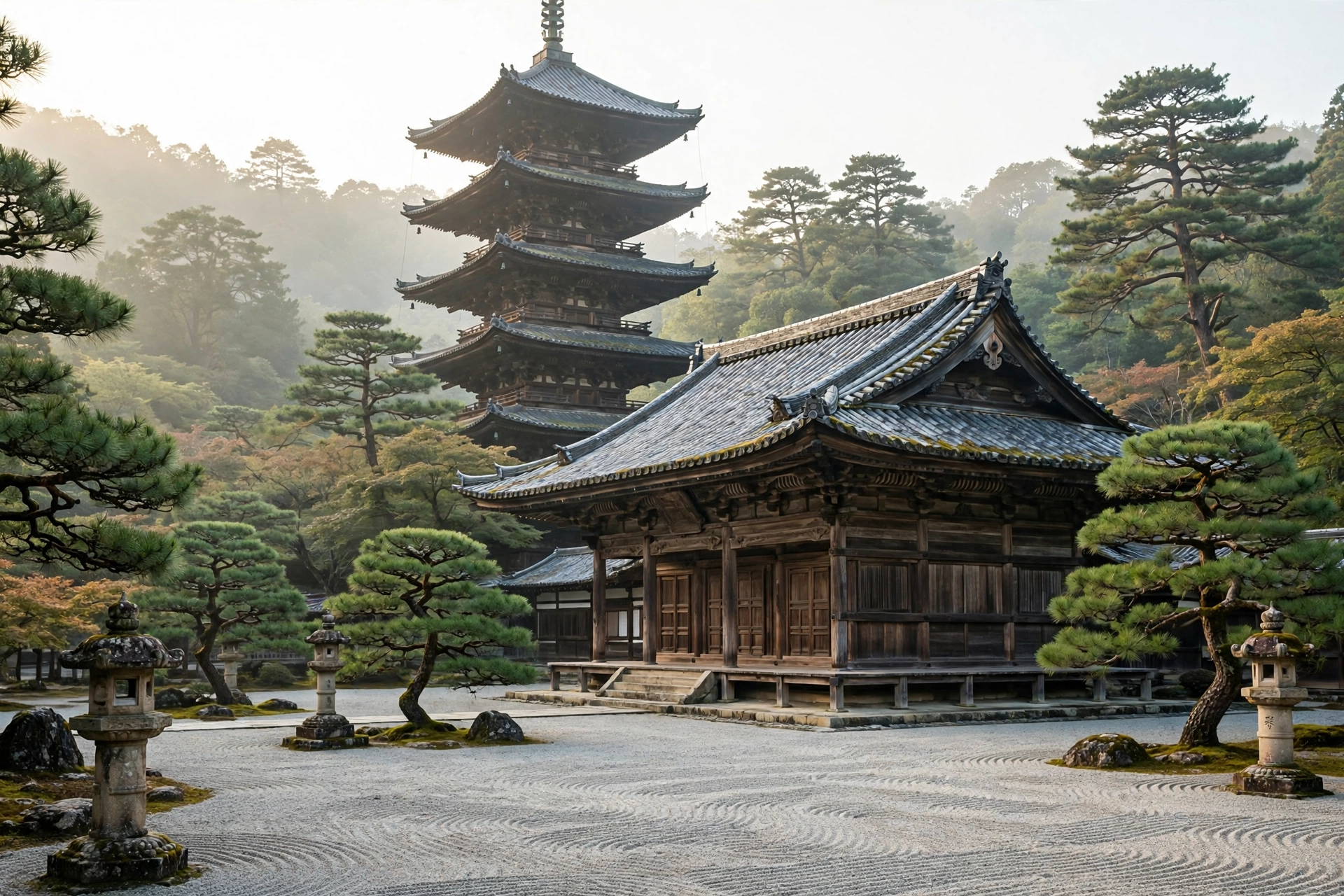
The point first: Eiheiji in Eiheiji Town, Fukui, is one of the two great head temples of the Soto School (together with Sojiji), founded in 1244 by Dogen Zenji, and it remains a living training monastery where, according to the Ministry’s database, more than 130 training monks reside and practice under Dogen’s principles. Visiting runs 8:30–16:30 (arrive by 16:00), at ¥700 for adults and ¥300 for elementary and junior high school students. Its official guide to services at the Shidoden is concrete: scheduled memorials from ¥10,000 per spirit (from ¥5,000 without attendance), interment from ¥40,000 per spirit for divided remains only — interred remains are jointly enshrined in the Jakko-en ossuary and cannot be returned — and perpetual memorials are in principle for 50 years. The postal code, and direct statements of the principal image and mountain name, could not be confirmed in the sources opened this time, and this article does not state them definitively.
I am Kurashiki Bouzu (kurashiki-bouzu), born in 1971, a former funeral professional now living in an old house in Kurashiki, Okayama, working with Moka, my AI butler.
This is one article in a series introducing temples across Japan, one temple at a time. This time it is Daihonzan Eiheiji in Eiheiji Town, Yoshida District, Fukui Prefecture. This article is organized from official published sources such as the temple’s official site; it is not an account of a visit I made myself.
Basic information
- Name: Daihonzan Eiheiji
- School: a great head temple (Daihonzan) of the Soto School. Together with Sojiji, it is one of the two great head temples of the Soto School
- Address: 5-15 Shibi, Eiheiji Town, Yoshida District, Fukui Prefecture
The postal code could not be confirmed on the public pages opened this time. The principal image and the mountain name (sango) also could not be directly confirmed in the text of the official site and the Ministry of Land, Infrastructure, Transport and Tourism materials opened this time. Points that could not be confirmed are not stated definitively here. When visiting, please check the official site’s guide.
The Soto School has two great head temples, the other being Sojiji. As the temple carrying one of those two, Eiheiji is deeply connected with Soto temples across the country. Many readers may have been cared for by a Soto temple at a funeral or memorial service — one of that school’s head temples is here.
History
Eiheiji was founded in 1244 by Dogen Zenji (1200–1253). Dogen returned from China in 1227 and, after activity around Kyoto, moved to Echizen in 1243 at the invitation of Hatano Yoshishige. After a year at Kippoji, he built Eiheiji, as recorded in the Ministry’s multilingual commentary database.
Eiheiji is still a “living training monastery” where training monks (unsui) practice based on Dogen’s principles. The same database records that more than 130 training monks reside there. That it is at once a tourist destination and the very site of training is this temple’s foremost characteristic.
Highlights
The temple complex is structured around the Seven-Hall complex (Shichido Garan). According to Cultural Heritage Online of the Agency for Cultural Affairs system, the Sanmon gate, Chujakumon gate, Butsuden (Buddha Hall) and Hatto (Dharma Hall) stand in line, connected by corridors, and the Joyoden is Dogen’s mausoleum. The group of halls is recorded as having high value as Important Cultural Properties.
Because this is a place of training, a visit follows the route and manners the temple guides. Keeping quiet and not hindering the training is especially important at this temple. When you think of it as a place to receive not only the buildings to “see” but the very air of training, the way of visiting changes.
Events
According to the official “Guide to services,” memorials are held at the Shidoden five times every day (9:30, 11:00, 13:00, 15:00 and 16:30). Daily memorials continue alongside the life of training.
On the other hand, a schedule of the year’s major events could not be confirmed on the official pages opened this time. If you wish to visit in time with an event, please check the latest guide on the official site.
Funerals and memorial services
I will organize this from a former funeral professional’s viewpoint. Eiheiji’s official site has a “Guide to services (interment and memorials).” Scheduled memorials at the Shidoden are guided at ¥10,000 or more per spirit, and memorials without attendance at ¥5,000 or more. Interment is ¥40,000 or more per spirit, and only divided remains (bun-kotsu) are accepted. It is clearly stated that interred remains are jointly enshrined in the Jakko-en ossuary and cannot be returned.
Perpetual memorials are in principle for 50 years, and details such as the offering are to be inquired about at the general reception (Sojukesho). Applications require no prior reservation or contact; the guide says to come to the temple and apply at least 40 minutes before the service begins.
Memorials at a training monastery have nothing to do with showiness. Precisely because they are held at fixed times and in a fixed form, I feel as a former funeral professional that there is a side one can entrust with peace of mind. Note that a guide to funerals themselves and to tree burials could not be confirmed on the official pages opened this time.
On interment, there is one more important caution. The official guide accepts only divided remains, and states that interred remains are jointly enshrined in the Jakko-en ossuary and cannot be returned. Joint enshrinement (goshi) means placing remains together with those of others. Once jointly enshrined, they cannot be taken out, so it is important to discuss well within the family before applying. That such conditions are clearly stated officially matters for preventing later misunderstandings. In funeral work too, family misunderstandings over the form of interment were not rare. Reading the conditions first and applying only after accepting them — this temple’s guide supports that natural procedure.
That the perpetual memorial is in principle 50 years is also an example of how the meaning of “perpetual” differs by temple. In consulting about memorials, the basis is not to judge by the word alone, but to confirm the period and contents.
Practical information for a visit
According to the official “Guide to visiting,” the gates open at 8:30 and close at 16:30, and visitors are asked to arrive by 16:00. Admission is ¥700 for adults, ¥300 for elementary and junior high school students, ¥300 for those presenting a disability certificate, and free for preschool children.
Because this is a training monastery, please read the official visiting guide well regarding clothing and conduct before visiting. Amounts and hours may change. Please check the official site before your visit.
Finally, I will add one way of seeing this temple. Eiheiji is not merely a place to appreciate historic buildings. At this very moment, training monks called unsui are living days of meals, cleaning and zazen following the manners Dogen laid down. Walking the visiting route also means passing right beside those days of training. For that reason, walking quietly, exactly along the guided route, becomes the courtesy owed to this temple. Applications for memorials also follow the form of the training timetable — coming to the temple at least 40 minutes before the service begins. Visitors fit themselves to the temple’s life. I think that relationship is what makes Eiheiji itself.
For the manners and route of a visit, following the official visiting guide is the basis. For a first visit, reading both the visiting guide and the services guide on the official site before setting out will keep you from hesitation on site.
Sources
- Official top page
- Guide to visiting (official)
- Guide to services (interment and memorials) (official)
- Outline of Daihonzan Eiheiji (Ministry of Land, Infrastructure, Transport and Tourism, multilingual commentary database)
- Eiheiji, Sutra Repository (Cultural Heritage Online)
- November 22, 2026 ― Published in English (translation of the Japanese article, ledger No. 2870)(6,753 characters)