
The Right Way to Prepare for the End When You Live Alone — The Story of Ms. Toyokawa (a Pseudonym), Whom I Met in a Hospital Waiting Lobby
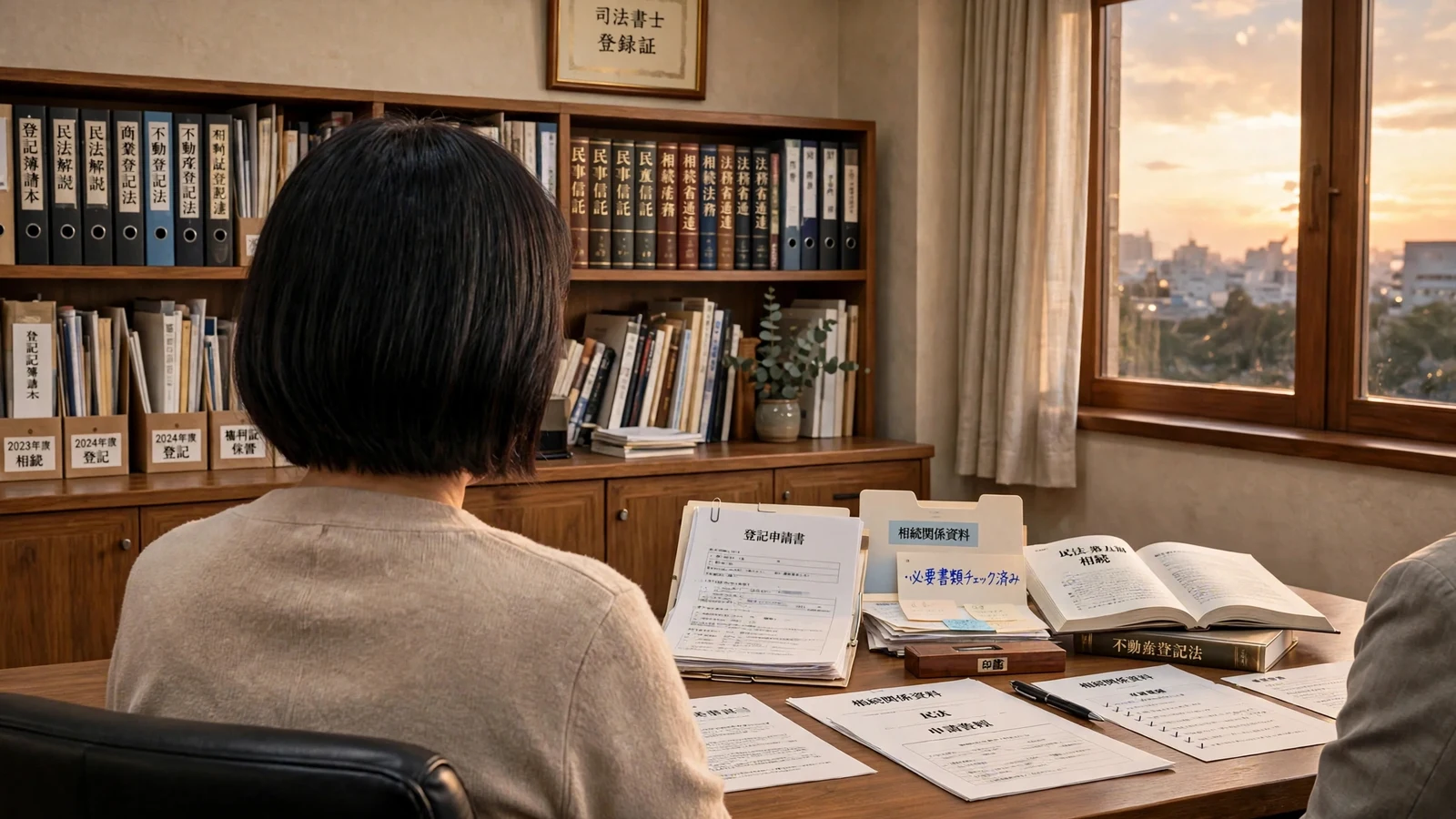
The result first: what made this farewell work was the order of preparation. Before property or a grave, Ms. Masako Nakamura (a pseudonym) had first decided “who to leave things to if something happens to me,” and had asked Ms. Toyokawa (a pseudonym), a judicial scrivener, to be her guardian. The hospital payment, the cremation, the destination of her ashes, the perpetual memorial fee of 500,000 yen, and even the disposal of the home she left behind — all of it had been decided while she was alive. Because there was a person she had entrusted, there was a person who moved with the death certificate after she died, a person who looked for a funeral home, and a farewell that held together.
In the story of Mr. Kazuo Yamada (a pseudonym), a judicial scrivener appeared, to whom I asked a favor concerning property.
She is the teacher of whom I wrote, “There is a judicial scrivener I am always indebted to.” Her pseudonym is Ms. Toyokawa.
Today is the story of how I first met Ms. Toyokawa.
And this is also the story of a person for whom she had been asked to act as guardian. The person who died had decided, while still alive, who to entrust her later affairs to. I think it is a story of the right way to prepare for the end when you live alone.
At the Hospital, After Finishing a Report
That day, I was at a hospital with which I had a relationship of mutual help.
I had finished reporting on a person I had assisted, and had come out into the waiting lobby.
In the lobby, there was a woman.
She held a telephone in one hand and had a telephone directory open. She looked flustered.
When I looked into the telephone directory, the page open was the funeral-home page. She was just on the verge of making a call.
In her hand, she also held a death certificate.
“I Am Also With a Funeral Home”
That she was looking for a funeral home was immediately clear.
I spoke to her.
“Are you looking for a funeral home?”
“I am also with a funeral home. If you like, shall I listen to your story?”
I handed her my business card, and also asked this.
“Is it about someone in your family?”
The woman wore a pantsuit and had a dignified bearing. Even though she was flustered, her back was straight.
At that point I did not yet know her occupation. I only thought she might be a lawyer or a judicial scrivener.
Speaking to an unknown woman in a hospital waiting lobby. Looking back now, it was a work approach, but it was a beginning like a “pickup.”
It Was Not Family
That death certificate was not for a member of her family.
The person who had died was someone who had asked Ms. Toyokawa to act as her guardian.
That person was named Ms. Masako Nakamura (a pseudonym). She was 65 years old. I was told she was a person with no relatives.
I know almost nothing about what kind of person Ms. Nakamura was. All I had heard from Ms. Toyokawa was that she had been an English teacher. From the standpoint of personal information, I did not ask anything beyond that.
All I needed was the arrangements for the farewell. I think Ms. Toyokawa’s side also kept the information she passed to me within the necessary range.
Judicial scriveners are bound by a rule of law that they must not leak secrets learned in their work. Confidentiality is strict for these licensed professionals. That Ms. Toyokawa passed me little information was probably also for that reason.
Ms. Toyokawa’s ward, for whom she had served as guardian, had died, and for that farewell she was looking for a funeral home.
When I asked, I learned that for Ms. Toyokawa too, this was the first time to hold a funeral for a ward. She said she had not thought the person would die so soon, and had not looked into funeral homes in advance.
Ms. Toyokawa answered, looking embarrassed.
That was the reason the person with the dignified bearing was flustered, clutching a telephone directory.
I had Ms. Toyokawa confirm the situation for me in detail.
On that basis, I accepted that person’s farewell.
The farewell was cremation only.
The one who saw her off was me alone.
There was no ceremony and no mourners. Still, at the crematorium, there was one person who watched over her to the very end.
The destination of the ashes had also been decided. A temple in Kyoto, where she had been a parishioner. The offering to the temple was to be paid in by Ms. Toyokawa.
The cost of the perpetual memorial was 500,000 yen. This is the amount I learned by confirming with the chief priest.
Our company undertook everything, from the procedures to the interment of the ashes at the temple, for 250,000 yen.
This became my first job with Ms. Toyokawa.
What Happened to the Home Afterward
The disposal of the home that remained also moved forward.
I asked a real estate agent I had been indebted to for a time to handle the sale, and two months later I received a report that it had sold. I was told it sold for 10,000,000 yen.
The money from the sale went to Ms. Toyokawa. It did not pass through my hands. Afterward, I heard that the money was donated to the temple.
Up to the arrangements for selling the house, I could help as well. The destination of the money was Ms. Toyokawa’s work.
From the payment to the hospital to the settling of the home. That, it seems, was the whole of what Ms. Toyokawa had been entrusted with as guardian.
Making a Person You Can Ask
When people speak of preparing for the end while living alone, the division of property and graves are spoken of first.
But in this person’s case, the order was different.
First, she had decided “who to leave things to if something happens to me,” and had asked Ms. Toyokawa.
Ms. Nakamura came to Ms. Toyokawa’s office six months before she died. She said that because she had no relatives, she wanted to ask her to take care of her affairs after her death. And so Ms. Toyokawa became her guardian.
It had been only half a year since she became guardian. That is why Ms. Toyokawa said, “I never thought it would be so soon.”
The contents of the aftercare had also been discussed. The payment to the hospital. The cremation. The destination of her own ashes. The cost of the perpetual memorial at the temple. Even the disposal of the home that remained. The final payments, the destination of the ashes, and the settling of the house had all been decided.
The system of asking a third party, while still alive, to handle the affairs after death is now known by the name “death affairs entrustment contract.” In materials from the National Consumer Affairs Center of Japan as well, the affairs that can be requested are listed as funerals, cremation and burial, the settlement and payment of medical expenses, the vacating of a home and the disposal of things left behind, and so on.
The name itself may not have existed, but Ms. Nakamura’s aftercare was exactly those contents.
Even so, after she died, there was a person who moved while holding the death certificate. There was a person who looked for a funeral home. There was a person who confirmed the farewell with the funeral home.
Dying alone and dying without entrusting anything to anyone are different.
This person had made someone to entrust. I think that is what made her farewell hold together.
I Am Glad I Spoke to Her
That day, if the call had connected a little sooner, Ms. Toyokawa might have asked another funeral home. If I had passed through the lobby a little later, we would not have met.
After that, Ms. Toyokawa became, as a judicial scrivener who helps people with no relatives, a teacher I am indebted to in my daily work.
In Mr. Yamada’s case, our positions were reversed, and I came to ask Ms. Toyokawa, from my side, about property. I was able to introduce her, saying, “We cannot take custody of money at our company, but there is a judicial scrivener I am always indebted to.”
Thinking about it, I got along well with these licensed professionals.
The reason is clear. The handing over of money and goods cannot touch against the rules. Precisely because of that, on this side, we repay with what we can do. Because it was a relationship in which we could draw a line and say what cannot be done cannot be done, the association continued, I think.
This line also has backing in the rules. Legal work such as the handing over of property is prohibited by the Attorney Act for unqualified persons to handle for remuneration. A funeral home cannot take custody of money and hand it to the family.
Conversely, in the rules for judicial scriveners (the Code of Conduct for Judicial Scriveners), it is provided that money entrusted must be managed separately from one’s own, and that one must not lend or borrow money with a client. Precisely because they handle money, the rules are strict.
Because there are rules, a line can be drawn. Because a line can be drawn, things can be entrusted. I think that suited me.
That beginning was in a hospital waiting lobby.
I am glad I spoke to her. I still think so now.
- November 18, 2026 ― English draft created (results-first rewrite of the Japanese article, ledger No. 69). Not published; publication is a separate step.(7,275 characters)