
Shitennoji — Founded by Prince Shotoku, the First Official Temple of Japanese Buddhism
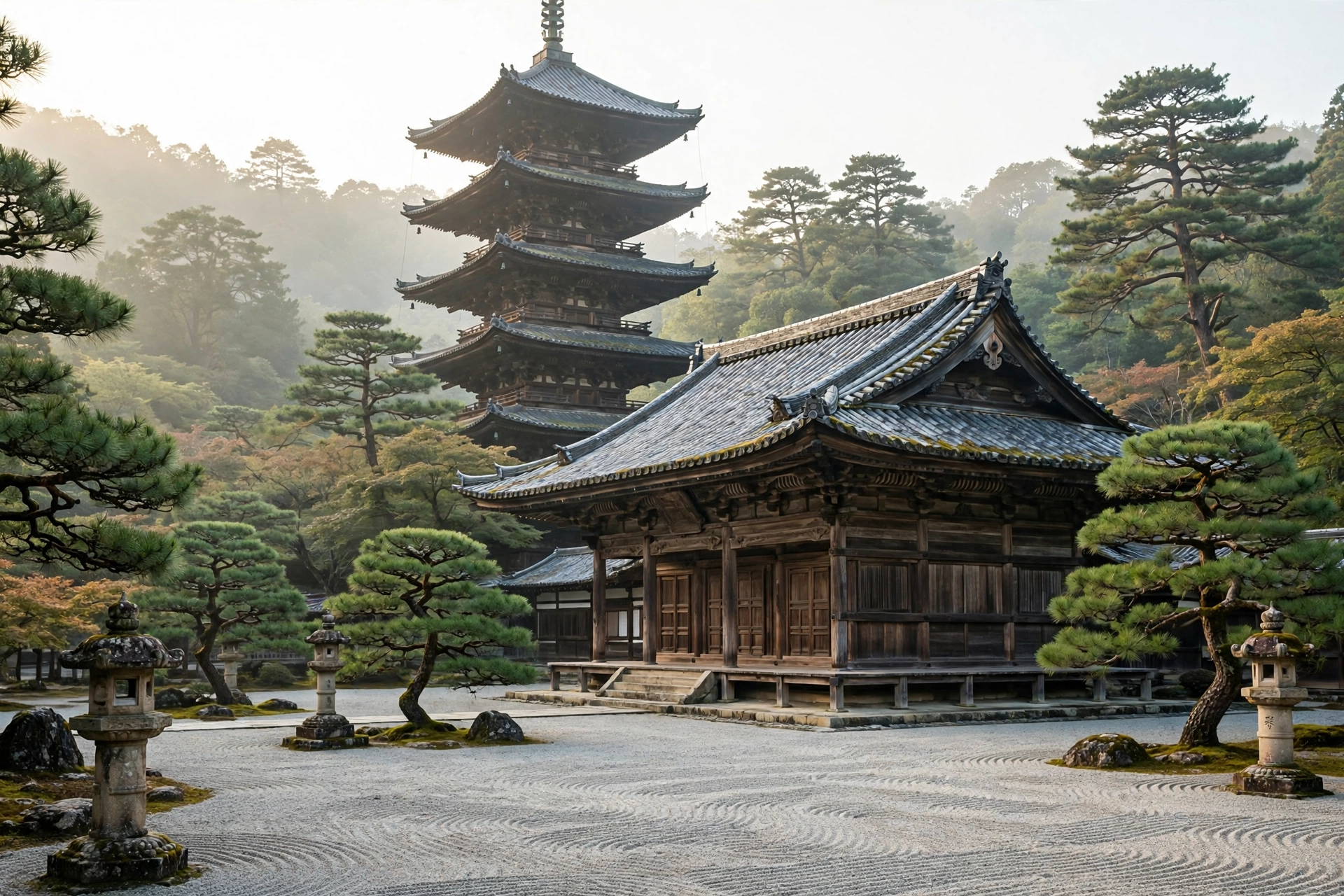
The point first: Shitennoji in Tennoji Ward, Osaka, was founded by Prince Shotoku in 593 (the first year of Empress Suiko) at Arahaka in Naniwa, and its official site calls it the head temple of the Washu School and “the first official temple of Japanese Buddhism.” Its layout — South Great Gate, Middle Gate, Pagoda, Golden Hall and Lecture Hall in a straight line, the classic “Shitennoji-style layout” — is said to have barely changed since the founding, and the grounds are designated a Historic Site. Its official site carries a concrete interment guide: applications for interment in the Nokotsu Sosaito (joint grave) are accepted without reservation at the Rokujido (at the Warodo on Saturdays, Sundays and holidays), 8:30–15:00, with documents including the original cremation permit — while details such as the fee for ancestral memorials, and dedicated guides to funerals themselves and tree burials, could not be confirmed, and this article writes no amounts for them. Visiting the central precinct is ¥500 for adults, and it is free on the fair days of the 21st and 22nd of every month.
I am Kurashiki Bouzu (kurashiki-bouzu), born in 1971, a former funeral professional now living in an old house in Kurashiki, Okayama, working with Moka, my AI butler.
This is one article in a series introducing temples across Japan, one temple at a time. This time it is Shitennoji in Tennoji Ward, Osaka City. This article is organized from official published sources such as the temple’s official site; it is not an account of a visit I made myself.
Basic information
- Name: Shitennoji. The official site’s title is “Head Temple of the Washu School, Shitennoji — the first official temple of Japanese Buddhism”
- School: head temple of the Washu School (Sohonzan)
- Address: 1-11-18 Shitennoji, Tennoji Ward, Osaka City, Osaka Prefecture, postal code 543-0051
- Telephone: 06-6771-0066
That the Kondo (Golden Hall) is the main hall of the central precinct is clear from Osaka City’s explanation. However, an official notation indicating the principal image could not be confirmed on the official pages opened this time. A clear official statement of the mountain name (sango) is also unconfirmed. Points that could not be confirmed are not stated definitively.
Shitennoji calls itself not only the head temple of a particular school but the “head temple of the Washu School.” Washu is the school that takes Shitennoji as its head temple. The words “the first official temple of Japanese Buddhism” in the official title indicate its position as a temple built as a temple of the state in the earliest period. That it keeps broad grounds and a temple complex while standing within Osaka’s urban area is also a feature of this temple.
History
Shitennoji is a representative temple of the Asuka period, founded in the first year of Empress Suiko (593) by Prince Shotoku at Arahaka in Naniwa. So records Osaka City’s “Walk of History.” It is a temple of the very period when Buddhism was taking root in Japan.
Its temple layout is the classic example of the “Shitennoji-style layout,” in which the South Great Gate, Middle Gate, Pagoda, Golden Hall and Lecture Hall stand in a straight line, and the positions of the halls and pagoda are said to have barely changed since the founding. The stone torii of the West Gate was built in Einin 2 (1294) and is the oldest in the temple. Buildings built in Genna 9 (1623), such as the Honbo Hojo and the Rokujido, escaped war damage and survive. The temple grounds are designated a Historic Site.
That the alignment of the complex has been kept in the same place for more than 1,400 years is itself a great value of this temple.
Highlights
Osaka City guides that Shitennoji holds 6 National Treasures and many Important Cultural Properties. As an example of a National Treasure, the “Fan-shaped Lotus Sutra booklets” (Senmen Hokekyo Sasshi) are named.
The highlights are the central precinct (Middle Gate, Five-Story Pagoda, Golden Hall and Lecture Hall), the Honbo Garden (the Garden of the Pure Land of Ultimate Bliss) and the Treasure Hall. The official group-visiting application form also lists these three as visiting categories. The bugaku (court dance) service of the Shoryo-e is designated an Important Intangible Folk Cultural Property. Including the performing arts of services handed down, as well as buildings and treasures, is among this temple’s highlights.
Events
The Shoryo-e is on April 22. Osaka City guides it as Shitennoji’s largest event, in which bugaku is performed on the stone stage.
The Daishi-e is on the 21st of every month, the memorial day of Kobo Daishi, when stalls line the grounds. The Taishi-e is on the 22nd of every month, the memorial day of Prince Shotoku. In the official group-visiting application form, the 21st and 22nd of every month are treated as days when visiting the temple complex is free. Visiting together with the bustle of the fair days is also a way of enjoying this temple in its own style. Event dates may change, so please check the official site.
Funerals and memorial services
I will organize this from a former funeral professional’s viewpoint. Shitennoji’s official site has a guide to interment. It accepts applications for interment in the Nokotsu Sosaito (a joint grave), and no reservation is needed. Reception hours are 8:30 to 15:00, and the reception place is the Rokujido (with a guide that on Saturdays, Sundays and holidays it is held at the Warodo).
The required documents, according to the official notice, include the cremation permit (original), the date of death (meinichi), the posthumous Buddhist name (kaimyo; a secular name is acceptable), the age at death (gyonen), and the applicant’s (sesu’s) seal and identity documents. It is also recorded that all remains received are buried in the Nokotsu Sosaito. That a joint-grave form is accepted with its procedure shown officially is a characteristic of this temple’s guide.
A reception guide for ancestral memorials exists within the official site, but details such as amounts could not be confirmed this time, so no amounts are written here. Note that a dedicated guide to funerals themselves and to tree burials could not be confirmed on the official pages opened this time.
A supplement as a former funeral professional: joint graves, as a form of interment requiring no successor, have drawn increasing consultations in recent years. Shitennoji’s guide states concretely that no reservation is needed and lists the required documents. That points applicants are apt to hesitate over — that the original cremation permit is required, and that a secular name is acceptable in place of a posthumous name — are written in advance, which is kind. That it is clearly stated that all remains are buried in the Nokotsu Sosaito is also important information for preventing later misunderstandings.
If you are considering applying, the reception hours and place (the Rokujido; the Warodo on Saturdays, Sundays and holidays) may differ from the guide, so please check the day’s guide on the official site before setting out. Because you bring the originals of documents, I recommend rereading the official notice in advance so that nothing is forgotten.
Practical information for a visit
According to the official group-visiting application form, the halls open and close at 8:30 to 16:30 from April to September, and 8:30 to 16:00 from October to March. Admission (individual) is: for the central precinct, ¥500 for adults and university students, ¥300 for high school students, and free for junior high school students and below; for the garden, ¥300 for adults and university students, ¥200 for high school students and ¥200 for elementary and junior high school students; for the Treasure Hall, ¥500 for adults and university students, ¥300 for high school students, and free for junior high school students and below.
On the 21st and 22nd of every month, and during the spring and autumn Higan-e and the Obon period, the central precinct is free to visit. Amounts and hours may change. Please check the official site before your visit.
Finally, I will add one way of seeing this temple. At Shitennoji, visiting is divided into the central precinct, the garden and the Treasure Hall, each with its own fee. On the fair days of the 21st and 22nd the central precinct becomes free — a form that values both local people’s worship and visiting as cultural property. Events handed down across a history of more than 1,400 years, such as the bugaku of the Shoryo-e, are still held today. A place that keeps, within the city of Osaka, a temple alignment barely changed since the founding. I think this is a temple suited to a slow visit, feeling that weight, touring places where old things survive, such as the stone stage and the stone torii of the West Gate.
Sources
- Official top page
- Notices list, interment procedures and more (official)
- Group visiting application form (official PDF)
- Walk of History 76, Shitennoji (Osaka City)
- Shitennoji Treasure Hall, facility information (Osaka City)
- November 22, 2026 ― Published in English (translation of the Japanese article, ledger No. 2906)(7,534 characters)