
Yakushiji — The Hakuhō-Period Precinct Revived Through Sutra Copying, and the Temple Where the Original East Pagoda Still Stands
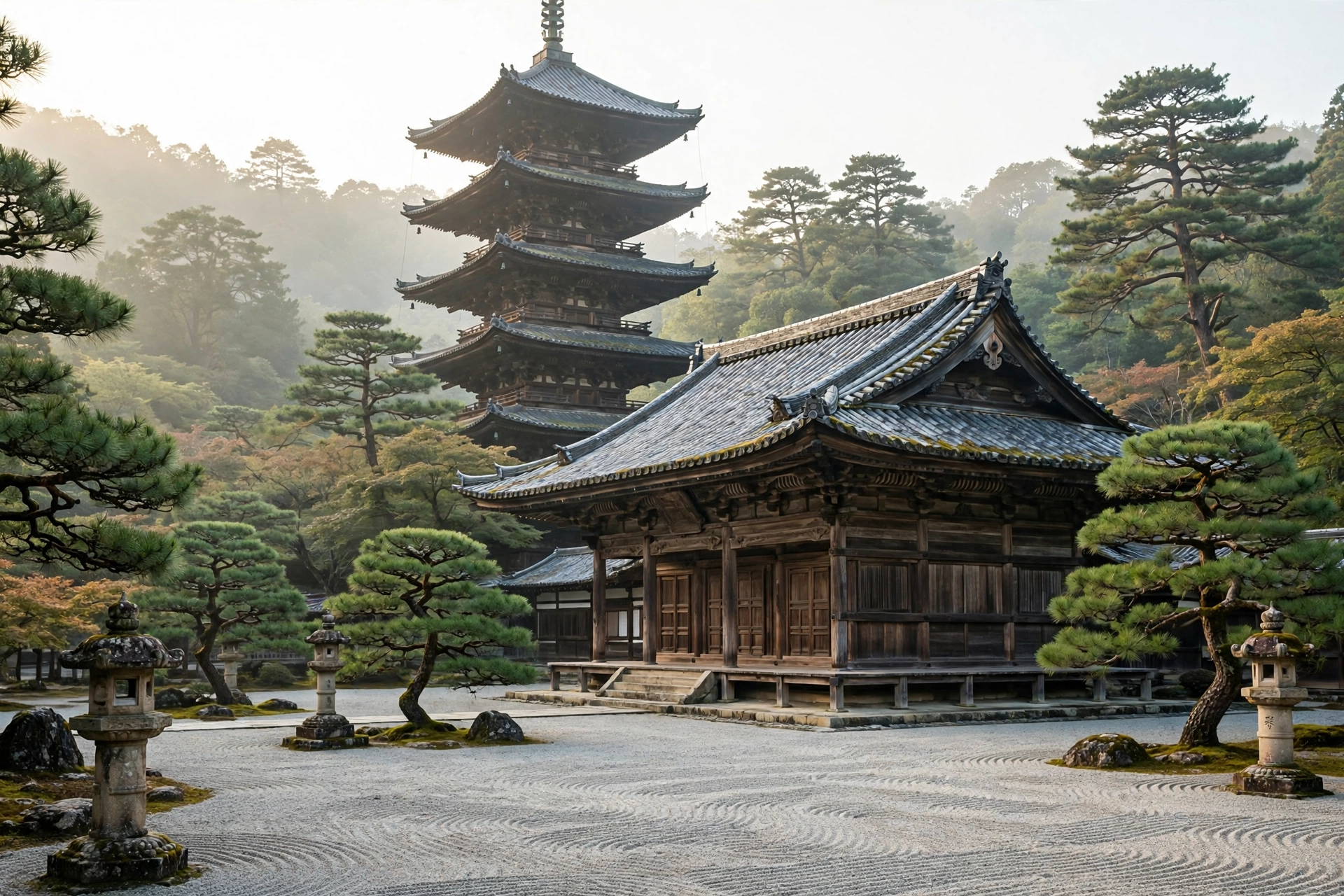
The point first: Yakushiji in Nishinokyo, Nara City, is the head temple of the Hossō School, enshrining the Yakushi Triad. Its East Pagoda is the only building surviving from the time of its founding, while the Hakuhō-period precinct, lost to war fire in 1528, was largely rebuilt through a sutra-copying campaign begun in 1968. In 1998 it was registered as a World Cultural Heritage site as one of the component assets of the “Historic Monuments of Ancient Nara.” No official guide to funerals, memorial anniversary services, ossuaries or cemeteries was found on the official site of the Nara head temple within the range checked, and the center of its memorial practice is sutra copying, offered for perpetual memorial.
I am Kurashiki Bouzu (kurashiki-bouzu), born in 1971, a former funeral professional now living in an old house in Kurashiki, working with Moka, my AI butler.
This is one article in a series introducing temples across Japan, one temple at a time. This time it is Yakushiji in Nara City, Nara Prefecture. This is not a record of a visit I made myself; it is an article organizing only confirmed facts from the official site and published sources of Nara Prefecture and Nara City.
Basic information
- Temple name: Yakushiji. The official site’s wording is “Nara Yakushiji”
- School: Hossō School, head temple. It is one of the “Six Schools of Nara” brought from China in the Nara period, and its teaching is officially explained as the Yogācāra (consciousness-only) philosophy
- Principal image: Yakushi Nyorai (the Medicine Buddha). The Kondō enshrines the Yakushi Triad, with Yakushi Nyorai as the central figure, flanked by Nikkō Bosatsu and Gakkō Bosatsu
- Address: 457 Nishinokyō-chō, Nara City, Nara Prefecture
In 1998, Yakushiji was registered as a World Cultural Heritage site as one of the component assets of the “Historic Monuments of Ancient Nara.”
History
In 680, the ninth year of Emperor Tenmu, Emperor Tenmu vowed to build the temple, praying for the recovery from illness of Empress Uno no Sarara (later Empress Jitō). Emperor Tenmu passed away without seeing its completion, and Empress Jitō carried forward its construction in Fujiwara-kyō. The consecration (eye-opening) of the principal image, Yakushi Nyorai, took place in 697, and by 698 the construction was said to be largely complete and monks began to reside there. The original temple site is in present-day Kashihara City and is designated a National Special Historic Site as the “Moto-Yakushiji Temple Site.”
When the capital moved to Heijō-kyō in 710, Yakushiji also moved in 718 to Rokujō-Nibō, Right Capital, Heijō-kyō — present-day Nishinokyō-chō. Its magnificent appearance, with mokoshi (pent roofs) added to the main halls, is said to have been called “Ryūgū-zukuri” (Dragon Palace style). The East Pagoda was built in 730.
After that, many halls and pagodas were lost to fire and earthquakes. In particular, in the war fire of 1528, the Kondō, West Pagoda, Great Lecture Hall and others burned down. Amid all this, the only building surviving from the time of founding is the East Pagoda.
In 1968, the chief priest Takada Kōin began the revival of the Hakuhō-period precinct through a sutra-copying campaign. The call to aim for one million copied sutras, at a sutra-offering fee of 1,000 yen per scroll (at the time), spread widely, and in 1976 one million scrolls were achieved and the Kondō was completed and consecrated. After that, the main halls and pagodas were largely rebuilt. The official site describes Yakushiji as “a place of faith handed down for 1,300 years.”
Highlights
The places open to visitors are the Kondō, the Great Lecture Hall (Daikōdō) and the Tōindō.
The East Pagoda is the only building surviving from the time of founding. Nara Prefecture’s official page introduces it as being called “frozen music” for the beauty of its overlapping large and small roofs.
The Kondō is the hall enshrining the principal image, the Yakushi Triad. After burning down in the war fire of 1528, it was completed and consecrated in 1976 as the first step of the revival through the sutra-copying campaign. The present Great Lecture Hall was completed and consecrated in 2003, and according to the official chronology, the Saishō-e service was also revived then for the first time in about 500 years. The Tōindō is said in the chronology to have been rebuilt in 1285.
The Genjō Sanzō-in Precinct, which enshrines Xuanzang, the founder of the Hossō School, was completed and consecrated in 1991. Its Great Tang Western Regions mural, the mural in the dining hall (Jikidō), and the mural in the Jionden are called the “Three Great Murals” and are specially opened to the public in spring and autumn. The West Pagoda, Central Gate and corridors are also halls and pagodas that were lost and later rebuilt in the revival of the Hakuhō-period precinct.
Events
- Shushō-e: a New Year service enshrining Kichijōten, praying for the peace of the nation, abundant harvests, the well-being of all people, and the removal of illness and epidemics. The Kichijō Keka service is performed strictly for 14 days; from January 1 to 3, the National Treasure image of Kichijōten handed down from the Nara period is enshrined as the principal image, and from January 4 to 15, a Heisei-period copy of the Kichijōten image is enshrined
- Ominugui (wiping of the sacred images): December 29, from 1:00 p.m. Monks wipe and purify the bodies of the Buddhas with clean cloths and prepare to welcome the New Year
- New Year’s Eve: the Hakuhō-period precinct can be visited from 10:30 p.m. to 2:00 a.m. the next morning, and the New Year’s Eve bell and a year-crossing sutra-copying gathering are held
- Hatsu-Genjō Ennichi: January 5. Among the Genjō Sanzō services held on the 5th of each month, on January 5 a service with prayers for world peace is held
- Yakushi Ennichi: the 8th of each month. In the Kondō, the Daihannya-kyō recitation service is performed strictly, and requests for health prayers are accepted
Event schedules may change by year. Please check that year’s guide on the official site. As for the Shunie (Hanaeshiki), in this round of materials the schedule could not be directly confirmed on an official page, so this article does not state it definitively.
Funerals and memorial services
As a former funeral professional, what draws my attention is guidance on funerals and memorials. This time, within the range of the official site of Yakushiji (the Nara head temple) that was checked, no official guide stating that funerals are held was found. No official fee table or application guide for memorial anniversary services, ossuaries or cemeteries was found within the checked range either. To be honest, no such guide appeared on the official site.
The center of Yakushiji’s memorial practice is sutra copying. According to the official explanation, a copied sutra that has been offered is first enshrined before the principal image, Yakushi Nyorai, and after the wishes are conveyed through services, one thousand scrolls are bound as one bundle and offered in the sutra repository, where they receive perpetual memorial. The sutra-copying campaign itself was the driving force behind the revival of the Hakuhō-period precinct, and memorial practice and revival have continued as one flow — that is a feature of this temple. The official guide also clearly states that anyone may copy sutras regardless of religion or school.
At the Tokyo branch temple, there is also a campaign guide for ancestor memorial, reviving the Million Pagodas to enshrine ancestors. However, this is a guide of the Tokyo branch temple, and whether the same application can be made at the Nara head temple has not been confirmed. It is not written here as a system of the Nara head temple. Not writing what is not known is the rule of this series.
Practical information for a visit
Visiting hours and fees are as officially stated after the revision of March 1, 2024.
- Visiting hours: 9:00 a.m. to 5:00 p.m. Reception until 4:30 p.m. The sutra-copying hall opens at 9:00 a.m. and closes at 5:00 p.m., with reception until 4:00 p.m.
- Admission (Hakuhō-period precinct: Kondō, Great Lecture Hall, Tōindō): adults ¥1,000, junior high and high school students ¥600, elementary school students ¥200
- Special opening of the Three Great Murals: in addition to the Hakuhō-period precinct admission, adults ¥1,000, junior high and high school students ¥500, elementary school students ¥100 are required. In spring it is announced as March 1 to March 15, and in autumn as about two weeks from late October
- Time required: the official FAQ states about 30 minutes to visit all the halls, and about 30 minutes more if you listen to a sermon
- Parking: regular cars ¥800 (per visit), motorcycles ¥200 (per visit), and so on
- Access: 1 minute on foot from Kintetsu Nishinokyō Station. From Kintetsu Kyoto Station and Kintetsu Osaka-Namba Station, about 40 minutes via Yamato-Saidaiji
- Inquiries: Yakushiji, telephone 0742-33-6001
Fees and hours may change. Cashless payment could not be confirmed from the current materials this time, so please check the official site before going.
Sources
- Yakushiji official, “Visiting Guide”
- Yakushiji official, “About Yakushiji”
- Yakushiji official, “History of Yakushiji”
- Yakushiji official, “Location and Access”
- Yakushiji official, “Shushō-e”
- Yakushiji Tokyo Branch official, “Sutra Copying”
- Nara Prefecture, “Places Associated with Emperors Tenmu and Jitō”
- Nara Prefecture, “World Heritage of Nara Prefecture”
- Nara Prefecture official tourism site, “Yakushiji”
- November 22, 2026 ― Published in English (translation of the Japanese article, ledger No. 3050)(7,964 characters)