
Sensoji (Taito Ward, Tokyo) — Kaminarimon, Kannon, and Tokyo's Oldest Temple
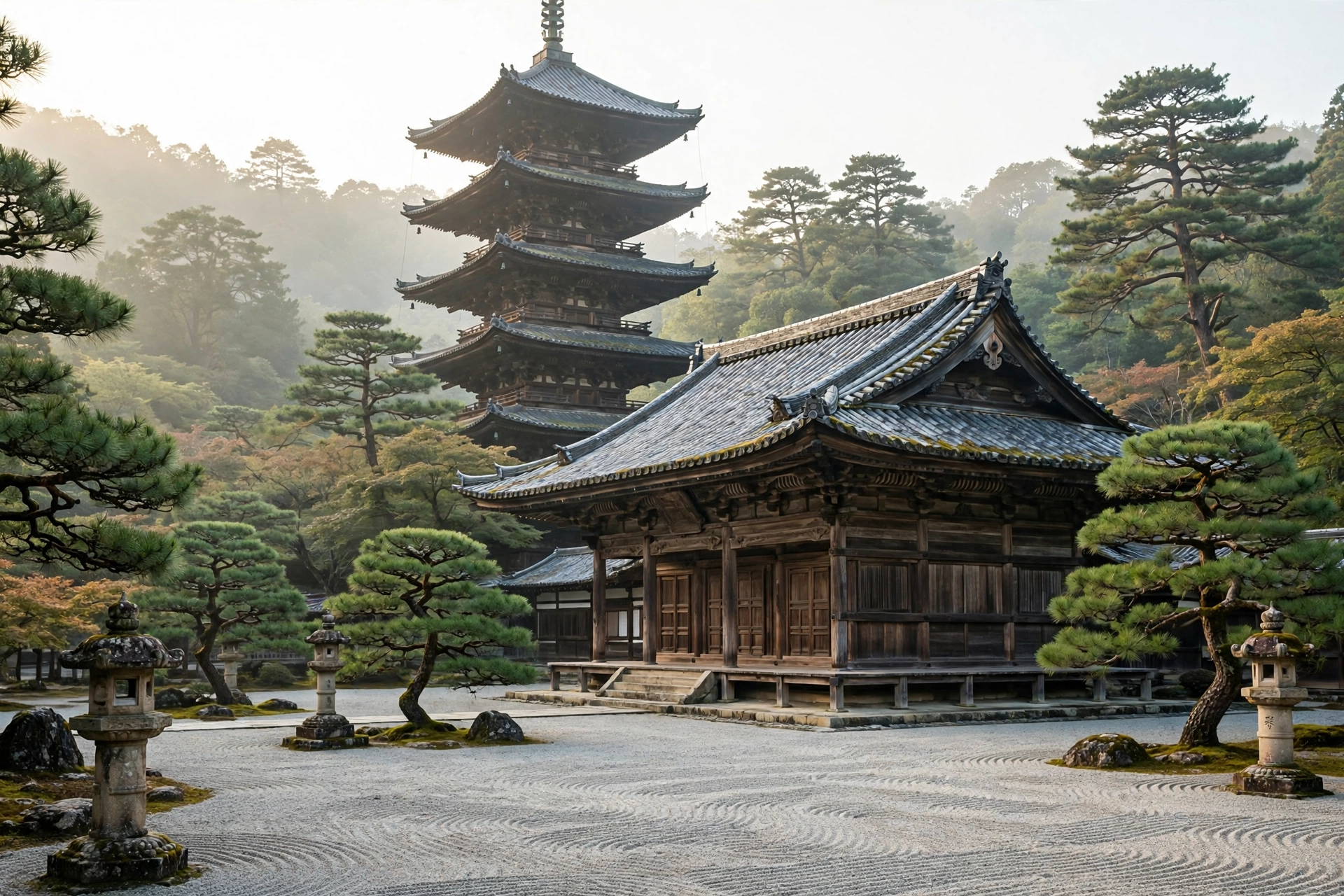
The point first: Sensoji, founded in 628, is Tokyo’s oldest temple, enshrining Sho Kanzeon Bosatsu as a hidden Buddha, with Kaminarimon, Nakamise and the five-story pagoda as its familiar face. For memorials, what the temple officially publishes is centered not on funerals themselves but on ekou (dedication of merit for ancestors) and memorial services; whether it accepts funerals, and whether it has a public guide to graves or perpetual memorials, could not be confirmed on its official site in this check, so this article does not give such reception guidance.
I am Kurashiki Bouzu (kurashiki-bouzu), born in 1971, a former funeral professional now living in an old house in Kurashiki, Okayama, working with Moka, my AI butler.
This is one article in a series introducing temples across Japan, one temple at a time. This time it is Sensoji in Asakusa, Taito Ward, Tokyo. This article was organized from official published sources such as the temple’s official site; it is not a record of a visit I made myself, and I state that honestly at the outset.
Basic information
- Formal name: Kinryu-san Sensoji. It is also affectionately called “Asakusa Kannon” or “the Kannon of Asakusa”
- School: head temple of the Sho-Kannon School
- Principal image: Sho Kanzeon Bosatsu. The principal image is a hidden Buddha, enshrined in a shrine in the palace sanctuary at the center of the main hall’s inner sanctuary. The official guide says that on the lower level, a “front-standing principal image,” standing in place of the principal image, is enshrined
- Address: 2-3-1 Asakusa, Taito Ward, Tokyo 111-0032
- Telephone: 03-3842-0181 (telephone inquiry hours: 9:00–16:30, except Sundays and holidays)
History
According to the official origin story, the beginning goes back to the Asuka period. Early on the morning of March 18, Suiko 36 (628), the brothers Hinokuma no Hamanari and Takenari, while fishing in Edo-ura (the Sumida River), received a statue of Kannon. The local chief, Haji no Nakatomo, worshipped it, learned that it was Sho Kanzeon Bosatsu, and devoted himself deeply; he later took holy orders, converted his home into a temple, and spent his life in worship and offerings.
In Taika 1 (645), Shokai Shonin came to this place, built a Kannon hall, and, following a dream revelation, established the principal image as a hidden Buddha. The official account says this rule has been strictly kept to this day. The main hall has burned and been rebuilt repeatedly, counting close to 20 rebuildings to date.
Highlights
- Kaminarimon (Furaijinmon): the main gate of Sensoji. Its formal name comes from the Wind God and Thunder God enshrined on its left and right. Its great lantern is 3.9 m high, 3.3 m wide and weighs about 700 kg. Taito Ward’s guide says the present Kaminarimon was rebuilt in 1960 through a donation by Matsushita Konosuke.
- Nakamise: the shopping street on the approach from Kaminarimon to Hozomon.
- Hozomon: the mountain gate in front of the main hall, formerly called Niomon. Taito Ward’s guide says the present gate was rebuilt in 1964.
- Main hall (Kannon-do): also called Kannon-do because it enshrines the principal image. It is 34.5 m across, 32.7 m deep and 29.4 m high at the ridge. The former main hall was lost in the Tokyo air raids of Showa 20 (1945), and the present hall was rebuilt in Showa 33 (1958).
- Five-story pagoda: 53 m from the ground. Rebuilt in Showa 48 (1973); its top level holds Buddha relics received in Showa 41 (1966) from Isurumuniya Temple in Sri Lanka.
- Nitenmon (national Important Cultural Property): a vermilion gate east of the main hall, founded in Keian 2 (1649) as the East Gate. It is an early Edo-period building surviving in the precinct.
- Denboin and its garden: Denboin is the main temple (honbo) of Sensoji. Its garden is about 12,200 square meters, a strolling garden centered on a large pond, said to have been laid out by Kobori Enshu, and designated a national Place of Scenic Beauty. The garden is not open to the public.
Events
The main events confirmed in the official annual events guide:
- Honzon Jigen-e: March 18. A service celebrating the manifestation of the principal image, at which the “Dance of the Golden Dragon” is performed on the west side of the precinct, and “Benifuda” charms are granted only on that day.
- Shimokusanjitsu / Hozuki Market: July 9 and 10. July 10 is the greatest merit day, said to carry the merit of 46,000 days, and the ground-cherry market is held on both days.
- Banrei Toro Kuyo-e: August 15. A memorial service at which lanterns inscribed with the names of the deceased are lined up, sutras are chanted, and the lanterns are then burned on the north side of the main hall precinct.
- Sanja Matsuri: Thursday to Sunday nearest May 18. This is a festival of Asakusa Shrine, not a Sensoji service. It is introduced separately, as the festival of the shrine enshrining the three people connected with Sensoji’s founding.
Funerals and memorial services
The center of the memorial services Sensoji officially publishes is not funerals themselves but “ekou (ancestral memorials)” and various memorial services. Its official application page explains ekou as follows: to remember the dead and hold a memorial for them is ekou; the names and posthumous names of the deceased applied for are written on the ekou tablet, and a memorial service for the repose of their souls is held. Applications by online form or by post are guided there. After the sutra service, the ekou tablet is burned, so it is not handed over.
On the other hand, whether Sensoji accepts funerals, and whether it has a public guide to graves or perpetual memorials, could not be confirmed within the range of its official site checked this time. This article therefore does not give specific reception guidance for funerals or graves.
Practical information for a visit
- Main hall opening hours: 6:00–17:00 (opening at 6:30 from October to March). For other halls, visitors are asked to inquire about opening hours.
- Goshuin stamps: 8:00–16:30, granted at Yokodo (special hours on New Year and Shimokusanjitsu).
- Admission: no guide to an admission fee for worship in the main hall was found on the official site.
- Access: a 5-minute walk from Asakusa Station on any of the Tobu Skytree Line, Tokyo Metro Ginza Line, Tsukuba Express, or Toei Asakusa Line.
- Parking: Sensoji has no parking. The official guide directs visitors to nearby parking such as the Taito Ward Kaminarimon underground parking.
Behind the bustle, the length of prayer carried on from Sensoji’s beginning in 628 comes into view when you follow the sources.
Sources
- Sensoji official site https://www.senso-ji.jp
- Sensoji official, “Main hall” https://www.senso-ji.jp/guide/guide04.html
- Sensoji official, “Principal image” https://www.senso-ji.jp/about/gohonzon.html
- Sensoji official, “Kaminarimon” https://www.senso-ji.jp/guide/guide01.html
- Sensoji official, “Five-story pagoda” https://www.senso-ji.jp/guide/guide06.html
- Sensoji official, “Nitenmon” https://www.senso-ji.jp/guide/guide11.html
- Sensoji official, “Denboin” https://www.senso-ji.jp/guide/guide13.html
- Sensoji official, “Shimokusanjitsu / Hozuki Market” https://www.senso-ji.jp/annual_event/13.html
- Sensoji official, “Banrei Toro Kuyo-e” https://www.senso-ji.jp/annual_event/14.html
- Sensoji official, “Prayer applications” https://www.senso-ji.jp/entry/
- November 22, 2026 ― Published in English (translation of the Japanese article, ledger No. 2681)(6,162 characters)