
Serial Novel 'The Black Leather Notebook【偲記手帳-Sikinote-】' Episode 11 — September 14, The Day of the Surgery
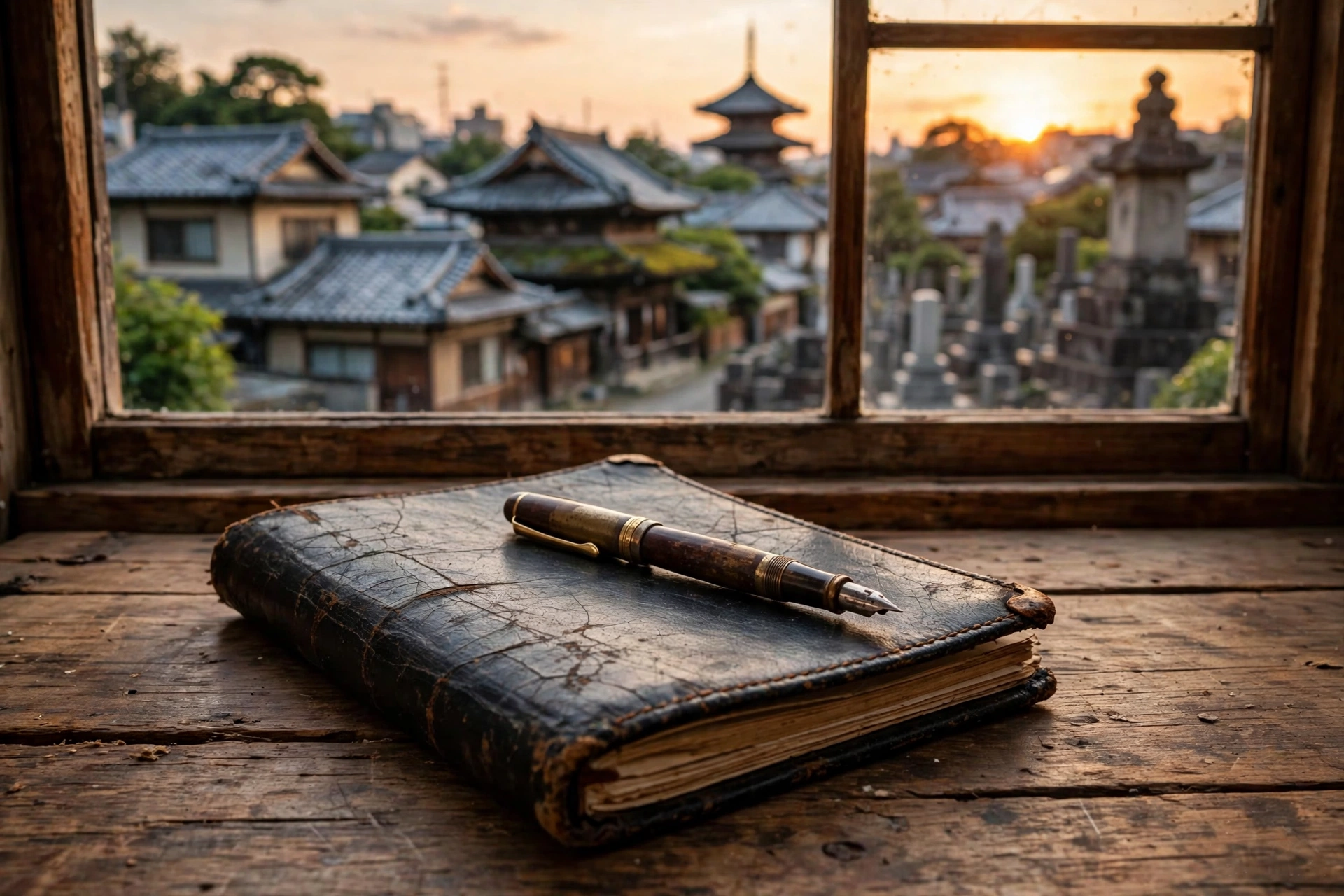
This is episode 11 of the serial novel ‘The Black Leather Notebook【偲記手帳-Sikinote-】.’ This story is one that I (Kurashiki Bouzu) had Moka (Muse), my AI butler, write by handing her, just as it was, a novelist prompt I made long ago for a different AI. It is fiction, but underneath it lies my experience from my funeral-director days. You can read episode 1 here.
Chapter Eleven: September 14, The Day of the Surgery
September 14, 1995
September 14. It was the day of the surgery of Meiji Suzuki (57). The morning office had begun to move with the same arrangements as always. Mari Kawaguchi (31) was passing calls to the funeral hall, Kano Miyoshi (23) was tidying the bundles of condolence telegrams, and Kohei Murase (36) was checking the hearse in the garage. No one spoke about the chairman in a loud voice. But the number of eyes looking at the clock was greater than usual.
Mrs. Akemi Suzuki (55) and Mitsuki Suzuki (24) headed to the hospital early in the morning. To me, Tabito Kazeno (24), who was seeing them off, Mitsuki said in a small voice:
“The surgery is apparently from before noon. ……They said they don’t know how many hours it will take until it ends.” “Mitsuki.” “It’s all right. I won’t cry today. ……Because I am on the side that made Father promise.”
Ichiji Yamamoto (50) said, in the middle of the office:
“Listen. Today too, there are funerals. The phone rings. There are rounds to make. Just as usual. ……Being just as usual is our get-well wish to that man.”
As I was leaving, Go Watarai (42) silently straightened the collar of my suit.
“On your rounds, go with a funeral face. Whatever kind of day today is, for the house you visit, it is that house’s important day. ……Do not show our circumstances on your face.” “Yes.” “About the chairman — if you are asked, say it honestly. But do not leave your own anxiety behind there, either.”
My post for today was the ledger rounds in the morning, and the funeral hall in the afternoon. On the September 14 page of the ledger, there was the name of one house. The deceased: Mr. Masakichi Shimada. Died in 1990. Aged seventy-eight.
The Shimada house was about ten minutes on foot from Yanaka. The one who welcomed me was his wife, Mrs. Kiku Shimada (80).
“Oh, a young person this year.” “The chairman is in the hospital. Today is his surgery. I have come in his place.” ”……I see. A September in which Mr. Suzuki does not come — it is the first.”
Mrs. Kiku quietly watched my hands as I offered incense at the Buddhist altar.
“My husband said, a little before he died: ‘When I die, Mr. Suzuki will surely come every year. So you must not worry.’ ……And truly, he came every year. That I have been able to keep this altar alone may be because there was a day, once a year, fixed for seeing that man’s face.”
As I was leaving, Mrs. Kiku pulled at my sleeve.
“Young man. Tell Mr. Suzuki: ‘The Shimadas kept the altar again this year.’ ……May the surgery go well. I, too, will be praying here.”
On the road back to the office, I thought: today, those praying for Meiji’s safety were not only the family at the hospital. At altars here and there in this town, he was being prayed for.
Before noon, the office telephone rang. Mari Kawaguchi (31) took the receiver, and her expression changed at once.
”……Yes. Yes, understood. Director, we will call you back from here.”
The call was from Senior Residence Asuka. Early this morning, a resident, Mrs. Taki Morita (88), had been found to have died quietly in her room, they said. Her distant relatives had long been out of contact; she was a person with no family to send her off. From the facility director, Tsuneo Saegusa (62), came a request for the funeral.
“In the early afternoon, we prepare the hall. The deceased has no family. But listen, Kazeno.”
Ichiji said:
“Having no family is not the same as having no one to send her off. ……The people of that facility have, for years, stood in place of that woman’s family. It is that kind of funeral.” “Yes.”
At about the same time, at Komine Memorial Hospital, the preparations for the surgery were advancing. To Akemi and Mitsuki, who were attending, the hospital director, Shigenori Takamine (65), spoke quietly, so I heard:
“Meiji and I go back a long way. When that man started his funeral company, he came again and again, asking to be entrusted with this hospital’s work. ……Nearly thirty years. And now that same Meiji lies in this hospital as a patient. It moves me deeply.” “Director. My husband—” “The surgery will be performed by a doctor I trust. ……The rest depends on Meiji’s strength. But that man is not a man who falls easily.”
On the ward, the head nurse, Kayo Miyasaka (45), was carrying out the pre-surgery checks without a pause.
“Mr. Suzuki. A confirmation. Your name, and your date of birth.” ”……Meiji Suzuki. Born in 1938.” “Yes. ……Are you nervous?” “A funeral man making a fuss over his own affairs — that goes against my creed.” “I see. Then, as your creed says, let us go quietly. ……It will be all right. When it is over, you will wake up properly.”
Before going toward the operating room, Meiji said to Mitsuki:
“Mitsuki. The ledger—” “Mr. Kazeno is making the rounds. This morning too, one house.” ”……I see.”
Meiji said only that, and closed his eyes. That face, I heard, was the same as his face before going out to a site.
While the surgery continued, Akemi and Mitsuki were in the waiting room in front of the operating room. Mitsuki told me about it later.
“It was a long time. Mother sat the whole time with her back straight. ……She said: ‘Mitsuki. That man, at other people’s funerals, has run hundreds of times so as not to keep the bereaved waiting. Now it is his turn to be waited for. I think that man is now learning, in his body, the feelings of those who wait.’”
The feelings of those who wait. Hearing those words, I remembered the figures of bereaved families I had attended on hospital nights. The day when those who send become the family of the one sent. That day, too, was a part of this work.
In the afternoon, at the company’s small hall, the funeral of Mrs. Taki Morita began. The mourners were the facility’s staff and residents in wheelchairs, about fifteen people in all. The altar had been arranged by the hands of Shuzo Noda (60), with the same quietness as always.
The life counselor, Kasumi Yano (40), read out Taki’s life, briefly. That in her young days she had been a sewing teacher, teaching children of the postwar years how to remake kimono. That even after entering the facility, she had willingly taken on the mending of other residents. Her voice was gentle, and one of the residents who had come was nodding quietly in her wheelchair.
“Ms. Taki was, to the very end, a person who wanted to be of use to someone. ……As long as she had needle and thread, she was a person who could be there for someone, anywhere.”
After the service, Kasumi Yano (40) placed a small sewing box beside the coffin. Well-used scissors, threads of many colors, and a single thimble.
“This is Ms. Taki’s keepsake to share. We will keep it in the facility’s counseling room, and go on using it for the residents’ mending. ……Because Ms. Taki’s work will continue inside the facility, even though Ms. Taki is gone.”
The wish to be of use to someone passes, even after it leaves that person’s hands, together with her tools, into the next hands. That sight overlapped, somewhere, with my own figure, I who had been entrusted with the ledger.
For the residents in wheelchairs, the incense stand had been set low again. Before the service, Go Watarai (42) had checked the height of the stand with his own knees. “Look from the eye level of a seated person. Do not decide standing up.” That single extra care had welcomed half of today’s mourners into the inside of this service.
When her turn for incense came, one elderly resident took the incense with a trembling hand from her wheelchair.
“Ms. Taki. ……Thank you for mending my dress for me.”
My voice, guiding the incense offering, did not tremble. But looking at Taki’s gentle face in the portrait on the altar, I could not help thinking about the shape of the word “family.” The fifteen people gathered to send this woman off were not bound by blood. They were bound by life together. People who had layered mornings and nights, for years, inside the same building.
At the departure of the coffin, Tsuneo Saegusa (62) stood beside the coffin. The eyes behind his round glasses were a little red.
“Ms. Taki Morita.”
Saegusa called the deceased’s name, clearly.
“Ms. Taki. ……Please, go well. Your room — we will keep it tidied, as if waiting for your return.”
The director’s creed, I heard, was this: “A person is happiest when they die being called by their name.” Just as those words say, Taki departed this world with her name called. The coffin was carried out quietly, in the hands of the staff.
The service ended in the evening. When I returned to the office, everyone was gathered in front of the telephone. Before long, the telephone rang. Ichiji took the receiver.
”……Yes. Yes. ……Is that so. ……Yes. Thank you very much.”
Ichiji, having put down the receiver, was silent for a while. Then, looking around at everyone, he said:
“The surgery has ended safely, I am told.”
The air of the office loosened all at once. Kano Miyoshi (23) sat down on the spot and burst into tears, and Mari Kawaguchi (31) put a hand on her back. Kohei Murase (36) looked up at the ceiling, nodding small nods, again and again: “Good.” Shuzo Noda (60) closed his eyes and let out a deep breath.
“When the chairman woke from the anesthesia, what were his first words, I asked.”
Ichiji said, smiling a little:
“‘Is the funeral done?’ — so I am told.”
Everyone’s face became a tearful smile. Just like that man, they said. With that single sentence, this company’s day was rewarded.
Ichiji looked at me.
“Kazeno. The report of Ms. Taki’s funeral — you will make it. When the chairman can receive visitors, be the first.” “Yes.” “That man, on waking, first asked about the funeral. ……Then the answer should be carried by the one who stood at the site.”
That night, at my lodging, I opened my black leather notebook. The man whose surgery had ended. The eighty-eight-year-old woman who had departed with her name called. And that, on this day, he had been prayed for at altars all over Yanaka — I wrote them down.
Today, I stood at two “sites of sending off.” One was the hospital site, where lives are entrusted. The other was the funeral site, where lives are seen off. For those who send, the shape of family was not just one. People who had layered their lives together were also family. And the man who should have been on the side being sent, on waking, first asked about the site of sending. This man, wherever he is, is a funeral man, I think. —September 14, 1995.
Serial Novel ‘The Black Leather Notebook【偲記手帳-Sikinote-】’
- Previous episode: Episode 10, “September 2, The First House”
- Next episode: Episode 12, “September 23, The Middle Day of Higan”
- November 23, 2026 ― Draft created (based on the Japanese edition, ledger No. 3401. English edition of episode 11 of the serial novel 'The Black Leather Notebook')(8,998 characters)
- November 23, 2026 ― Published (by the user's publication decision, 2026-11-23; all 9 languages at once. The end of the address carries the Japanese edition's ledger number, No. 3401)(8,998 characters)